

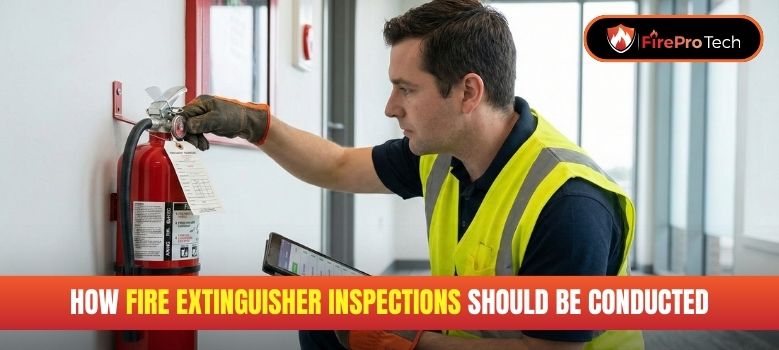
Fire extinguisher inspections are the foundation of any effective fire safety program, yet they are often misunderstood, rushed, or treated as a simple box to check. In reality, these inspections play a critical role in protecting people, property, and operations when a fire emergency occurs. A fire extinguisher that looks fine at a glance can still fail when needed if it has not been properly inspected and maintained.
For business owners, property managers, and facility directors, understanding how fire extinguisher inspections should be conducted is not just about compliance. It is about confidence. When a fire breaks out, there is no time to question whether equipment will work. Proper inspections ensure that extinguishers are accessible, charged, functional, and ready for immediate use.
Fire extinguisher inspections also connect directly to broader fire protection services. They support overall fire protection system reliability and help ensure that other fire safety services, such as alarms and suppression systems, are not undermined by a single point of failure. When inspections are performed correctly and on schedule, they reduce risk, support insurance requirements, and demonstrate a strong commitment to safety.
At FirePro Tech, LLC, we see fire extinguisher inspections as an ongoing process rather than a once-a-year obligation. Each inspection layer builds on the last, creating a clear and dependable safety net for facilities across Houston and surrounding areas.
Fire extinguisher inspections are not a one-size-fits-all activity. When done correctly, they follow a structured approach that combines routine visual checks, professional servicing, and long-term testing. Each layer serves a different purpose, and skipping any one of them weakens the entire fire safety strategy.
Understanding what proper fire extinguisher inspections involve helps decision-makers recognize the difference between surface-level compliance and true readiness. It also clarifies why trained professionals, documented procedures, and consistent schedules matter so much.
Fire extinguisher inspections typically fall into three distinct lanes, each with a specific role. Monthly visual checks focus on obvious issues that could prevent immediate use. These checks confirm that extinguishers are present, visible, unobstructed, and show no clear signs of damage or pressure loss.
Annual servicing takes inspections further. This is where fire extinguisher servicing and fire extinguisher maintenance are performed by qualified technicians. Internal components are examined, pressure levels are verified accurately, and worn or damaged parts are repaired or replaced. This step ensures the extinguisher will operate correctly under real emergency conditions.
Periodic testing addresses the long-term integrity of the extinguisher itself. These inspections confirm that the cylinder can safely contain pressure over time. Together, these three lanes form a complete inspection program, not isolated tasks.
One of the most common points of confusion around fire extinguisher inspections is responsibility. Facility staff are often responsible for performing routine visual checks, but responsibility does not equal qualification. Staff inspections are limited by design and intended only to catch visible or obvious problems.
Professional inspections must be performed by a qualified fire extinguisher inspection company. These technicians have the training, tools, and certifications needed to perform proper fire extinguisher servicing and maintenance. They understand manufacturer requirements, applicable standards, and how extinguishers behave under stress.
FirePro Tech, LLC regularly works with facility teams to clarify these roles. When responsibilities are clearly defined, inspections are more consistent, documentation is cleaner, and compliance gaps are far less likely to appear.
Fire extinguisher inspections do not exist in isolation. They directly support the performance of the entire fire protection system within a building. An extinguisher is often the first line of defense, especially during the early stages of a fire, before alarms trigger evacuations or suppression systems activate.
When inspections are neglected, that first line of defense becomes unreliable. A blocked extinguisher, a missing pin, or low pressure can turn a manageable incident into a major emergency. Consistent fire extinguisher inspections help ensure that fire protection services work together as intended.
By integrating extinguisher inspections with fire safety services and fire suppression maintenance, facilities create a coordinated safety strategy. FirePro Tech, LLC approaches inspections with this bigger picture in mind, helping Houston-area businesses move beyond minimum requirements toward dependable, real-world protection.
Fire extinguisher inspections follow a defined schedule for a reason. Fire risks change over time, equipment ages, and environmental conditions take a toll. When inspections are delayed or skipped, even a well-installed fire protection system can fail at the moment it is needed most. Understanding timing helps facilities move from reactive fixes to proactive safety.
Fire extinguisher inspections also answer some of the most common compliance questions facility managers ask, including how often are fire extinguishers inspected and how often should fire extinguishers be checked in real-world conditions. The answers are not arbitrary. They are tied directly to reliability, safety, and accountability.
Monthly checks are the most frequent layer of fire extinguisher inspections. These checks confirm that extinguishers are still where they belong and have not been compromised during daily operations. In busy facilities, equipment is moved, bumped, or blocked more often than most people realize.
When asking how often to check fire extinguisher units, the practical answer is every month without exception. These checks focus on visibility, accessibility, obvious physical damage, and gauge readings where applicable. Even a small issue, such as a blocked extinguisher or a broken tamper seal, can make the unit unusable in an emergency.
FirePro Tech, LLC often finds that consistent monthly fire extinguisher inspections reduce the number of problems discovered during annual service. Small issues addressed early prevent larger failures later.
Annual service is where fire extinguisher inspections become more technical. This is the stage that answers how often should fire extinguishers be inspected by a qualified technician rather than by on-site staff. Once per year, each extinguisher must be examined internally and externally by trained professionals.
During annual inspections, fire extinguisher servicing and fire extinguisher maintenance go beyond what visual checks can catch. Technicians verify pressure accuracy, examine internal components, confirm proper agent levels, and ensure labels and instructions remain legible. These steps ensure the extinguisher will function as designed under stress.
A qualified fire extinguisher inspection company brings consistency and documentation to this process. FirePro Tech, LLC performs annual fire extinguisher inspections with a focus on reliability, not just passing a checklist.
Some inspections occur less frequently but are just as important. These milestones answer how often should a fire extinguisher be serviced beyond the annual requirement. Depending on the extinguisher type, deeper maintenance or testing is required at longer intervals.
These services verify the structural integrity of the extinguisher and its ability to safely hold pressure over time. Skipping these steps can lead to failures that are not visible during routine checks. Fire extinguisher inspections that follow the full service lifecycle help facilities avoid sudden equipment failures and unexpected replacements.
By tracking service dates and planning ahead, FirePro Tech, LLC helps facilities stay compliant while avoiding last-minute disruptions.
Not all facilities face the same risks. Warehouses, kitchens, manufacturing plants, and office buildings all place different demands on fire safety equipment. Exposure to heat, grease, moisture, vibration, or chemicals can accelerate wear and tear.
Fire extinguisher inspections must account for these conditions. High-risk environments may require closer attention, even when minimum schedules are technically met. Aligning inspection frequency with actual risk strengthens overall fire protection services and reduces liability.
Monthly checks are often underestimated, yet they are one of the most valuable parts of fire extinguisher inspections. These inspections are designed to catch everyday issues that develop between professional service visits. When performed consistently, they form a reliable early warning system.
Understanding how monthly fire extinguisher inspections should be conducted helps staff perform them correctly and recognize when professional help is needed.
The first step in monthly fire extinguisher inspections is confirming that each unit is in its designated location. Extinguishers must be clearly visible and easy to reach. Equipment, furniture, or stored materials should never block access.
Even when an extinguisher is fully functional, poor placement can render it useless during an emergency. Fire extinguisher inspections that address access ensure that response time is not delayed when seconds matter.
A quick visual scan can reveal many common problems. Dents, corrosion, leaking agents, or damaged hoses indicate that the extinguisher may not operate properly. These signs should never be ignored during fire extinguisher inspections.
Environmental exposure often causes gradual damage that goes unnoticed without regular checks. Monthly inspections help catch these issues early, reducing repair costs and improving safety outcomes.
For extinguishers with pressure gauges, monthly fire extinguisher inspections include confirming that the indicator falls within the operable range. For units without gauges, such as certain CO₂ extinguishers, weight checks help determine readiness.
Pressure or weight discrepancies signal internal problems that require professional fire extinguisher servicing. Identifying these issues early prevents equipment failure during an actual fire.
Small components play a big role in performance. Fire extinguisher inspections must confirm that pins are in place, tamper seals are intact, and operating instructions remain legible. Missing or damaged labels can lead to improper use during emergencies.
Documentation is also part of the process. Recording inspection dates and findings creates a clear compliance trail. FirePro Tech, LLC emphasizes proper documentation because it supports both safety accountability and regulatory confidence.
Monthly fire extinguisher inspections are not meant to replace professional maintenance. Instead, they act as a filter that identifies when expert attention is needed. Any sign of damage, pressure loss, or missing components should prompt immediate service.
By knowing the limits of on-site inspections, facilities protect their people and property. Fire extinguisher inspections work best when routine checks and professional expertise support each other within a complete fire protection system.
Read Also: Fire Sprinkler Inspection Companies for Building Safety
While routine checks help catch visible issues, professional servicing is where fire extinguisher inspections become truly technical. Annual maintenance ensures that extinguishers are not only present and accessible but also mechanically reliable. This level of inspection confirms that the equipment will perform correctly under real fire conditions, not just look acceptable on the wall.
Fire extinguisher inspections conducted during annual service bridge the gap between basic oversight and dependable fire protection services. They are essential for compliance, insurance confidence, and real-world safety.
Professional fire extinguisher inspections go far beyond what on-site staff can safely perform. Technicians are trained to evaluate internal and external components that are not visible during monthly checks. This includes verifying accurate pressure levels, checking internal seals, and confirming that discharge mechanisms function correctly.
Fire extinguisher servicing also involves reviewing manufacturer specifications and service history. An extinguisher may appear fine externally but still fail due to internal deterioration. FirePro Tech, LLC approaches annual fire extinguisher inspections with this deeper level of scrutiny to reduce hidden risks.
Annual fire extinguisher inspections often uncover issues that require immediate correction. These may include replacing damaged hoses, restoring pressure, updating labels, or repairing minor leaks. Each correction improves reliability and extends the usable life of the extinguisher.
Fire extinguisher maintenance at this stage is preventive rather than reactive. Addressing small issues during scheduled service helps facilities avoid emergency replacements and unplanned downtime. FirePro Tech, LLC focuses on maintaining readiness, not just meeting minimum standards.
Not every extinguisher can or should be repaired. During professional fire extinguisher inspections, technicians evaluate whether continued use is safe and practical. Severe corrosion, structural damage, or repeated service failures often indicate that replacement is the smarter option.
Choosing replacement at the right time supports the integrity of the overall fire protection system. FirePro Tech, LLC helps clients make informed decisions by explaining risks clearly and aligning solutions with long-term safety goals.
Fire extinguisher inspections are most effective when they are coordinated with other fire safety services. Facilities with commercial kitchens, industrial hazards, or complex layouts benefit from aligning extinguisher maintenance with fire suppression maintenance and system inspections.
This coordinated approach reduces gaps in protection and simplifies compliance management. FirePro Tech, LLC integrates fire extinguisher inspections into a larger fire protection services strategy to help Houston facilities stay consistently protected.
Read Also: Essential Importance of Fire Risk Assessment for Safety
Some fire extinguisher inspections focus on long-term safety rather than routine readiness. Periodic testing addresses the structural integrity of extinguishers over time. These inspections ensure that cylinders can safely contain pressure and function reliably after years of service.
Ignoring milestone work creates hidden risks that routine inspections cannot detect. Fire extinguisher inspections at this level protect against failures that could cause injury or equipment damage.
Certain extinguishers require more in-depth service at six-year intervals. These fire extinguisher inspections involve internal examinations and component replacements that are not part of annual service. The goal is to reset critical parts that degrade with age.
Six-year maintenance confirms that extinguishers remain mechanically sound and compliant. FirePro Tech, LLC tracks service intervals carefully so facilities do not miss these important milestones.
Hydrostatic testing occurs at longer intervals and focuses on the cylinder itself. During this phase of fire extinguisher inspections, the extinguisher is tested under controlled pressure to confirm it can safely contain internal force.
This process identifies weaknesses that could lead to rupture or failure. Fire extinguisher inspections that include hydrostatic testing protect both occupants and service personnel from dangerous equipment failures.
Not all extinguishers pass milestone inspections. When a unit fails, it must be removed from service immediately. Fire extinguisher inspections at this stage help facilities avoid catastrophic failure by identifying unsafe equipment before it is used.
FirePro Tech, LLC guides clients through replacement planning and documentation when failures occur, ensuring continued compliance and uninterrupted fire protection services.
Periodic fire extinguisher inspections require foresight. Facilities that plan ahead avoid last-minute scrambles, operational interruptions, and compliance violations. Tracking service dates and scheduling work proactively supports smoother operations.
By managing milestone inspections alongside routine maintenance, FirePro Tech, LLC helps facilities maintain a strong, reliable fire protection system built on consistency rather than urgency.
Fire extinguisher inspections do not end when the physical checks are complete. Documentation is a critical part of compliance and plays a major role during audits, insurance reviews, and authority inspections. Without proper records, even well-maintained equipment can be treated as noncompliant.
Clear, consistent documentation shows that fire extinguisher inspections are being performed correctly and on schedule. It also provides proof that issues were identified and resolved in a timely manner.
Every inspection creates a record. Monthly checks typically require confirmation of condition, accessibility, and readiness. Annual service and periodic testing require more detailed documentation that includes service dates, technician identification, and specific actions taken.
Fire extinguisher inspections rely on these records to establish a service history. When documentation is incomplete or inconsistent, it becomes difficult to prove compliance or track recurring issues. FirePro Tech, LLC emphasizes accuracy in records because they protect both the facility and the owner.
Inspection tags attached to extinguishers provide quick visual proof that fire extinguisher inspections have been performed. These tags usually show the most recent service date and inspector information. However, tags alone are not enough for long-term tracking.
Logs and digital records offer a more complete picture. They allow facilities to monitor patterns, schedule upcoming service, and store documentation securely. Fire extinguisher inspections supported by organized records reduce confusion and make audits far less stressful.
Fire extinguisher inspections are part of a larger fire protection system. Inspectors and authorities often review extinguisher records alongside alarm, suppression, and emergency lighting documentation. Gaps in one area can raise questions about the entire fire protection services program.
Consistent documentation shows that fire safety code consulting services are being managed as a system rather than as isolated tasks. FirePro Tech, LLC helps clients align extinguisher records with broader fire protection services to present a clear compliance story.
When authorities or insurers request documentation, preparation makes all the difference. Facilities that maintain organized records can respond confidently and quickly. Fire extinguisher inspections that are well-documented demonstrate responsibility and reduce the risk of citations or coverage issues.
FirePro Tech, LLC supports Houston-area facilities by maintaining clear service records and helping clients understand what inspectors typically request.
Not all providers approach fire extinguisher inspections with the same level of care. Choosing the right partner affects safety, compliance, and long-term costs. A qualified provider does more than perform checks; they help facilities understand their responsibilities and risks.
Selecting a fire extinguisher inspection company should be a strategic decision, not a last-minute choice driven by price alone.
A reliable provider must have properly trained technicians who understand both equipment and regulations. Fire extinguisher inspections require technical knowledge, attention to detail, and familiarity with different extinguisher types and environments.
The scope of service also matters. A company should clearly explain what is included in inspections, maintenance, and testing. FirePro Tech, LLC prioritizes transparency so clients know exactly what their fire extinguisher inspections cover.
Different facilities face different fire risks. Warehouses, offices, restaurants, and manufacturing sites all require tailored approaches. Fire extinguisher inspections should reflect these differences rather than applying a generic process.
An experienced provider understands how environment and usage affect inspection needs. FirePro Tech, LLC works with a wide range of facilities and adjusts fire extinguisher inspections to match real-world conditions.
Fire extinguisher inspections are most effective when they are integrated with other fire safety services. Coordination reduces scheduling conflicts, improves consistency, and strengthens overall protection.
A provider that understands the full fire protection system can identify gaps and recommend improvements. FirePro Tech, LLC integrates fire extinguisher inspections with broader fire protection services to support complete compliance.
Choosing FirePro Tech, LLC means partnering with a company that treats fire extinguisher inspections as a critical safety function, not a formality. Our approach focuses on accuracy, consistency, and clear communication.
By combining technical expertise with dependable service, FirePro Tech, LLC helps Houston facilities maintain compliant, reliable fire protection systems built for real-world performance.
Read Also: Annual Fire Extinguisher Inspections: A Must for Businesses
Fire extinguisher inspections are one of the most practical and effective ways to reduce fire risk in any facility. When inspections are performed correctly, on schedule, and supported by professional servicing, they help ensure that equipment works when it is needed most. Skipping steps or treating inspections as a formality creates hidden vulnerabilities that only appear during emergencies.
Throughout this guide, we have shown that fire extinguisher inspections are not a single task but a structured process. Monthly checks, annual maintenance, and long-term testing all play a role in keeping extinguishers reliable. When these inspections are combined with clear documentation and coordinated fire protection services, facilities gain both compliance confidence and real safety value.
FirePro Tech, LLC approaches fire extinguisher inspections with this complete perspective. By focusing on accuracy, consistency, and education, we help Houston-area businesses protect their people, property, and operations with confidence rather than uncertainty.
Fire extinguisher inspections are routine evaluations designed to confirm that extinguishers are present, accessible, and ready to operate in an emergency. These inspections are required because fire extinguishers are life safety devices, not decorative equipment. Without inspections, problems like low pressure, blocked access, or damaged components can go unnoticed until it is too late. Fire extinguisher inspections also support broader fire protection services by ensuring that first-response equipment works as intended. FirePro Tech, LLC emphasizes inspections because they protect occupants and demonstrate responsible facility management.
Fire extinguisher inspections occur on multiple schedules. Visual checks are performed monthly, while professional inspections and maintenance are completed annually. In addition, some extinguishers require periodic testing at longer intervals. This layered approach ensures both short-term readiness and long-term safety. Fire extinguisher inspections that follow these schedules reduce failure risk and support compliance with fire safety services. FirePro Tech, LLC helps facilities track and manage these timelines to avoid missed inspections.
Monthly visual checks can usually be performed by trained facility staff, but professional fire extinguisher inspections must be completed by qualified technicians. These professionals have the training and tools to perform fire extinguisher servicing and maintenance safely. Using an unqualified provider increases liability and compliance risk. FirePro Tech, LLC provides trained technicians who understand both equipment requirements and fire protection system expectations.
Monthly fire extinguisher inspections focus on visible and immediate concerns. Inspectors confirm that extinguishers are accessible, properly mounted, undamaged, and show normal pressure or weight. Pins, seals, and labels are also reviewed. These inspections act as an early warning system, identifying issues before they become serious problems. FirePro Tech, LLC encourages consistent monthly inspections because they reduce surprises during annual service.
Annual fire extinguisher inspections involve a deeper technical review performed by professionals. Technicians verify pressure accuracy, examine internal components, and perform necessary fire extinguisher maintenance. These inspections ensure that extinguishers will operate correctly under real fire conditions. FirePro Tech, LLC performs annual inspections with a focus on performance, not just compliance.
Periodic testing is part of long-term fire extinguisher inspections. These tests confirm that extinguisher cylinders can safely contain pressure over time. They are critical for preventing dangerous equipment failures. Fire extinguisher inspections that include periodic testing protect both building occupants and service personnel. FirePro Tech, LLC tracks these requirements to help facilities stay compliant without disruption.
If an extinguisher fails inspection, it must be removed from service immediately. Depending on the issue, it may be repaired or replaced. Fire extinguisher inspections are designed to identify unsafe equipment before it is needed in an emergency. FirePro Tech, LLC helps facilities respond quickly and maintain continuous fire protection services when failures occur.
A professional fire extinguisher inspection company brings expertise, consistency, and accountability. Fire extinguisher inspections performed by professionals reduce liability, improve documentation, and strengthen the overall fire protection system. FirePro Tech, LLC provides dependable inspection services that help Houston businesses stay safe, compliant, and prepared.
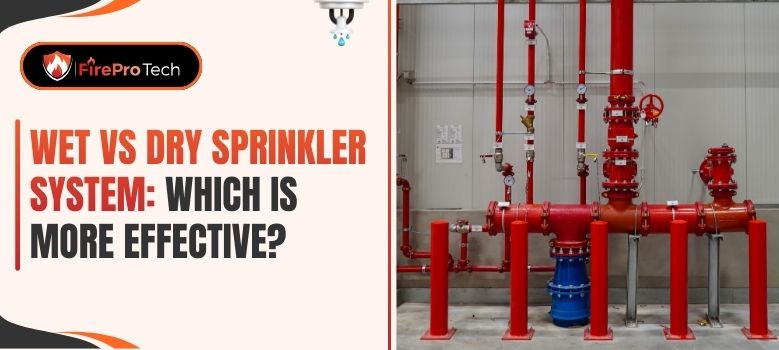
Choosing the right fire sprinkler system is an essential step in safeguarding properties from fire...
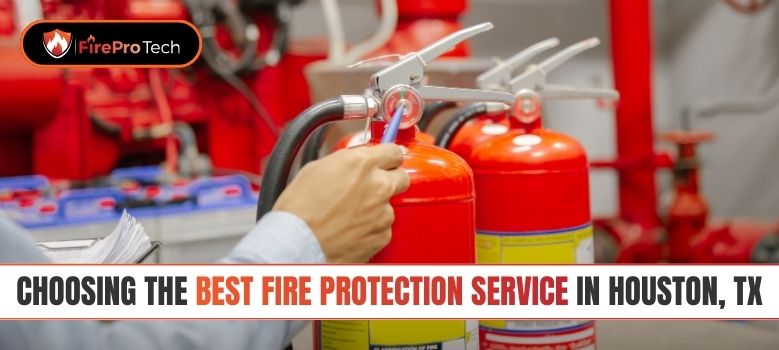
Choosing the right fire protection service in Houston TX is critical to protecting your home...
Businesses in Houston and nearby areas rely on dependable fire protection services to protect their...