

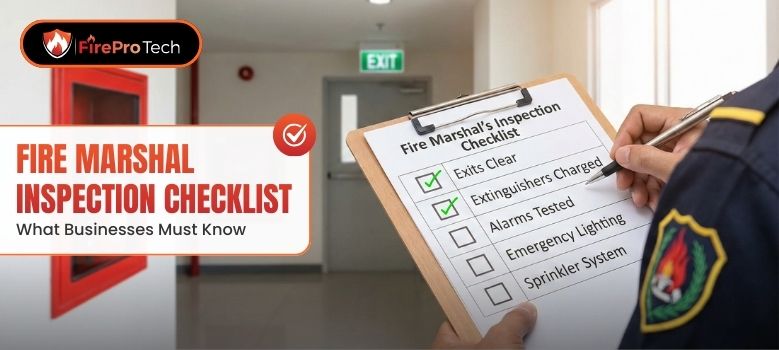
Fire marshal inspection checklist requirements are one of the most common sources of confusion and stress for business owners, property managers, and facility leaders. Many inspections fail not because of major system problems, but because small, preventable issues were overlooked or undocumented. When you understand what inspectors expect and how they evaluate a property, the entire process becomes far more manageable.
A fire marshal inspection is not designed to shut businesses down or create unnecessary obstacles. Its purpose is to confirm that a building can be occupied safely and that fire risks are being controlled in a practical, code-compliant way. The challenge is that expectations can feel unclear, especially when inspections vary by jurisdiction, building type, and occupancy use.
This is where a clear fire marshal inspection checklist becomes essential. Instead of reacting to an inspection notice at the last minute, businesses that prepare using a structured approach are far more likely to pass on the first visit. Planning ahead also reduces costly re-inspections, operational delays, and last-minute service calls.
FirePro Tech, LLC works with commercial and industrial properties across Houston to help them prepare for inspections long before a fire inspector arrives on site. By aligning systems, documentation, and staff readiness with inspection standards, businesses gain confidence and control over the process rather than scrambling under pressure.
In the sections that follow, we will break down what a fire marshal inspection checklist really covers, who enforces it, and why understanding the framework behind inspections is just as important as fixing visible issues.
A fire marshal inspection checklist is a structured method used by inspectors to verify that a building meets fire and life safety requirements. It acts as a roadmap for the inspection, guiding the fire inspector through critical safety areas such as egress, alarms, suppression systems, electrical conditions, and general housekeeping. While the checklist itself may not always be handed to the business, inspectors consistently follow the same evaluation logic.
The checklist exists to ensure consistency. Whether an inspection is triggered by a new occupancy, an annual review, or a complaint, the fire marshal inspection checklist helps inspectors focus on risk rather than preference. Businesses that understand this framework can prepare more effectively because they know the order and priority of what will be reviewed.
From a compliance standpoint, the checklist also protects building occupants. It ensures that fire protection services are functioning as intended, that escape paths remain usable, and that systems designed to control or suppress fire are not impaired or neglected.
The fire inspector is the official responsible for enforcing fire codes within a specific jurisdiction. While the term “fire marshal” is often used broadly, inspections are typically conducted by trained inspectors working under the authority of the local fire marshal’s office. These officials act as the Authority Having Jurisdiction, meaning their interpretation of code requirements carries legal weight.
During an inspection, the fire inspector is not only looking for visible hazards but also verifying that maintenance and testing have been performed as required. This includes reviewing records tied to fire alarm systems, suppression equipment, and prior inspection reports. A complete fire marshal inspection checklist accounts for both what can be seen and what must be proven through documentation.
FirePro Tech, LLC regularly assists businesses in aligning their systems and records with inspector expectations, helping eliminate confusion during the inspection itself. When documentation matches field conditions, inspections move faster and with fewer findings.
One of the most overlooked benefits of a fire marshal inspection checklist is predictability. Businesses that rely on memory or informal walk-throughs often miss recurring problem areas. Checklists remove guesswork by forcing a consistent review of the same critical elements every time.
A well-used fire marshal inspection checklist also helps identify issues early, before they rise to the level of a violation. Exit obstructions, expired extinguisher tags, blocked panels, or incomplete alarm testing are all common reasons inspections fail. These are not complex repairs, but they are easy to overlook without a structured approach.
From an operational standpoint, preparation reduces downtime. Failed inspections can delay openings, halt renovations, or trigger follow-up visits that consume time and resources. Businesses that partner with a qualified fire protection service are better positioned to address deficiencies proactively rather than reactively.
Compliance with a fire marshal inspection checklist is ultimately the responsibility of the building owner or operator, not the inspector. While inspectors enforce the code, it is up to businesses to maintain systems, train staff, and retain proper records. This shared responsibility model is why preparation matters so much.
Fire protection services play a critical role in this process by ensuring systems are installed, maintained, and documented correctly. FirePro Tech, LLC supports this effort by helping businesses understand how inspection expectations translate into daily operational practices, not just last-minute fixes.
When businesses treat the fire marshal inspection checklist as an ongoing standard rather than a one-time hurdle, inspections become routine confirmations instead of stressful events. This mindset shift is often the key difference between repeated failures and consistent first-pass approvals.
A fire marshal is not always a routine annual event. In many cases, it is triggered by a specific change or action related to the building or its use. New businesses opening their doors, tenant build-outs, renovations, changes in occupancy type, or increases in occupant load frequently require an inspection before approval is granted. Complaints, fire incidents, or previous violations can also prompt an unscheduled visit.
Each of these scenarios ties back to the same evaluation process. Inspectors rely on a fire marshal inspection checklist to confirm that the building’s current condition aligns with life safety expectations. When owners understand that these triggers are predictable, they can prepare systems and documentation in advance rather than waiting for official notice.
FirePro Tech, LLC often works with businesses during these transition periods, helping ensure that fire protection services are aligned with inspection requirements before an inspector is even requested.
Many business owners ask how to get a fire marshal inspection without delays or confusion. The process usually starts with contacting the local fire marshal’s office or permitting authority. Requests are often tied to permits, certificates of occupancy, or project sign-offs, which means timing matters.
When scheduling, it is important to confirm the scope of the inspection. Some visits focus only on specific systems, while others involve a full walkthrough using a fire marshal inspection checklist. Knowing what type of inspection is being conducted helps avoid surprises on the day of the visit.
Clear communication also matters. Providing accurate building information, occupancy details, and contact points reduces back-and-forth and keeps inspections moving forward. Businesses that work with a fire protection service provider are often better prepared to supply this information quickly and correctly.
Before the inspection, most fire inspectors expect systems to be operational and accessible. This includes alarms, suppression systems, and emergency lighting. Documentation should be current and easy to present. Internally, staff should know who will escort the inspector and answer basic questions.
During the inspection, the fire inspector typically follows a consistent path guided by the fire marshal inspection checklist. They will observe conditions, ask clarifying questions, and review records as needed. Inspections are usually straightforward when preparation has been done properly.
After the inspection, results may be provided immediately or issued in writing. If deficiencies are noted, a timeline for correction is usually assigned. FirePro Tech, LLC supports businesses during this phase by addressing findings efficiently and helping prepare for re-inspection when required.
Read Also: Fire Marshal Inspection Checklist: What Businesses Must Know
One of the most common reasons businesses struggle during inspections is missing or incomplete paperwork. A fire marshal inspection checklist does not rely solely on what the inspector can see. It also requires proof that systems have been inspected, tested, and maintained according to code.
Inspection tags, test reports, service invoices, and system certifications should be current and organized. Fire alarm testing records, sprinkler inspection reports, and extinguisher service documentation are frequently reviewed. When these records are unavailable or outdated, even well-maintained systems can result in violations.
FirePro Tech, LLC helps clients centralize and maintain this documentation so it is readily available when a fire inspector requests it.
Fire alarm systems are a critical focus area during inspections. Inspectors often review panel status, device condition, monitoring information, and recent test results. Coordinating with a qualified fire alarm company ahead of time ensures that records are complete and that any impairments have been resolved.
This coordination should happen well before the inspection date. Waiting until the last minute increases the risk of discovering issues that cannot be corrected quickly. A proactive approach aligns alarm readiness with the expectations outlined in the fire marshal inspection checklist.
Fire protection services that include alarms, suppression, and inspections under one provider can simplify this process. It reduces gaps between service records and system conditions that inspectors are trained to notice.
Even with perfect systems and documentation, unprepared staff can create problems during an inspection. Inspectors may ask basic questions about alarm response, evacuation procedures, or system supervision. If employees are unsure who to contact or how systems operate, it raises concerns.
Assigning a knowledgeable point of contact for the inspection is essential. This person should understand the building’s fire protection layout and know where records are kept. Familiarity with the fire marshal inspection checklist helps them anticipate questions rather than reacting defensively.
FirePro Tech, LLC encourages businesses to treat staff readiness as part of overall fire protection services. When people, systems, and paperwork are aligned, inspections tend to move smoothly and predictably.
Pre-inspection preparation is not just about passing a single visit. It establishes a repeatable process that reduces risk over time. Businesses that maintain records, train staff, and schedule regular service are less likely to face emergency repairs or compliance setbacks.
Using a fire marshal inspection checklist as an internal reference helps businesses stay inspection-ready year-round. This approach transforms inspections from stressful events into routine confirmations of safe operations, supported by reliable fire protection services and experienced partners like FirePro Tech, LLC.
One of the first areas a fire inspector evaluates during a site visit is how people get out of the building. The fire marshal inspection checklist places heavy emphasis on means of egress because clear exits save lives. Inspectors look for unobstructed pathways, properly functioning doors, and exit routes that match the approved occupancy and layout.
Exit doors must open as required, without special knowledge or force. Storage, furniture, or equipment placed in corridors is a common violation because it reduces exit width. Even temporary obstructions can result in findings if they are present during the inspection.
Exit signage and emergency lighting are reviewed alongside physical pathways. Inspectors verify that signs are illuminated, visible, and powered correctly. Emergency lights must activate during power loss and provide adequate coverage. FirePro Tech, LLC frequently identifies lighting issues during pre-inspections, helping businesses correct them before they appear on a fire marshal inspection checklist report.
Fire alarm systems receive close attention during inspections because they are the primary warning mechanism for occupants. The fire inspector will typically review the control panel condition, check for trouble signals, and confirm that devices are accessible and undamaged.
Audibility and visibility are also part of the evaluation. Horns, strobes, and notification appliances must be appropriate for the space and occupancy. If devices are blocked or missing, they may be cited under the fire marshal inspection checklist even if the system technically functions.
Documentation ties directly into this review. Inspectors often ask for recent test records, monitoring confirmation, and service history from a fire alarm company. FirePro Tech, LLC helps ensure that system performance and paperwork align, reducing friction during this portion of the walkthrough.
Fire suppression systems are another core component of the fire marshal inspection checklist. For sprinklered buildings, inspectors visually assess heads, piping, valves, and gauges. They look for damage, corrosion, improper storage clearance, and signs that valves are not supervised or accessible.
Special suppression systems, such as kitchen systems or clean agent setups, are evaluated based on the specific hazards they protect. Inspectors confirm that systems are serviced, tagged, and free from obvious impairments. Missing caps, blocked nozzles, or expired service intervals are common issues.
Fire protection services that include regular inspections and maintenance significantly reduce the risk of suppression-related violations. FirePro Tech, LLC works with businesses to ensure these systems are inspection-ready year-round, not just on inspection day.
Portable fire extinguishers are reviewed for placement, accessibility, and service status. Inspectors verify that extinguishers are mounted correctly, visible, and tagged with current inspection dates. An expired tag or blocked extinguisher can result in a citation under the fire marshal inspection checklist, even if everything else is compliant.
Electrical conditions are often evaluated at the same time. Overloaded outlets, improper extension cord use, and blocked electrical panels are frequent findings. Inspectors view these issues as ignition risks that can undermine otherwise strong fire protection measures.
Housekeeping, storage, and separation of combustibles are also reviewed. Proper organization supports both fire prevention and emergency response, making it a recurring theme throughout the fire marshal inspection checklist.
Businesses often ask how do you pass a fire marshal inspection without last-minute stress. The most effective approach is to perform an internal walkthrough using the same logic inspectors follow. A fire marshal inspection checklist provides a clear sequence, starting with egress, moving through systems, and ending with documentation.
Walking the site with fresh eyes helps identify issues that blend into daily operations. Blocked exits, damaged devices, or missing tags are easier to correct early. FirePro Tech, LLC often supports clients by conducting mock inspections that mirror the official process.
This checklist-first strategy turns preparation into a routine task rather than a reaction to an inspection notice.
Correcting deficiencies is only half the solution. Inspectors also want proof that issues were addressed properly. Service reports, updated tags, and completion records all support compliance during a fire marshal inspection checklist review.
Quick fixes without documentation can still result in findings. For example, replacing an extinguisher without updating records leaves a gap. The same applies to alarm or suppression work performed without proper paperwork.
Fire protection services that emphasize documentation help close this loop. FirePro Tech, LLC ensures that corrections are not only completed but also recorded in a way inspectors recognize and accept.
Employee interaction with the fire inspector can influence how smoothly an inspection goes. Staff should know basic procedures, such as what to do when an alarm sounds and who to contact in an emergency. Uncertainty can raise red flags, even if systems are compliant.
Assigning a single point of contact for the inspection helps maintain consistency. This person should understand the building layout, system locations, and where records are stored. Familiarity with the fire marshal inspection checklist allows them to anticipate questions rather than scramble for answers.
Training and awareness are often overlooked, but they are a quiet factor in successful inspections.
On the day of the inspection, a final walkthrough is essential. This last check focuses on conditions that change daily, such as storage, door positions, and access to equipment. Even well-prepared buildings can fail portions of a fire marshal inspection checklist due to temporary issues.
This final sweep reinforces the value of preparation as an ongoing process. Businesses that maintain inspection readiness as part of their normal operations rarely face surprises. With support from FirePro Tech, LLC and consistent fire protection services, passing inspections becomes the expected outcome rather than a relief.
Fire inspections in Texas follow statewide codes, but enforcement is handled at the local level. This means the fire marshal inspection checklist used during an inspection can reflect both state requirements and local priorities. In Houston and surrounding areas, businesses are often inspected under Harris County authority, which brings its own enforcement patterns and focus areas.
A fire inspector working in Harris County may emphasize certain life safety elements based on local risk history, occupancy density, or regional code interpretations. While the foundation of the fire marshal inspection checklist remains consistent, local enforcement trends can influence how closely specific items are reviewed.
FirePro Tech, LLC works with businesses throughout Houston and understands how these jurisdictional differences affect inspection outcomes. That local familiarity helps clients prepare for what inspectors are most likely to examine.
The Harris County fire marshal inspection checklist typically places strong emphasis on egress conditions, alarm system readiness, and documentation accuracy. Inspectors often focus on how buildings are actually being used versus how they were originally permitted. Changes in storage, furniture layout, or occupancy load are common sources of findings.
Another area of attention is system maintenance history. Inspectors frequently request recent inspection and testing records, especially for alarms and suppression systems. Missing or inconsistent documentation can result in corrections even when systems appear functional.
Businesses that rely on experienced fire protection services tend to perform better during these inspections because their systems and records are aligned. FirePro Tech, LLC supports this alignment by keeping maintenance schedules and documentation current with Harris County expectations.
At the state level, the Texas fire marshal inspection checklist reinforces core life safety principles that apply across jurisdictions. These include reliable detection, effective suppression, safe evacuation, and controlled ignition sources. While local inspectors may interpret details differently, these fundamentals remain constant.
Statewide requirements also influence how inspectors view repeat violations or systemic issues. A pattern of non-compliance can trigger closer scrutiny, even during routine inspections. Understanding how state-level expectations overlay local enforcement helps businesses anticipate long-term compliance needs.
For companies operating in multiple Texas locations, consistency becomes critical. Using a standardized fire marshal inspection checklist internally helps maintain uniform safety standards regardless of local differences.
Businesses with multiple facilities or mixed-use occupancies often face inspections from different authorities. Managing these overlapping requirements can be challenging without a clear strategy. A single internal fire marshal inspection checklist adapted for local nuances helps maintain control.
FirePro Tech, LLC assists multi-site operators by aligning fire protection services across jurisdictions while accounting for local enforcement priorities. This approach reduces confusion and ensures that each facility is prepared for its specific inspection authority.
Call Now To Review Fire Inspection Readiness Checklist
Not every inspection issue can or should be handled internally. Complex systems, recurring violations, or major operational changes often require professional involvement. Fire protection services bring technical expertise and regulatory awareness that most businesses do not maintain in-house.
A fire marshal inspection checklist highlights these pressure points by revealing where systems, documentation, or procedures consistently fall short. When deficiencies repeat, it is usually a sign that professional intervention is needed.
FirePro Tech, LLC helps businesses identify these moments early, before small gaps escalate into major compliance problems.
Fire suppression systems are highly regulated and technically complex. Fire suppression companies play a critical role in ensuring these systems operate as designed and meet inspection standards. Inspectors expect suppression systems to be maintained, accessible, and properly documented.
When suppression work is delayed or handled inconsistently, it often shows up during a fire marshal inspection checklist review. Missing service tags, impaired components, or improper coverage can quickly lead to violations.
Coordinating suppression service with inspection readiness helps ensure that systems pass both functional and documentation reviews. FirePro Tech, LLC integrates suppression maintenance into a broader compliance strategy rather than treating it as an isolated task.
Fire alarm systems are among the most scrutinized elements during inspections. A qualified fire alarm company ensures that systems are tested regularly, monitored correctly, and free from unresolved trouble signals. Inspectors often evaluate alarm readiness early in the walkthrough.
A fire marshal inspection checklist frequently references alarm documentation, including testing intervals and monitoring verification. Gaps between system condition and paperwork raise immediate concerns.
FirePro Tech, LLC coordinates alarm services as part of a unified fire protection services approach, reducing disconnects that inspectors are trained to notice.
Long-term inspection success depends on consistency. Businesses that schedule regular inspections, maintenance, and internal reviews experience fewer surprises. A repeatable process anchored to a fire marshal inspection checklist transforms compliance into a routine operational function.
This rhythm includes scheduled service visits, documentation reviews, staff training, and periodic mock inspections. When these elements work together, inspections become confirmations rather than corrections.
By partnering with FirePro Tech, LLC, businesses gain access to fire protection services designed to support this rhythm. The result is reduced risk, smoother inspections, and confidence that facilities are prepared whenever a fire inspector arrives.
A fire marshal inspection does not have to feel unpredictable or overwhelming. When businesses understand how inspections are structured and what inspectors are trained to evaluate, preparation becomes a manageable process instead of a last-minute scramble. The fire marshal inspection checklist serves as the foundation for that preparation, guiding inspectors through safety priorities that protect people, property, and operations.
What matters most is consistency. Buildings that maintain systems, keep documentation current, and review conditions regularly tend to perform well during inspections. Issues that cause failures are often small, visible, and preventable when addressed early. Using the fire marshal inspection checklist as an internal reference helps businesses spot those issues before they become violations.
FirePro Tech, LLC works alongside businesses in Houston to support this proactive approach. By aligning fire protection services, documentation, and inspection readiness into one coordinated strategy, businesses gain confidence that they are meeting expectations not just on inspection day, but every day.
When inspection readiness becomes part of routine operations, passing inspections stops being the goal. Instead, safe, compliant facilities become the standard outcome.

A fire inspector follows a structured evaluation process that mirrors a fire marshal inspection checklist. The inspection usually starts with life safety elements such as exits, corridors, and doors to confirm occupants can evacuate safely. Inspectors then review fire alarm systems, suppression systems, emergency lighting, and extinguishers to ensure they are operational and properly maintained. Documentation plays a major role, as inspectors often request inspection reports, testing records, and service history to confirm compliance. Even minor issues like blocked panels or expired tags can result in findings. FirePro Tech, LLC helps businesses prepare by aligning physical conditions and paperwork so inspections move smoothly and without unnecessary delays.
Businesses that pass on the first visit typically prepare using a fire marshal inspection checklist well before the inspection is scheduled. This includes walking the building, correcting visible issues, and verifying that documentation is complete and current. Staff awareness also matters, as inspectors may ask basic questions about alarms or evacuation procedures. Passing is less about perfection and more about consistency and proof. FirePro Tech, LLC supports first-pass success by identifying common failure points early and ensuring fire protection services are inspection-ready before an inspector arrives.
Learning how to get a fire marshal inspection scheduled usually involves contacting the local fire marshal or permitting authority tied to your project or occupancy. Inspections are often required for new businesses, remodels, or changes in use, and they may be linked to permit approvals or certificates of occupancy. Providing accurate building information and understanding the scope of the inspection helps avoid delays. Preparing in advance with a fire marshal inspection checklist ensures that once the inspection is scheduled, the business is ready to proceed without setbacks. FirePro Tech, LLC often assists clients during this stage to reduce scheduling friction.
The frequency of a fire marshal inspection depends on occupancy type, local enforcement practices, and prior inspection history. Some businesses are inspected annually, while others are inspected based on permits, complaints, or operational changes. Regardless of timing, inspectors rely on the same fire marshal inspection checklist each time. Businesses that treat compliance as ongoing rather than event-based are better prepared for inspections that occur unexpectedly. FirePro Tech, LLC helps establish maintenance and inspection rhythms that support compliance year-round.
Failing a fire marshal inspection does not usually result in immediate closure, but it does trigger corrective action. Inspectors document deficiencies based on the fire marshal inspection checklist and provide a timeline for corrections. Serious life safety issues may require faster resolution. After corrections are made, a re-inspection is typically required. Delays often happen when documentation or repairs are incomplete. FirePro Tech, LLC helps businesses address findings efficiently and prepare for re-inspection with confidence.
A Harris County fire marshal inspection checklist focuses heavily on egress, alarm readiness, suppression systems, and documentation accuracy. Inspectors often evaluate how the building is currently used versus how it was approved, making layout changes and storage practices a common concern. Records for alarms, sprinklers, and extinguishers are frequently reviewed. Businesses that maintain consistent fire protection services tend to perform better during these inspections. FirePro Tech, LLC understands local enforcement priorities and helps businesses align with Harris County expectations.
The Texas fire marshal checklist reinforces statewide fire and life safety principles that apply across jurisdictions. While local inspectors enforce the code, state-level requirements shape expectations around detection, suppression, and evacuation. Differences typically appear in enforcement emphasis rather than core requirements. Businesses operating in multiple locations benefit from using a consistent internal fire marshal inspection checklist that accounts for statewide standards. FirePro Tech, LLC helps clients maintain that consistency while adapting to local enforcement.
Fire protection services should be involved whenever systems are due for inspection, repairs are needed, or documentation is incomplete. Waiting until an inspection notice arrives often limits options and increases risk. A fire marshal inspection checklist helps identify when professional support is needed, especially for alarms, suppression systems, and recurring issues. FirePro Tech, LLC provides integrated fire protection services that support inspection readiness long before an inspector arrives.
Fire safety is a major concern for business owners in Houston and surrounding communities, where...
In Houston and nearby areas, a thorough fire code inspection is more than just a...
Ensuring fire safety in Houston and surrounding areas begins with understanding the essential fire extinguisher...