

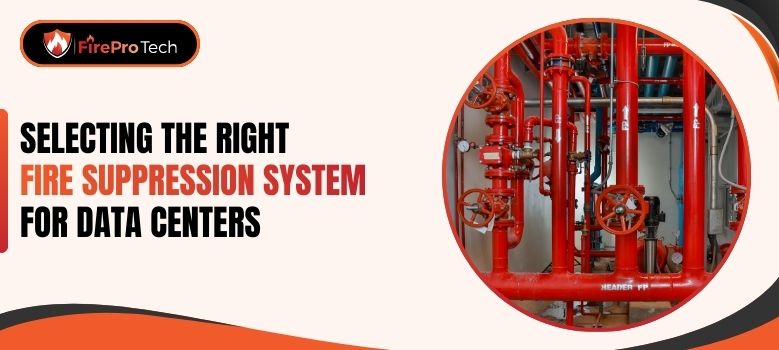
Fire suppression system for data centers planning starts long before equipment is specified, because these environments are unlike any other commercial space. A single fire event in a data center can interrupt operations, damage critical infrastructure, and cause financial losses that far exceed the cost of the building itself. For organizations that depend on continuous uptime, the goal is not just fire control, but fast, precise response that protects technology and keeps operations running.
Modern data centers house dense server racks, complex electrical systems, battery backups, and constant airflow. These factors increase fire risk while simultaneously limiting the types of suppression methods that can be safely used. Choosing a fire suppression system for data centers requires understanding how fire behaves in these environments and how suppression systems interact with sensitive electronics.
Business owners, facility managers, and IT leaders often assume that any compliant fire protection approach is enough. In reality, data center fire protection demands a more strategic mindset. The wrong system can cause as much damage as the fire itself. FirePro Tech, LLC works with organizations across Houston to design Fire Suppression Services that align with operational risk, compliance requirements, and long-term reliability, rather than relying on one-size-fits-all solutions.
This article focuses on helping decision-makers understand what makes data center fire suppression unique and how to begin selecting the right solution with confidence.
A fire suppression system for data centers is designed to protect more than physical assets. It protects continuity, data integrity, and business reputation. Unlike warehouses or office spaces, even a small fire incident in a server environment can result in prolonged downtime, lost data, and regulatory consequences.
Data center fire protection focuses on early intervention and rapid suppression. The objective is to stop fire growth at its earliest stage, often before visible flames develop. This approach minimizes heat, smoke, and corrosive byproducts that can damage servers and networking equipment long after a fire is extinguished.
Fire Code compliance is the baseline, not the finish line. Effective data center fire suppression systems are engineered to exceed minimum requirements by addressing the operational realities of high-density computing environments. FirePro Tech, LLC emphasizes this distinction when delivering Fire Suppression Services, ensuring systems are aligned with real-world risk rather than checklist compliance.
Understanding where fires start is critical when selecting a fire suppression system for data centers. Electrical faults are the most frequent ignition source, often originating from overloaded circuits, aging wiring, or failed power supplies. These risks are amplified by the continuous operation of equipment and limited shutdown opportunities.
Battery systems, including UPS rooms and energy storage components, present additional hazards. Thermal runaway events can escalate rapidly, producing intense heat and toxic gases. Server room fire suppression strategies must account for these scenarios without introducing suppression agents that could worsen damage.
Airflow also plays a role. Raised floors, cable voids, and cooling pathways can allow fire and smoke to spread quickly if not properly protected. Data center fire suppression planning must consider how fire moves through these spaces, not just where it starts.
Every organization has a different tolerance for risk, and a fire suppression system for data centers should reflect that reality. A facility supporting financial transactions or healthcare systems will require a higher level of protection than a small internal server room, even if both meet basic code requirements.
Business continuity planning ties directly into data center fire suppression decisions. The speed of detection, the type of suppression agent, and the potential for collateral damage all influence recovery time. Server room fire protection is most effective when it aligns with broader disaster recovery and operational resilience strategies.
FirePro Tech, LLC approaches data center fire protection by first understanding how downtime impacts the business. From there, Fire Suppression Services are engineered to balance safety, performance, and long-term reliability. This risk-based approach ensures the fire suppression system for data centers supports both immediate protection and sustained operations over time.
Selecting a fire suppression system for data centers starts with understanding where risk actually lives inside the facility. Not all areas present the same fire load or ignition probability. Treating the entire space as uniform often leads to overprotection in some zones and dangerous gaps in others.
Data center fire protection planning typically identifies zones with concentrated electrical activity, heat generation, and combustible materials. These zones influence how suppression is applied, how quickly it must act, and how localized the response should be. A well-mapped risk profile allows data center fire suppression to be precise instead of disruptive.
FirePro Tech, LLC begins Fire Suppression Services by walking the space with both facility and IT teams. This ensures operational realities are reflected in the design, not just drawings or assumptions.
Electrical rooms and UPS spaces represent some of the highest fire risks in any data center. These areas often contain high-energy equipment operating continuously under load. Battery systems add another layer of complexity due to heat buildup and potential chemical reactions.
A fire suppression system for data centers must address these risks without relying solely on water-based solutions that could cause secondary damage. In many cases, these rooms require dedicated server room fire suppression approaches that operate independently from the main data hall.
Designing protection for these zones is a critical step in ensuring data center fire suppression systems function as intended during an actual event.
Fire does not respect room boundaries. Cable trays, raised floors, and ceiling voids can allow heat and smoke to travel rapidly. These hidden spaces often go unprotected or under-protected, even though they play a major role in fire spread.
Server room fire protection strategies must account for how airflow feeds combustion and distributes smoke. A fire suppression system for data centers that ignores these pathways may suppress the visible fire while allowing damage to continue elsewhere.
Proper detection and suppression coverage in these areas improves overall data center fire protection and reduces the likelihood of extended downtime.
Not every fire suppression system for data centers is designed to achieve the same outcome. Some systems aim to control a fire until responders arrive, while others are engineered to suppress or fully extinguish a fire within seconds.
Data center fire suppression systems are typically expected to act fast and decisively. This expectation shapes system selection, agent choice, and discharge design. For mission-critical environments, suppression or extinguishment is often the goal, not containment.
FirePro Tech, LLC helps clients define these performance goals early. This clarity ensures Fire Suppression Services are aligned with operational expectations and not compromised by mismatched system capabilities.
Clean agents are among the most common choices for a fire suppression system for data centers due to their ability to suppress fire without leaving residue. These agents interrupt the fire chemistry or remove heat while remaining safe for sensitive equipment.
Data center fire suppression using clean agents supports rapid recovery because servers and networking hardware can often remain in place after discharge. This makes clean agents especially effective for server room fire suppression in high-density environments.
However, clean agents require tight room integrity and precise engineering. Without proper enclosure, their effectiveness drops significantly, which can compromise data center fire protection outcomes.
The primary advantage of clean-agent-based data center fire suppression systems is speed. Fires can be suppressed in seconds, often before visible flame growth occurs. This reduces thermal damage and limits smoke contamination.
A fire suppression system for data centers that deploys quickly supports business continuity by shortening recovery timelines. This performance advantage is one reason FirePro Tech, LLC frequently specifies clean agents as part of comprehensive Fire Suppression Services.
Clean agent systems rely on concentration levels that must be maintained long enough to suppress fire. Poorly sealed rooms, cable penetrations, or airflow leaks can reduce effectiveness.
Server room fire protection planning must include enclosure integrity testing and safety controls. These elements are not optional extras but essential components of reliable data center fire suppression.
Inert gas systems suppress fire by reducing oxygen levels rather than interrupting chemical reactions. These systems are often used in larger spaces where clean agent quantities become impractical.
A fire suppression system for data centers using inert gases can provide uniform coverage across expansive areas. They are effective for certain data center fire protection strategies but require careful consideration of space, storage, and discharge dynamics.
Inert gas systems typically require more cylinders and larger storage areas. This footprint can impact facility layout and expansion plans.
Server room fire suppression system designs using inert gases must also address personnel safety. Controlled discharge and warning systems are essential to ensure safe evacuation before oxygen levels are reduced.
While water is often viewed as incompatible with electronics, it still plays a role in many data center fire suppression systems. The key is controlled application rather than traditional wet-pipe sprinklers.
A fire suppression system for data centers may include water-based components as secondary or backup protection. These systems provide resilience when primary suppression methods are overwhelmed.
Pre-action systems require multiple triggers before releasing water, reducing the risk of accidental discharge. They are commonly used as a supplemental layer of data center fire protection.
This approach supports server room fire protection by adding redundancy without introducing unnecessary risk to equipment.
Water mist systems use fine droplets to absorb heat while minimizing water volume. In certain scenarios, they can complement other data center fire suppression strategies.
FirePro Tech, LLC evaluates these options carefully as part of Fire Suppression Services, ensuring they are applied only where they enhance protection rather than complicate recovery.
There is no universal best fire suppression system for data centers. The right choice depends on risk profile, room construction, operational priorities, and long-term maintenance considerations.
Effective data center fire suppression systems are selected through analysis, not preference. When systems are matched to real-world conditions, they perform reliably under pressure.
FirePro Tech, LLC helps clients navigate these decisions by aligning Fire Suppression Services with practical performance, regulatory requirements, and the realities of running mission-critical facilities.
A common mistake in fire protection planning is treating server rooms as scaled-down data centers. While they share similarities, the risk profile and operational constraints are often very different. A fire suppression system for data centers is typically designed for large, purpose-built environments, whereas server rooms are frequently retrofitted into existing buildings with limited flexibility.
Server room fire protection must account for tighter spaces, lower ceiling heights, and less controlled airflow. These factors directly influence how fire develops and how suppression agents behave during discharge. Applying data center fire suppression logic without adjustment can result in uneven coverage or delayed response.
FirePro Tech, LLC frequently sees server room fire suppression system designs that look good on paper but fail to account for real-world room conditions. Effective Fire Suppression Services begin by designing around the space that actually exists, not the one assumed during planning.
Server rooms often have fewer racks than full data centers, but the density can be higher. Concentrated heat output and tightly packed cabling increase fire intensity and speed of spread.
A fire suppression system for data centers must be carefully adapted when applied to server rooms so that discharge patterns and agent concentration match the actual fuel load. Without this adjustment, server room fire suppression may not achieve its intended performance.
Poor cable management and inconsistent airflow create hot spots that elevate fire risk. These conditions also affect how smoke and heat travel through the room.
Server room fire protection strategies must consider these hidden variables. Detection placement and suppression timing should reflect airflow patterns, not just rack layout. This level of detail is essential for reliable fire suppression for server rooms.
Choosing a fire suppression system for server room environments requires a different mindset than selecting a fire suppression system for data centers. Smaller rooms demand faster response and tighter control to avoid unnecessary disruption.
Clean agents are commonly used, but only when room integrity supports effective concentration levels. In some cases, hybrid approaches or localized suppression may provide better protection without over-engineering the space.
FirePro Tech, LLC evaluates server room fire suppression system options based on how the room is used today and how it may change tomorrow. This approach ensures Fire Suppression Services remain effective over the life of the facility.
Server rooms often have more penetrations, doors, and ventilation openings than data halls. These leakage points can undermine suppression effectiveness.
A fire suppression system for data centers adapted for server room use must include enclosure evaluation and mitigation strategies. Without them, even the best system may fail to suppress a fire fully.
Not every server room requires integration into a full data center fire suppression system. In shared buildings or multi-tenant environments, localized protection is often more practical.
Fire suppression for server rooms can be designed as standalone systems that still align with broader data center fire protection objectives. This flexibility allows organizations to protect critical assets without unnecessary complexity.
FirePro Tech, LLC helps clients determine when localized server room fire protection is sufficient and when broader integration is necessary for risk management.
A fire suppression system for data centers is only as effective as its detection capabilities. Early detection reduces the amount of heat and smoke generated, making suppression faster and less disruptive.
Data center fire suppression systems often rely on advanced detection technologies that identify combustion particles before flames appear. This early warning is critical in environments where seconds matter.
FirePro Tech, LLC incorporates detection strategy into Fire Suppression Services from the start, recognizing that suppression without early detection is reactive rather than preventive.
Air sampling systems continuously analyze air for microscopic particles. This technology is especially effective in high-airflow environments common to data centers.
When integrated properly, air sampling enhances the performance of a fire suppression system for data centers by enabling activation at the incipient stage of fire development. This capability significantly reduces potential damage.
Spot detectors still play an important role, particularly in server room fire suppression system designs. They provide targeted coverage where airflow patterns are predictable.
Combining spot detection with other technologies strengthens overall server room fire protection and reduces the likelihood of undetected events.
False discharges are disruptive and costly, especially in mission-critical environments. A fire suppression system for data centers must balance speed with verification to avoid unnecessary activation.
Data center fire suppression systems use releasing logic that requires multiple confirming signals before discharge. This approach improves reliability without sacrificing response time.
FirePro Tech, LLC designs Fire Suppression Services with layered verification to protect both people and equipment.
Cross-zoning requires confirmation from multiple detectors before suppression is released. This method significantly reduces false fire alarms while maintaining rapid response.
Server room fire protection benefits greatly from this approach, particularly in environments where dust or airflow could otherwise trigger false signals.
Detection and suppression do not operate in isolation. A fire suppression system for data centers must coordinate with HVAC shutdowns, power controls, and notification systems.
Proper coordination ensures suppression agents remain effective and occupants have time to respond safely. This integration is a cornerstone of modern data center fire protection.
FirePro Tech, LLC ensures Fire Suppression Services include this level of coordination, delivering systems that respond intelligently under real emergency conditions rather than reacting in isolation.
Even the most advanced fire suppression system for data centers can fail if installation details are overlooked. One of the most critical factors is room integrity. Suppression agents are engineered to reach and maintain specific concentrations for a defined period. If a room leaks, that concentration drops before the fire is fully controlled.
Data center fire protection requires careful sealing of wall penetrations, cable pathways, raised floor openings, and ceiling voids. These leakage points are common in both data halls and server rooms, especially in retrofitted facilities. Without mitigation, data center fire suppression systems may discharge correctly but still underperform.
FirePro Tech, LLC includes room integrity evaluation as part of its Fire Suppression Services, helping ensure the fire suppression system for data centers performs as designed during real events.
The physical layout of nozzles directly affects how suppression agents move through a space. Poor placement can create shadowed areas where heat and flames persist despite system activation.
A fire suppression system for data centers must be installed with an understanding of rack layout, airflow patterns, and obstructions. Server room fire suppression system designs often fail when nozzles are positioned for convenience rather than performance.
Data center fire suppression effectiveness improves when discharge patterns are mapped to actual equipment placement. FirePro Tech, LLC coordinates closely with facility and IT teams during installation to align system design with operational reality.
While protecting equipment is critical, life safety cannot be secondary. A fire suppression system for data centers must incorporate clear warning signals, abort controls, and safe egress paths.
Server room fire protection planning often involves occupied spaces, increasing the importance of audible alerts and visual indicators. Personnel must have adequate time to exit before suppression agents are released.
FirePro Tech, LLC integrates these safeguards into Fire Suppression Services to ensure data center fire protection supports both equipment preservation and occupant safety.
Installation is not complete until acceptance testing confirms performance. A fire suppression system for data centers must be tested under realistic conditions to verify detection, releasing logic, and coordination with other building systems.
Data center clean agent fire suppression systems that skip thorough testing often reveal problems only during emergencies. Acceptance testing reduces this risk and establishes a performance baseline for future inspections.
FirePro Tech, LLC emphasizes documentation and testing as part of Fire Suppression Services, supporting reliable data center fire protection over the life of the system.
The initial price of a fire suppression system for data centers is only part of the financial picture. Long-term costs include inspections, maintenance, agent refills, and system upgrades as technology evolves.
Data center fire suppression systems with lower upfront costs may require more frequent service or present higher recovery expenses after discharge. Evaluating total cost of ownership helps organizations make smarter decisions.
FirePro Tech, LLC helps clients assess both short-term and long-term financial impacts when designing Fire Suppression Services for critical facilities.
A fire suppression system for data centers must be maintained to perform reliably when needed. Inspections verify detection sensitivity, cylinder pressure, releasing controls, and room integrity.
Server room fire suppression systems are especially vulnerable to performance drift due to frequent changes in cabling and equipment layout. Regular maintenance ensures data center fire protection adapts to these changes.
FirePro Tech, LLC provides ongoing Fire Suppression Services that support compliance, reliability, and operational confidence.
Not all contractors understand the complexities of data center fire suppression. Selecting the wrong provider can result in systems that meet code but fail operationally.
A qualified partner evaluates risk, designs around real conditions, and supports the system long after installation. Fire protection services should be proactive, not reactive.
FirePro Tech, LLC brings specialized experience in fire suppression system for data centers projects across Houston. By aligning Fire Suppression Services with business continuity goals, FirePro Tech, LLC helps organizations protect critical infrastructure with confidence and clarity.
Selecting the right fire suppression system for data centers is not a decision that should be rushed or simplified. These environments demand protection strategies that go beyond basic compliance and focus on speed, precision, and reliability. From understanding risk zones to choosing the right suppression technology, every step plays a role in protecting uptime and critical data.
A well-designed fire suppression system for data centers reflects how the space is actually used, how equipment is arranged, and how quickly an organization needs to recover after an incident. Server rooms, data halls, and support spaces all introduce different challenges that must be addressed as part of a unified data center fire protection strategy.
FirePro Tech, LLC approaches Fire Suppression Services with this long-term perspective in mind. By aligning system design, detection, installation, and maintenance with real operational risk, FirePro Tech, LLC helps organizations in Houston protect what matters most while maintaining confidence in their fire safety planning.
There is no single best fire suppression system for data centers, because the right solution depends on room size, equipment density, airflow, and business continuity goals. Clean agents are often preferred for their fast response and lack of residue, while inert gas or hybrid systems may be better for larger volumes. A proper evaluation looks at risk, performance expectations, and long-term maintenance. FirePro Tech, LLC helps organizations compare options as part of comprehensive Fire Suppression Services tailored to real-world conditions.
Clean agent systems used in a fire suppression system for data centers are designed to be safe for occupied spaces when installed correctly. These systems include warning alarms, time delays, and abort controls to allow personnel to exit before discharge. Server room fire protection designs must also follow strict concentration limits and safety standards. FirePro Tech, LLC ensures Fire Suppression Services prioritize both equipment protection and occupant safety.
In most cases, yes. Many data center fire protection strategies use clean agents as primary suppression and pre-action sprinklers as secondary protection. A fire suppression system for data centers often relies on layered defense to address different fire scenarios. Sprinklers provide backup protection if a fire grows beyond the capability of gaseous systems. FirePro Tech, LLC designs Fire Suppression Services that balance redundancy with minimal operational risk.
Server room fire suppression typically protects smaller, enclosed spaces with higher variability in layout and construction. A fire suppression system for data centers is usually engineered for larger, purpose-built environments with controlled airflow and room integrity. Server room fire protection often requires more customization to address leakage, occupancy, and retrofit challenges. FirePro Tech, LLC accounts for these differences when delivering Fire Suppression Services.
Choosing a fire suppression system for server room environments starts with evaluating room tightness, equipment density, and airflow. Clean agents are common, but only effective when the enclosure supports proper concentration levels. Detection speed and releasing logic are also critical. FirePro Tech, LLC evaluates these factors as part of Fire Suppression Services to ensure server room fire protection performs reliably.
Data center fire protection is governed by multiple codes and standards that address suppression, detection, and life safety. These requirements influence how a fire suppression system for data centers is designed and installed. Compliance alone is not enough, however. FirePro Tech, LLC goes beyond minimum standards when delivering Fire Suppression Services to address operational risk and performance expectations.
A fire suppression system for data centers must be inspected and tested regularly to ensure readiness. Detection devices, control panels, cylinders, and releasing mechanisms all require scheduled checks. Changes in equipment layout can also affect performance. FirePro Tech, LLC provides ongoing Fire Suppression Services that help maintain compliance and long-term reliability.
The cost of a fire suppression for data centers varies based on system type, room size, and complexity. Upfront installation is only part of the expense, with maintenance and testing contributing to total cost of ownership. Choosing the right system can reduce long-term risk and recovery costs. FirePro Tech, LLC helps organizations evaluate costs realistically through transparent Fire Suppression Services.
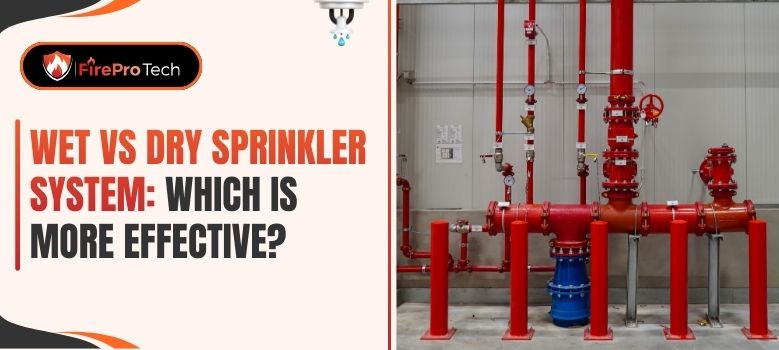
Choosing the right fire sprinkler system is an essential step in safeguarding properties from fire...
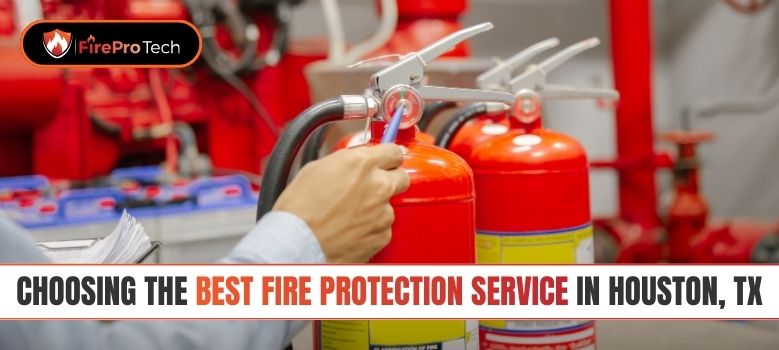
Choosing the right fire protection service in Houston TX is critical to protecting your home...
Businesses in Houston and nearby areas rely on dependable fire protection services to protect their...