

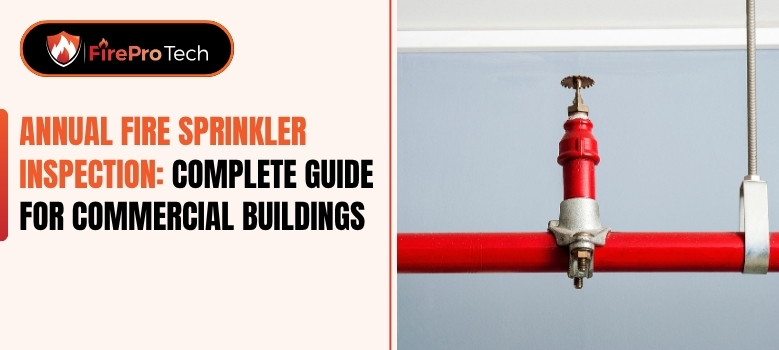
Annual fire sprinkler inspection is a recurring commercial building responsibility that can become difficult when records are incomplete, access is limited, or deficiencies are discovered at the last minute.
Property managers, facility teams, and business owners need more than a calendar reminder; they need a clear process for keeping the system ready and the inspection documentation organized.
This guide explains what an annual inspection typically covers, how it differs from maintenance and testing, what affects cost, how to prepare a building, and how to evaluate fire sprinkler system service in Houston. It also outlines practical questions to ask before scheduling service with FirePro Tech, LLC.
An annual sprinkler inspection is a structured review of a commercial fire sprinkler system. Its purpose is to identify visible conditions, access problems, impairment risks, and other issues that could affect system performance or compliance.
It is not simply a visual walk-through, and it is not a substitute for every other inspection or test required for the property. Track this detail through annual fire sprinkler inspection.
Requirements may vary according to the sprinkler system design, building use, local fire code adoption, applicable standards, insurance requirements, and the authority having jurisdiction. A responsible inspection plan therefore starts with the building’s actual system records rather than a generic checklist.
A qualified technician generally reviews whether important system components are present, accessible, identifiable, and in an acceptable condition. Depending on the system and scope, the review may include sprinkler heads and piping, control valves, gauges, alarm devices, water supply components, risers, and related equipment.
The technician may look for conditions such as blocked access, physical damage, corrosion, leakage, missing identification, closed or improperly positioned valves, damaged gauges, storage that interferes with sprinkler discharge, or changes to the building that may affect protection.
These findings do not all carry the same level of urgency, which is why clear documentation matters. Review this item as part of annual fire sprinkler inspection.
These terms are often used together, but they describe different activities. Fire sprinkler inspection in Houston is primarily the examination of system condition. Testing verifies that a component or function operates as intended. Maintenance involves corrective work, servicing, adjustment, replacement, or repair needed to keep fire sprinkler equipment in working order.
For example, observing a valve’s condition is different from operating or supervising that valve as part of a test. Finding a damaged gauge is different from replacing it. An annual fire sprinkler service plan may include several of these activities, but the exact scope should be defined before work begins.
A common planning mistake is assuming that completing one annual visit automatically satisfies every required activity. System records, prior reports, equipment type, and local requirements should be reviewed to determine what is due and what can be handled during the same visit.
Inspection documentation creates a working history for the property. It can help a facility team determine whether the same deficiency is recurring, whether repairs were completed, and whether a system has experienced changes or impairments. Make this check part of routine annual fire sprinkler inspection.
Keep prior reports, repair records, system drawings when available, acceptance documentation, and notices of system changes accessible. If a building has changed ownership or management, reconstructing this history early is usually easier than trying to locate records during an urgent compliance request.
The precise scope depends on the system and the service agreement, but fire sprinkler inspection companies typically conduct a well-planned annual inspection to examine conditions that could prevent the system from performing as intended or prevent responders and building personnel from understanding its status.
The inspection should also identify limitations rather than leaving the property team with an unclear pass-or-fail impression.
Sprinkler heads should remain unobstructed, undamaged, and appropriate for their installed environment. Technicians may identify painted, corroded, loaded, displaced, or physically damaged sprinklers. Storage, partitions, light fixtures, signs, ductwork, or new construction can change the relationship between sprinkler discharge and the protected area.
Piping and fittings may be reviewed for visible leakage, corrosion, impact damage, or other conditions that warrant attention. In older buildings, corrosion or repeated water exposure may require a more detailed evaluation. Review this item as part of annual fire sprinkler inspection.
A visible issue does not always reveal the full cause, so repairs should be based on the system’s design and the technician’s findings rather than a quick cosmetic fix.
Control valves are essential because an improperly positioned or inaccessible valve can compromise part or all of a sprinkler system. The inspection may consider valve identification, accessibility, supervision, physical condition, and signs that the valve has been disturbed or left in an incorrect position.
Gauges should be legible and in suitable condition, while riser areas should remain accessible for inspection, testing, and emergency response. Water supply components may require additional testing or review depending on the system and the property’s inspection schedule. Keep this condition visible during annual fire sprinkler inspection.
Never assume that a quiet mechanical room means the system is ready; a small access or identification problem can create a significant delay during an emergency.
Where connected to the sprinkler system, waterflow alarms, supervisory signals, pressure switches, and related notification pathways may be part of the inspection and testing scope. The technician should clarify what is being visually inspected, what is being functionally tested, and whether another fire alarm service provider must participate.
This distinction is especially important in multi-tenant buildings. A sprinkler inspection can identify a concern with an alarm interface, but coordination may be necessary to test the complete signal path without creating confusion for occupants or monitoring personnel. Keep this condition visible during annual fire sprinkler inspection.
A useful report should describe the observed condition clearly enough for a property manager, contractor, owner, or authority having jurisdiction to understand what needs attention. It should distinguish between an immediate impairment, a condition requiring correction, and a recommendation for further evaluation when those classifications apply.
Ask how deficiencies will be documented, whether photographs are included when useful, and how completed repairs will be verified. A vague note such as “needs attention” does not help a facility team prioritize work, obtain a quote, or demonstrate that corrective action was addressed.
Preparation can make an inspection faster, safer, and more useful. Most avoidable delays involve access, tenant coordination, incomplete records, or unplanned work around occupied areas. A short planning review before the appointment helps the technician examine the system properly and helps the building team respond to findings.
Walk the property and note renovations, new walls, changed storage arrangements, ceiling work, tenant improvements, water damage, mechanical-room restrictions, or areas that have become difficult to access. Any change that affects ceilings, room arrangement, hazard classification, or sprinkler coverage should be disclosed. Track this detail through annual fire sprinkler inspection.
If the building includes multiple risers, remote areas, garages, loading spaces, or tenant suites, confirm that the inspection scope accounts for the entire protected system. A visit limited to an easily accessible riser room may not address conditions elsewhere in the building.
Provide access to riser rooms, valve rooms, pump areas, fire department connections, backflow assemblies, remote portions of the system, and other relevant locations. Coordinate keys, escorts, security procedures, lift access, parking, and tenant notifications in advance. This is a practical checkpoint for annual fire sprinkler inspection.
If testing may create audible alarms, water discharge, monitoring signals, or temporary service interruptions, ask the service provider what notifications and coordination are needed. Building occupants should not be left to interpret an alarm or impairment on their own. Include this check in annual fire sprinkler inspection.
Have the latest inspection reports, repair invoices, test records, system drawings, impairment plans, and contact information for monitoring or alarm providers available when possible. Records may not be complete, especially after a property transfer, but even partial documentation helps establish the system’s history.
A property manager should also identify who can authorize corrective work. If every deficiency requires a separate approval process, the building may remain exposed longer than necessary. Establishing an internal decision path before the inspection can reduce delays without committing the owner to work that has not yet been evaluated.
Three mistakes appear frequently in commercial inspection planning: treating a tenant’s storage issue as unrelated to sprinkler protection, scheduling without checking access to all system areas, and assuming an old report describes the building’s current condition. Document this point during annual fire sprinkler inspection.
Renovations and operational changes can make an otherwise familiar system different from the one documented years earlier.
At FirePro Tech, LLC, the practical goal of fire protection services is not merely to complete a scheduled visit. It is to help the responsible party understand the system condition, identify next steps, and maintain records that support ongoing fire safety decisions.
Annual fire sprinkler inspection cost is not a universal flat rate. A small commercial property with one accessible system may require a different scope from a large facility with multiple risers, remote areas, specialized equipment, difficult access, or a long list of unresolved deficiencies.
The most useful comparison is based on scope and documentation, not price alone.
A service provider may consider the number and type of systems, building size and layout, number of risers and control valves, travel and access conditions, testing requirements, alarm coordination, backflow or pump-related equipment, record availability, and the condition of visible components.
Local requirements and the requested report format may also affect the work.
Additional work may be identified during the inspection. That work could involve repairs, replacement of damaged components, correction of access or identification issues, investigation of a suspected problem, or coordination with another contractor.
These items should be separated from the inspection charge whenever possible so the property owner can make an informed decision.
A lower quote may not represent the same service as a more detailed proposal. Before comparing numbers, ask each annual fire sprinkler inspection company to explain the included areas, inspection and testing activities, documentation, exclusions, follow-up process, and treatment of deficiencies.
Useful questions include:
The right choice should balance technical scope, clear communication, scheduling fit, documentation quality, and the provider’s ability to support the building’s actual needs. A quote that is easy to understand is valuable because it reduces disputes and helps the responsible party plan corrective work.
An inspection report is not the same as a repair authorization. When a deficiency is found, determine its urgency, whether the system is impaired, what temporary precautions may be needed, and who is responsible for correction.
Requirements for notification and impairment handling may vary, so the responsible party should follow the property’s procedures and applicable direction from the authority having jurisdiction.
For nonurgent corrections, request enough detail to decide whether the work can be completed during a planned maintenance visit or requires a separate appointment. Then track the issue to closure. Track this detail through annual fire sprinkler inspection.
Keeping an open deficiency on a spreadsheet without assigning an owner or target action can allow a manageable problem to become a recurring compliance and reliability concern.
Searching for fire sprinkler system service near me is usually the beginning of a practical decision, not the end. A nearby provider may be convenient, but commercial property managers also need confidence that the provider understands inspection documentation, system coordination, access challenges, and the consequences of missed follow-up.
Ask how the company handles scheduling, site access, inspection reports, deficiencies, emergency impairments, and communication with the responsible party. The answers should be specific enough for your team to understand what happens before, during, and after the appointment.
Confirm that the proposed service matches the system in the building.
A general request for an annual fire sprinkler inspection may need to be refined if the property has multiple systems, a fire pump, a backflow assembly, monitored alarms, special hazards, or areas that require coordination with tenants and other contractors.
Commercial inspections take place in working buildings. Retail spaces, offices, warehouses, industrial facilities, schools, medical environments, and multi-tenant properties each present different access and scheduling challenges. The service plan should account for occupied areas, equipment movement, security rules, production schedules, and any temporary impairment communication.
The cheapest appointment is not necessarily the least disruptive. A clear scope and prepared access plan can prevent return visits, missed areas, or unplanned delays. Ask whether the provider will identify information needed from your team before arriving so the inspection can be completed efficiently.
Before selecting a provider, compare four practical areas: technical scope, documentation, communication, and follow-up. If one area is unclear, ask for clarification in writing. This is particularly important when multiple vendors divide responsibility between sprinklers, fire alarms, pumps, backflow assemblies, and monitoring.
FirePro Tech, LLC provides fire protection services for commercial decision-makers who need inspection, testing, maintenance, installation, and compliance-related support to be considered in the context of the property’s actual system. Service scope should be confirmed for the specific building and requested work before scheduling.
When an inspection identifies a condition that may affect system reliability, address it through the appropriate maintenance or repair process rather than waiting for the next annual date. Use annual fire sprinkler inspection to keep this step documented.
Annual service is part of a continuing program, not a once-a-year substitute for reporting leaks, damage, blocked valves, or system impairments when they occur.
Need Guidance From A Sprinkler Service Professional? [Speak With An Expert]
The global Fire Sprinkler Systems market was valued at USD 13.69 billion in 2025 and is projected to grow at a compound annual growth rate (CAGR) of 8.20% from 2026 to 2032. By 2032, the market is expected to reach approximately USD 23.76 billion, driven by increasing fire safety regulations, infrastructure development, and growing demand for advanced fire protection systems.
An annual fire sprinkler inspection helps commercial property teams identify system conditions before those conditions become harder to manage. The strongest inspection process combines an appropriate scope, access to all relevant areas, accurate records, clear deficiency reporting, and timely follow-up.
Remember that inspection, testing, and maintenance are related but different activities. Requirements, intervals, and documentation expectations may vary by system, occupancy, jurisdiction, and authority having jurisdiction. Confirm the scope for your building instead of relying on a generic annual checklist or an old report.
If you are planning annual fire sprinkler service, reviewing an inspection deficiency, or establishing a recurring fire protection program in Houston, FirePro Tech, LLC can help you evaluate the service needs for your commercial property.
A clear conversation about the building, system type, records, and operational constraints is the best place to begin your annual fire sprinkler inspection planning.
It typically reviews sprinkler heads, piping, valves, gauges, risers, access, identification, water supplies, and related alarm or supervisory components. The exact scope varies by system and jurisdiction.
No. An inspection examines system condition, testing verifies operation, and maintenance corrects or services equipment. A service visit may include more than one activity, but the scope should be confirmed in advance.
Cost varies with system complexity, building size, access, equipment, documentation, and required testing. Request an itemized scope so inspection fees and possible corrective work are not confused.
Inspection intervals depend on the system, building use, adopted requirements, and authority having jurisdiction. Many commercial programs include annual work, but the property’s records and applicable rules should be verified.
Arrange access to risers, valves, remote areas, and related equipment; gather prior reports; disclose renovations or storage changes; and notify tenants about possible testing or temporary interruptions.
Compare the provider’s technical scope, reporting process, experience with your system type, scheduling communication, deficiency follow-up, and ability to coordinate with other fire protection vendors.
FirePro Tech, LLC is a Houston-based fire protection company. Confirm current availability, service area, and the exact inspection, testing, or maintenance scope for your commercial property before scheduling.
The deficiency should be documented and prioritized. The responsible party may need corrective maintenance, impairment procedures, or authority coordination, depending on the condition and applicable requirements.
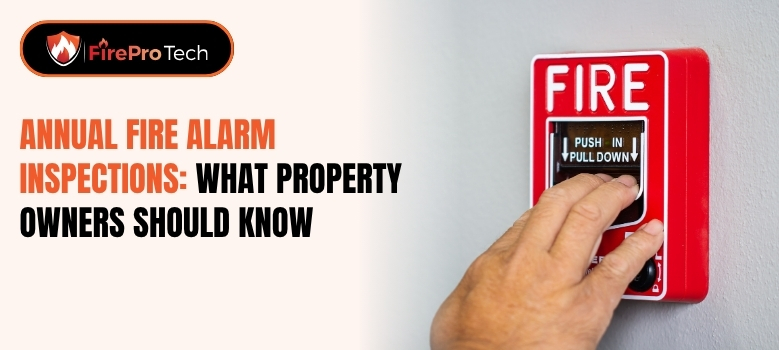
A reliable schedule for annual fire alarm inspections helps property owners find system problems before an alarm, inspection deadline, or fire marshal review exposes them. In Houston, commercial buildings often depend on coordinated inspections, testing, documentation, and repairs to keep fire protection responsibilities organized.
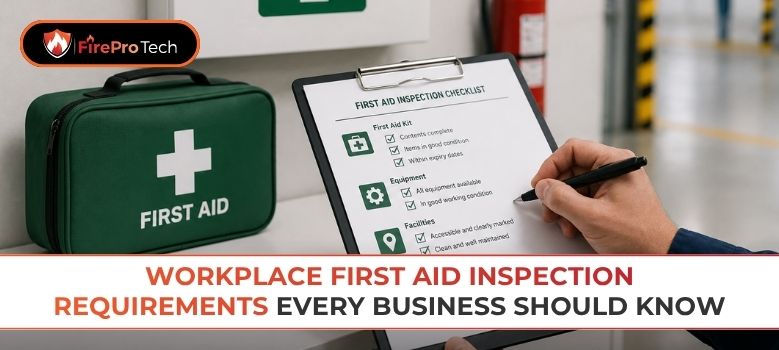
Workplace first aid inspection requirements are easy to overlook because the cabinet may look complete from the outside. A real inspection checks whether supplies are present, usable, accessible, and suited to the injuries employees could reasonably face.
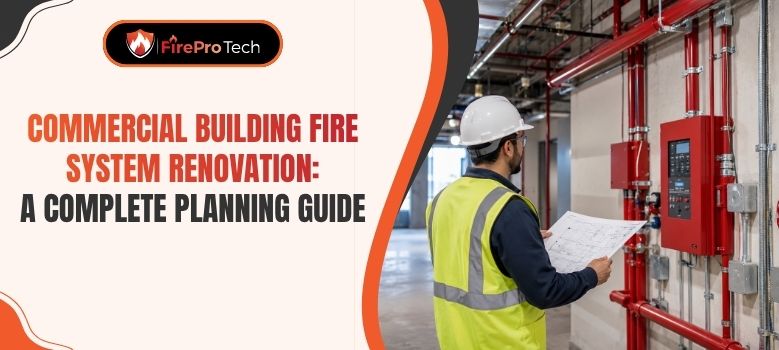
Commercial building fire system renovation is where many property teams discover how much hidden risk lives behind walls, above ceilings, and inside old paperwork. If you are updating a tenant space, reconfiguring a floor plan, or modernizing an aging facility, the fire protection work cannot be treated as an afterthought.