

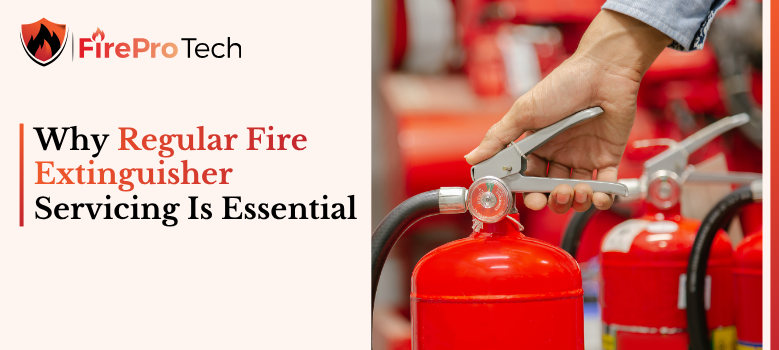
Fire extinguisher servicing is essential when a business needs dependable first-response equipment instead of extinguishers that merely look acceptable on the wall. A unit can lose pressure, become corroded, be blocked by stored materials, or no longer suit the hazard in the room.
For building owners, facility managers, property managers, contractors, and business operators, the goal is not simply to check a box. It is to maintain accessible equipment, identify deficiencies early, keep usable records, and coordinate service without creating confusion for employees or tenants.
This guide explains what servicing includes, how often fire extinguisher services should be checked, what a practical servicing checklist covers, and when to schedule professional help in Houston.
Fire extinguisher servicing is a continuing process that helps confirm portable extinguishers remain appropriate, accessible, and in serviceable condition. It can involve inspection, maintenance, testing, documentation, corrective work, and—when conditions require it—installation or relocation.
The exact scope depends on the extinguisher, building, hazard, manufacturer instructions, applicable requirements, and authority having jurisdiction.
The important point is that servicing is more than looking at a pressure gauge. A responsible review connects the physical condition of the unit with its location, intended use, service history, and the risk it is expected to address.
An inspection is an evaluation intended to identify visible or apparent conditions that could affect readiness. It may include checking access, mounting, labels, tamper indicators, physical damage, and other observable details. A visual review by facility staff can help identify obvious problems between professional visits, but it has limits.
Maintenance goes further. It addresses conditions that require fire extinguisher servicing or correction so the extinguisher can remain dependable. Depending on the equipment and applicable requirements, maintenance may involve cleaning, restoring components, correcting pressure-related issues, replacing damaged parts, or other work within the technician’s qualified scope.
Testing is a separate technical activity governed by the equipment, manufacturer instructions, and applicable requirements. It should not be assumed that every extinguisher receives the same test at the same time. A qualified fire protection professional can determine what is due and document the result.
Extinguishers are often exposed to conditions that are easy to overlook during normal operations. A unit near an exterior door may experience moisture and temperature changes. One in a warehouse may be struck by equipment or hidden behind inventory.
An extinguisher in a leased office may remain mounted while the occupancy, layout, or hazards change around it. Fire extinguisher servicing should address this condition before the unit returns to service.
Common concerns include:
A unit may also be technically intact but poorly located. If employees cannot see or reach it quickly, its practical value is reduced. Similarly, an extinguisher may be accessible but not appropriate for the hazards present.
Regular fire extinguisher servicing creates an opportunity to evaluate those issues before an emergency exposes them.
Protect Your Business – Install Extinguishers Now
The question “how often should fire extinguishers be checked?” does not have one universal answer for every facility. The appropriate schedule can depend on the type of extinguisher, the environment, the hazard level, manufacturer instructions, applicable fire code provisions, inspection and maintenance requirements, and the authority having jurisdiction.
Many commercial facilities use a combination of routine visual observations and scheduled professional fire extinguisher inspection services. Annual fire extinguisher servicing is commonly part of a facility’s planning cycle, but the exact work and timing should be confirmed for the equipment and jurisdiction rather than assumed from a generic calendar.
Designated staff may be able to notice obvious issues between professional service visits. A simple observation should focus on whether the extinguisher is in its assigned location, visible, accessible, mounted as intended, and free from apparent damage.
Staff can also look for a missing pin or seal, a discharged appearance, leakage, corrosion, or a pressure indicator that appears abnormal where a gauge is provided.
This is not a substitute for technician-performed inspection or maintenance. Staff members should not disassemble an extinguisher, attempt repairs, remove the valve, or treat a quick walk-through as proof of compliance. Their role is to report concerns promptly and keep access clear.
This point belongs in a complete fire extinguisher servicing review before the unit returns to service.
Schedule professional attention when an extinguisher has been discharged, moved, damaged, exposed to unusual conditions, or found with incomplete or uncertain service records. Service may also be appropriate after a renovation, change in occupancy, change in stored materials, or reconfiguration of a work area.
A missed service date should not be handled by simply updating a tag without reviewing the equipment. The responsible provider should evaluate what is due, what conditions were found, and whether corrective work or additional testing is necessary.
Requirements can vary, so facility managers should coordinate with the service provider and, where appropriate, the local authority having jurisdiction. Regular fire extinguisher servicing can help identify this issue before the unit returns to service.
For a Houston business, scheduling can also require practical coordination with tenants, security staff, loading areas, production schedules, or contractors. Planning access in advance helps avoid incomplete visits and makes it easier to address deficiencies while the relevant personnel are available.
Ensure Safety – Check Your Fire Code Compliance
A fire extinguisher servicing checklist should help the technician and responsible facility contact evaluate the complete service picture—not just whether a gauge appears to be in the green zone. The checklist should support consistent observations, clear documentation, and prompt follow-through on deficiencies.
The first question is whether the extinguisher can be found and reached when needed. Check that it remains in the intended location, is visible to people who may need it, and is not blocked by furniture, inventory, vehicles, temporary displays, or construction materials.
The surrounding area matters. A newly installed partition, changed aisle, relocated work station, or additional storage rack can make a previously acceptable location difficult to use. If the extinguisher has been moved, the new location should be evaluated rather than selected only for convenience.
Records from fire extinguisher servicing should make this condition easy to track before the unit returns to service.
The equipment must also be suitable for the hazards present. A general office, commercial kitchen area, warehouse, electrical room, and industrial process area may present different risks. Selection and placement should be handled using the applicable requirements and a qualified evaluation instead of relying on a one-size-fits-all assumption.
A professional review generally considers the cylinder, handle, hose or nozzle where provided, safety pin, tamper seal, labels, mounting hardware, and pressure indicator where applicable. The technician looks for corrosion, dents, leakage, damage, missing parts, obstruction, evidence of discharge, and conditions that may affect safe operation.
Fire extinguisher servicing should address this condition during scheduled maintenance.
Labels should remain legible enough to identify the extinguisher and its intended application. If labels are damaged or obscured, employees may hesitate or choose incorrectly during a stressful event. The extinguisher should also be clean enough that important markings and physical defects are not hidden.
A pressure indicator is only one part of the evaluation. A normal-looking gauge does not prove that the extinguisher is correctly located, undamaged, suitable for the hazard, or properly documented. Conversely, a problem with access or labeling can be serious even when the pressure indication appears normal.
This point belongs in a complete fire extinguisher servicing review during scheduled maintenance.
Good documentation identifies what was reviewed, when service occurred, what deficiencies were found, and what action was recommended or completed. Records can help facility managers track multiple fire extinguisher requirements for commercial buildings, coordinate with landlords or tenants, and prepare information for internal reviews or visits by an authority.
Regular fire extinguisher servicing can help identify this issue during scheduled maintenance.
The service tag or record should not be treated as a decoration. If a technician identifies a blocked extinguisher, damaged component, missing identification, or another concern, the responsible person needs a clear explanation of the issue and the next step.
A deficiency that remains unresolved can continue to affect readiness after the service visit is over.
FirePro Tech, LLC approaches fire protection services with this practical perspective: inspection and documentation are most useful when they help the person responsible for the building understand what was found and what should happen next.
Fire extinguisher servicing does not always mean keeping every existing extinguisher in the same place. Sometimes the correct solution is installation, relocation, replacement, or a broader review of the facility’s fire protection arrangement.
This can happen when a building’s use changes, new hazards are introduced, the layout is remodeled, or existing equipment no longer provides suitable coverage.
The right equipment depends on the materials and processes in the area. For example, ordinary combustibles, flammable liquids, energized electrical equipment, and specialized hazards may require different protection considerations.
The answer should be based on a qualified assessment and applicable fire extinguisher requirements, not on the assumption that every extinguisher performs the same function. Records from fire extinguisher servicing should make this condition easy to track during scheduled maintenance.
A new tenant may bring different operations into a space. A warehouse may change its storage arrangement. A workshop may add equipment or combustible materials. A commercial property may divide one large area into several rooms. Each change can affect visibility, travel paths, access, and the suitability of existing equipment.
Fire extinguisher installation should therefore be part of a planned evaluation. The goal is not to place units wherever wall space is available. It is to provide appropriately selected and accessible protection while considering the building’s use, occupants, circulation, and operational realities.
Fire extinguisher servicing should address this condition as inspection findings are reviewed.
Facility teams can make service more efficient by preparing current floor plans or site information, identifying restricted areas, notifying occupants, and ensuring that storage or vehicles do not block equipment.
If multiple locations are involved, a property manager may also want a consistent record format so deficiencies can be compared and tracked.
Do not remove an extinguisher from service or relocate it casually. If a unit must be taken down for maintenance, ask the service provider how coverage will be handled during that period. Requirements and appropriate temporary measures may vary by facility and situation.
At approximately the same time that businesses review annual fire extinguisher servicing, they should consider whether renovations, new tenants, process changes, or construction have altered the fire protection needs. That review can prevent a common operational mistake: continuing an old service plan after the building has materially changed.
Schedule a Free Fire Extinguisher Now
Choosing a provider for fire extinguisher services involves more than comparing a service price. The provider should be able to explain the scope of work, identify equipment-specific concerns, document findings, and communicate what requires attention.
For commercial and industrial facilities, the service process should also account for access, tenant coordination, site hazards, and operating schedules. This point belongs in a complete fire extinguisher servicing review as inspection findings are reviewed.
Before arranging service, ask what will be reviewed, how deficiencies will be reported, and what records the provider will leave with the responsible person. Confirm whether the visit covers only inspection or also includes maintenance, testing, installation evaluation, or corrective work when needed.
Useful questions include:
A clear conversation at the beginning reduces surprises. It also helps prevent a facility from scheduling a narrow visual review when it actually needs a broader assessment of service history, placement, or changing hazards. Regular fire extinguisher servicing can help identify this issue as inspection findings are reviewed.
After the visit, the responsible person should know which extinguishers were reviewed, what conditions were found, which items require correction, and what follow-up is recommended. Documentation should be understandable to someone who manages the property but does not perform fire protection work every day.
The provider should also be willing to explain uncertainty. If a requirement depends on the building type, equipment, local interpretation, or authority having jurisdiction, it is better to identify that variable than to offer an unsupported guarantee. Fire protection decisions should be based on verified site information and applicable requirements.
Records from fire extinguisher servicing should make this condition easy to track as inspection findings are reviewed.
FirePro Tech, LLC provides fire protection services for customers who need help with inspection, testing, maintenance, installation, and compliance-related planning. For Houston businesses and property teams, the most useful first step is usually a conversation about the facility, the current equipment, known concerns, and the service records available.
That information helps determine whether the next need is routine fire extinguisher servicing, corrective maintenance, installation planning, or a more detailed review.
If a deficiency is found, treat it as an action item rather than an administrative detail. Keep access clear, communicate the issue to the person responsible for the space, and coordinate corrective work promptly.
If the building is undergoing construction or a change in use, include fire extinguisher planning in the project schedule instead of waiting until the work is complete.
The Fire Protection System Market was valued at USD 67.35 billion in 2023 and is expected to reach USD 116.17 billion by 2032, registering a CAGR of 6.25% during the forecast period from 2024 to 2032.
Regular fire extinguisher servicing helps businesses maintain equipment that can be located, reached, understood, and used when conditions are demanding. It also gives facility managers a structured way to identify pressure concerns, corrosion, missing components, blocked access, outdated records, and changes in hazard or occupancy.
A routine visual observation is valuable, but it does not replace professional inspection, maintenance, testing, or installation evaluation. How often fire extinguishers should be checked depends on the equipment, environment, manufacturer guidance, applicable requirements, and authority having jurisdiction.
For Houston businesses, property managers, contractors, and facility decision-makers, the practical next step is to review the current service records and identify any changes to the building or hazards. FirePro Tech, LLC can help evaluate the appropriate fire extinguisher services, inspection, maintenance, installation, and compliance support needed for the facility.
A planned approach is more dependable than waiting for a failed inspection or an emergency to reveal a preventable problem.
Regular fire extinguisher servicing helps confirm that equipment is accessible, suitable, properly documented, and in serviceable condition. It can identify pressure issues, corrosion, damage, blocked access, and missing components before an emergency.
Commercial extinguishers should receive routine observations and scheduled professional service based on the equipment, environment, manufacturer guidance, applicable requirements, and authority having jurisdiction. Annual servicing may apply, but intervals should be verified.
Annual fire extinguisher servicing may include reviewing location, access, condition, labels, pressure indicators, pins, seals, hoses, mounting, and records. The exact scope depends on the extinguisher and applicable requirements.
Employees can observe obvious issues such as blocked access, damage, leakage, missing pins, or abnormal indicators, then report them. Their review does not replace professional inspection, maintenance, testing, or required documentation.
Installation or replacement may be needed after a layout, occupancy, or hazard change, when equipment is damaged or unsuitable, or when existing locations do not provide appropriate access. A qualified evaluation should guide the decision.
A practical checklist should cover location, visibility, accessibility, mounting, physical condition, pressure indicators, pins, seals, hoses or nozzles, labels, service records, deficiencies, and required follow-up.
Houston businesses can prepare by reviewing service records, clearing access, identifying renovations or hazard changes, notifying occupants, and providing access to all areas. Share known concerns with the provider before the visit.
Choose a provider that clearly explains its inspection, testing, maintenance, installation, documentation, and follow-up process. FirePro Tech, LLC can help Houston businesses evaluate their fire protection service needs. Fire extinguisher servicing should address this condition after a discharge.

Industrial fire protection company selection can determine whether your facility receives practical protection or simply accumulates paperwork and unresolved deficiencies.
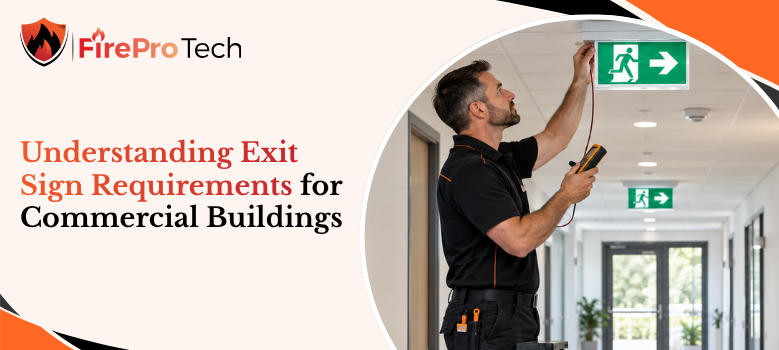
Exit sign requirements are a practical concern for any commercial property where employees, customers, tenants, or visitors may need to leave during a power failure or emergency.
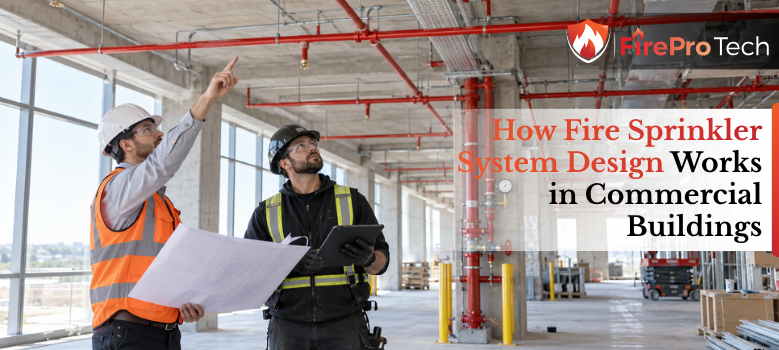
Fire sprinkler system design determines how a commercial property will detect and control a developing fire, but many owners are unsure what the process actually includes or why costs vary.