

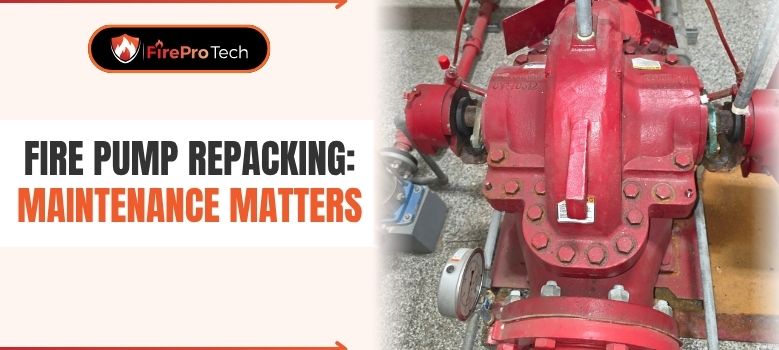
Fire pump repacking is often the difference between a pump that stays ready and one that starts showing leaks, loss of pressure, or avoidable wear at the worst possible time.
If your facility depends on a fire pump, the packing around the shaft should never be treated like a minor nuisance repair.
For Houston properties and other commercial facilities, this topic matters because small seal issues can quickly turn into maintenance headaches, system reliability concerns, inspection problems, and challenges in meeting fire pump inspection requirements.
In the sections below, we’ll explain what repacking actually solves, when it makes sense, how professional service protects the pump, and what to look for when you choose a fire protection company for the work.
Fire pump repacking is a maintenance task focused on the gland packing that helps control leakage where the pump shaft passes through the casing.
In a working fire pump, a small amount of leakage can be normal, but the packing has to be tight enough to control water loss without overheating the shaft or creating excessive friction.
When packing wears down, the pump may drip more than expected, run hotter, vibrate, or show signs of deterioration around the stuffing box. That does not always mean the entire pump needs major repair, but it does mean the sealing surface needs attention before the issue spreads.
Packing wears for the same basic reasons most moving parts wear: friction, age, heat, pump cycling, and operating conditions. In some systems, inconsistent run times or poor alignment can accelerate the problem. In others, the cause is simpler, such as packing that has reached the end of its service life.
Good coordination keeps fire pump repacking aligned with the building’s actual needs.
For facility teams, the key is understanding that leakage is not just a housekeeping issue. It can indicate a balance problem between sealing and shaft protection, and that balance needs to be restored carefully.
A fire pump repack service is not the same as a full overhaul or a major internal fire pump repair. Repacking addresses the sealing material at the stuffing box. Other repairs may involve bearings, coupling alignment, impellers, shafts, or diesel-related components on a driver.
That distinction matters because the wrong fix can waste time and leave the actual issue unresolved. A fire pump maintenance company should inspect the pump condition first and confirm whether fire pump repacking is the right corrective step or only one part of a broader repair plan.
The easiest problems to see are usually leakage and visible wear, but not every maintenance issue announces itself clearly. A well-run facility should pay attention to changes in pump behavior, especially if the fire pump is part of a larger protection strategy that depends on reliable water delivery.
A few symptoms often point to packing deterioration or related shaft-seal concerns:. Owners should connect fire pump repacking with related inspection and maintenance work.
These signs do not automatically mean the pump is failing, but they do mean the issue should be evaluated before it becomes more expensive to correct. This detail should be reviewed during fire pump repacking, not after the work ends.
A small amount of leakage can be part of the packing’s design, since the material needs lubrication from the pumped water to function properly. The challenge is knowing where the line is between expected seepage and a leak that suggests packing is worn, installed incorrectly, or over-tightened.
In practice, many maintenance problems begin when someone keeps tightening the packing to stop the drip completely. That often creates heat, speeds up wear, and can damage the shaft.
A better approach is to verify the condition of the packing and adjust or replace it based on the pump’s actual performance.
Fire pump repacking looks simple from the outside, but the work has to be done with the pump’s operating conditions in mind. The goal is not just to stop water from dripping today.
The goal is to keep the pump dependable, reduce unnecessary wear, and avoid creating another problem during the repair.
One of the most common mistakes in packing maintenance is tightening the gland too aggressively. That may reduce leakage for a short time, but it also increases friction at the shaft. Over time, that friction can generate heat, damage the packing, and wear the shaft sleeve or related components.
Once that happens, the repair can become more complex and more expensive than it needed to be. Professional service helps avoid that spiral by setting the packing correctly instead of forcing a temporary result. Accurate field information improves the outcome of fire pump repacking.
Fire pumps do not operate like ordinary transfer pumps. They are part of life safety and property protection planning, so any repair needs to account for reliability, inspection readiness, and overall system performance.
A technician experienced in fire protection services understands that a quick-looking fix can have long-term consequences if the pump does not remain stable under demand.
That is especially important for facilities that depend on a diesel fire pump repair Houston team or other specialized support, since the pump, driver, controls, and water supply all need to work together. Fire pump repacking should fit into a broader maintenance mindset, not be treated as an isolated patch.
A quality fire pump repack service should do more than swap packing material and leave. The process should start with a condition check, continue with careful disassembly and replacement, and finish with verification that the pump operates as expected.
Before any packing is changed, the technician should assess the stuffing box, shaft condition, leakage pattern, and any signs of wear on surrounding parts. If the shaft sleeve is scored or the packing cavity is contaminated, simply adding new packing may not solve the problem. Understanding how fire pump repair services address these underlying issues helps ensure the correct repairs are made instead of only replacing the packing.
Regular review helps the plan for fire pump repacking reflect changing building conditions.
That inspection step is what separates routine maintenance from guesswork. It helps identify whether the issue is truly a packing issue or a symptom of something larger.
Fire pump gland packing replacement has to be installed and adjusted with care. If the packing is cut poorly, seated unevenly, or compressed too much, the pump may leak, run hot, or wear prematurely. If it is too loose, leakage may continue.
Planning for fire pump repacking early can prevent avoidable delays later.
Proper repacking is about balance. The material has to seal well enough to protect the pump without creating excess drag on the shaft. That balance is why experience matters, especially on systems that support critical occupancies or busy facilities.
After the packing is replaced, the pump should be checked during operation to confirm the gland area is behaving normally. That includes watching for leakage, temperature, noise, and overall pump response.
If the pump is part of a larger maintenance program, the findings should be documented so future inspections can compare conditions over time. A practical plan for fire pump repacking should include access, timing, and documentation.
Repacking is most effective when it is part of a planned maintenance strategy instead of a reaction to visible dripping. Facilities that schedule inspections and testing more consistently tend to catch small issues earlier, which usually keeps repairs less disruptive.
Good records matter because they show whether a leak is getting worse, whether adjustments are holding, and whether the pump has needed repeated attention. That history helps you decide when the issue is routine maintenance and when it may be a sign of deeper wear.
Clear records make fire pump repacking easier to manage over time.
For property managers and facility leaders, documentation also supports a cleaner compliance trail. Even when requirements vary by system type and authority having jurisdiction, clear maintenance records make it easier to explain what was done, why it was performed, and how it supports fire pump testing requirements.
If a pump keeps needing packing adjustments or replacement in a short period, the packing itself may not be the root cause. Shaft condition, alignment, vibration, operating cycles, or other mechanical issues can drive repeated failure.
That is where internal fire pump repair may become necessary. An experienced fire protection company should help you decide whether to continue with maintenance-level correction or move into a deeper repair scope. Qualified support during fire pump repacking can reduce repeat work and confusion.
The best maintenance outcome usually comes from choosing a team that understands fire pumps as life safety equipment, not just rotating machinery. You want a provider that can evaluate the problem, explain the options clearly, and complete the work without creating unnecessary disruption.
Before hiring anyone for fire pump repacking, it helps to ask a few direct questions:
These questions help you separate general repair work from true fire pump maintenance expertise.
For Houston facilities, local experience is valuable because building types, operational demands, and maintenance schedules can vary widely. A team familiar with commercial and industrial environments understands the importance of minimizing downtime while keeping the system dependable. This consideration can affect the scope and success of fire pump repacking.
FirePro Tech, LLC supports fire protection services with inspection, testing, maintenance, installation, and compliance-focused work for facilities that need practical, reliable help.
When a fire pump issue is involved, that broader perspective helps connect the repair to the rest of the protection system instead of treating it as an isolated task.
The global Fire Protection System market was valued at USD 67.35 billion in 2023 and is expected to reach USD 116.17 billion by 2032, expanding at a compound annual growth rate (CAGR) of 6.25% during the forecast period from 2024 to 2032.
Fire pump repacking is a small-looking repair with big consequences if it is handled poorly. The right approach protects the shaft, controls leakage, and helps your fire pump stay dependable when your facility needs it most.
If you are seeing repeated drips, heat, noise, or poor performance around the packing area, the safest next step is a professional evaluation rather than more tightening or guesswork.
FirePro Tech, LLC can help Houston facilities with fire pump maintenance and related fire protection services that support reliability, documentation, and compliance-minded decision-making.
Fire pump repacking means replacing the packing material around the pump shaft to control leakage and reduce wear. It helps restore proper sealing without over-tightening the gland.
Watch for abnormal leakage, heat at the stuffing box, noise, vibration, or repeated gland adjustments. A small amount of seepage can be normal, but worsening leaks need inspection.
Sometimes minor adjustment helps, but over-tightening can overheat the shaft and shorten packing life. If leakage keeps returning, fire pump gland packing replacement is usually the better fix.
Repacking addresses the shaft sealing area only. Internal fire pump repair may involve bearings, alignment, shaft sleeves, impellers, or other components when wear is deeper than the packing.
There is no universal schedule because service life depends on pump use, operating conditions, and system condition. Regular inspection is the best way to decide when replacement is needed.
Yes, the packing and seal area can still need attention on diesel-driven systems. The driver type affects the overall service scope, so a technician should evaluate the whole pump setup.
A fire pump maintenance company can inspect the problem, replace packing correctly, and verify performance after service. That reduces the risk of leaks, heat damage, and repeat repairs.
FirePro Tech, LLC provides Houston fire protection services that include inspection, maintenance, installation, and compliance support. If the leak involves packing or related pump issues, professional evaluation is the right next step.

Fire protection compliance checklist planning can help your business find missed inspections, unresolved deficiencies, incomplete records, and system conditions that may affect safety or approval.
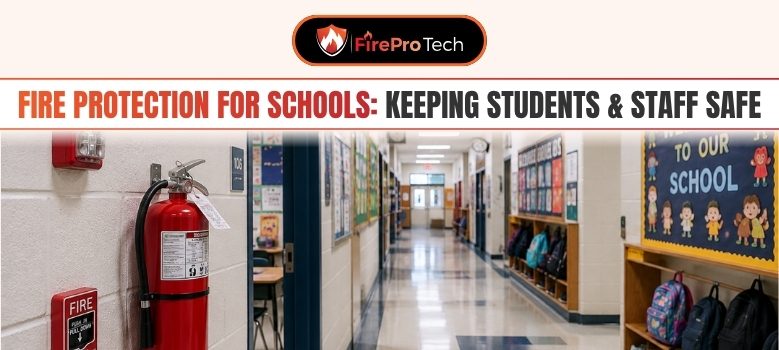
Fire protection for schools is a daily responsibility for administrators, facility managers, and school leaders who must protect students, staff, visitors, and the continuity of education.

Emergency lighting testing checklist work can become difficult to manage when exit fixtures are spread across several floors, tenant spaces, stairwells, corridors, and exterior discharge paths.