

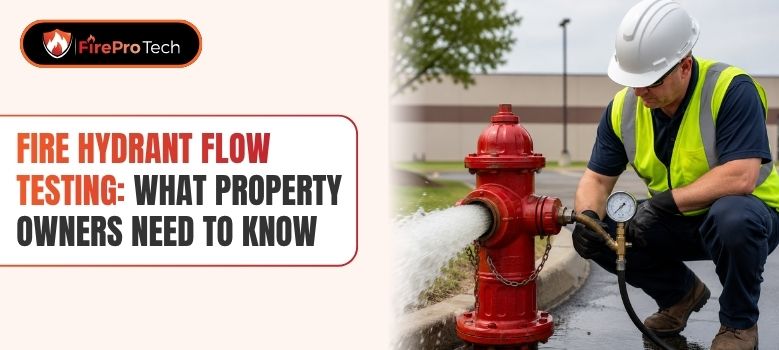
Fire hydrant flow testing is one of those tasks property owners often hear about only when a fire marshal, insurer, engineer, or maintenance team brings it up, but it can make a real difference in how well a site is protected.
If you manage a commercial building, industrial facility, or multi-unit property, knowing what the test shows and how to prepare for it helps you avoid surprises.
For property owners in Houston and nearby areas, this topic matters because hydrants are part of the water supply chain that fire crews and fire protection systems depend on.
A proper test can reveal whether a hydrant can deliver the expected water flow, whether there are restrictions in the system, and whether follow-up work may be needed before a real emergency exposes a weakness. Regular fire inspection services can also help identify these issues early and keep fire protection systems ready for emergencies.
Fire hydrant flow testing gives property owners a practical picture of how much water a hydrant can deliver under real conditions. It is not just a box to check.
It helps confirm whether the available water supply is adequate for the building, the site layout, and any fire protection needs tied to the property.
The test also helps identify problems that are easy to miss during a visual walkthrough. A hydrant may look fine from the curb, but still have internal issues, obstructions, low pressure, or distribution constraints that affect performance.
That is why fire hydrant water flow test results are useful for planning, compliance, and risk management. The final review of fire hydrant flow testing should verify both performance and documentation.
A typical fire hydrant water flow test measures pressure conditions before and during flow. In simple terms, it helps estimate how much usable water is available and how that supply changes when the hydrant is opened.
Depending on the site and the purpose of the test, the results may help support design decisions, compliance review, or hydrant troubleshooting. Qualified support during fire hydrant flow testing can reduce repeat work and confusion.
For owners, the key takeaway is this: a flow test is about water availability, not just hydrant presence. A hydrant can exist on the property and still not perform well enough when needed.
Waiting for a problem usually costs more time and money. If a hydrant cannot provide the expected flow, the issue may affect insurance conversations, project planning, system upgrades, or emergency response readiness.
In Houston, where commercial and industrial sites often have demanding operational needs, that can become a serious operational concern. During fire hydrant flow testing, small details often determine whether the result lasts.
We often see owners who assume the hydrant network is fine because it has never failed in daily use. But daily use is not the same as performance under fire conditions. A documented test gives you a more reliable picture of what is actually available.
Accurate field information improves the outcome of fire hydrant flow testing.
Flow testing is especially relevant when a property is being developed, expanded, remodeled, reclassified, or reviewed after a water system change. It is also important when there are signs of trouble, such as weak water pressure, damaged hydrants, chronic leaks, or questions from an insurer, engineer, or authority having jurisdiction.
A proper test is more than opening a hydrant and watching water come out. The process should be planned, controlled, and documented so the results can be used with confidence.
For property owners, understanding the basic steps helps you know what to expect from a hydrant fire hydrant flow testing company and how to judge whether the work was handled responsibly.
The exact method can vary based on site conditions, local requirements, and the purpose of the test, but the general flow is similar across many commercial properties. Consistent communication makes fire hydrant flow testing more predictable for everyone involved.
Before the test begins, the technician should review the site, identify the hydrant to be tested, and confirm how the work will affect nearby operations. On a commercial site, that may include traffic control, pedestrian safety, tenant awareness, and coordination with facility staff.
If the hydrant is private fire hydrant testing, the owner or manager usually needs to understand who has authority over the device and what access is required.
This planning stage matters because a poorly coordinated test can disrupt operations or create avoidable safety issues. It also helps reduce the chance of returning later because a valve, access point, or site restriction was not addressed ahead of time.
This detail should be reviewed during fire hydrant flow testing, not after the work ends.
During the test, the technician measures pressure before and during hydrant discharge. Those numbers are then used to evaluate how the system performs under load. In many cases, the results are compared against the needs of the building or the expected performance of the surrounding water supply.
Owners do not usually need to manage the technical calculations themselves, but they should expect a clear explanation of what the numbers mean. A good report should help you understand whether the site appears adequate, marginal, or in need of follow-up review.
Reliable follow-up after fire hydrant flow testing helps prevent the same problem from returning.
Hydrant flow testing can release a significant amount of water, so the work needs to be handled with care. Technicians should control where the water goes, protect surrounding property when possible, and avoid creating hazards for traffic, landscaping, or nearby structures. For facilities with higher-risk environments, special hazard fire protection services can provide additional planning and protection tailored to specific fire risks.
This is one reason owners should use a qualified hydrant fire hydrant flow testing company rather than treating the job as a simple field task. Safe discharge planning protects the property and helps keep the test from causing more problems than it solves.
The final report should clearly identify the hydrant tested, the date of service, the measured conditions, and the interpretation of the results.
If the test reveals a concern, the report should also point to the next step, whether that is repair, retesting, coordination with the water provider, or further evaluation of the fire protection system.
Good documentation is especially valuable during inspections, design work, and compliance reviews because it gives decision-makers something concrete to work from instead of guesswork. A well-planned approach to fire hydrant flow testing reduces gaps between design and field work.
Fire hydrant flow test requirements can vary depending on the property type, the local water authority, the authority having jurisdiction, and the reason the test is being performed. That is why owners should avoid assuming one universal checklist applies everywhere.
A test that supports a design project may look different from one performed for maintenance or compliance. Good coordination keeps fire hydrant flow testing aligned with the building’s actual needs.
Still, there are common expectations that most owners should understand before scheduling work. Knowing these basics helps you prepare the site, reduce delays, and ask better questions when comparing service providers.
In many cases, the owner or manager must confirm who controls the hydrant and whether any permissions are needed before testing begins. For private systems, that may involve the site owner, property manager, or facility team. For public connections or shared infrastructure, coordination may involve another party.
This is where a provider with local experience can help prevent delays. In Houston, for example, fire hydrant inspection Houston needs may be influenced by site layout, water supply conditions, or coordination requirements tied to the property and jurisdiction.
The findings from fire hydrant flow testing should guide the next maintenance decision.
Because hydrant testing can affect sidewalks, drive lanes, parking areas, and landscaping, site safety is part of the requirement conversation. Depending on the location, the work may need advance planning to keep water from pooling in unwanted areas or interfering with operations.
If the property is busy, plan for the test to happen at a time that minimizes disruption. This is especially important for industrial sites, retail centers, healthcare facilities, and occupied commercial buildings where access and scheduling matter.
A reliable fire hydrant water flow test should leave you with useful records, not just a quick yes-or-no answer. Property owners should expect clear results, an explanation of any limitations, and guidance on whether additional inspection, repair, or retesting is recommended.
Planning for fire hydrant flow testing early can prevent avoidable delays later.
If the hydrant shows signs of trouble, a repair plan may be needed before the property can move forward with design, approval, or routine maintenance tasks.
In those situations, it is often more efficient to work with a provider that can handle both testing and fire hydrant repair rather than juggling multiple vendors.
One of the most common points of confusion for property owners is the difference between a test, an inspection, and a repair. They are related, but they are not the same thing.
Understanding the difference helps you choose the right service and avoid paying for work that does not address the actual problem. The best plan for fire hydrant flow testing balances immediate needs with long-term reliability.
This section is especially important if you are trying to decide whether you need routine maintenance, a one-time evaluation, or emergency troubleshooting for a specific hydrant. Owners should connect fire hydrant flow testing with related inspection and maintenance work.
A hydrant inspection focuses on condition, accessibility, and obvious problems. The technician may look for damage, leaks, corrosion, missing caps, obstructions, or signs that the hydrant is difficult to operate. In many cases, an inspection is the first step before a test or repair.
If you are searching for fire hydrant inspection Houston service, you are usually trying to confirm that the equipment is ready to use and that nothing obvious is interfering with performance.
A flow test is about output. It answers the question, how much water can this hydrant actually deliver under the conditions being measured? That makes it different from a visual check, because a hydrant can appear serviceable and still fail to perform as expected.
For owners planning a project, fire hydrant flow testing is often the more relevant service because it helps determine whether the water supply supports the intended use of the property.
If a hydrant does not operate correctly, leaks, is damaged, or fails a functional check, repair may be necessary. Fire hydrant repair is not something to postpone if the device is part of your property’s fire protection strategy.
A small issue can become a larger problem if the hydrant is needed in an emergency or must support compliance work.
When owners search for fire hydrant repair near me, they are often reacting to a visible issue or a failed test. In that situation, the smartest path is usually to resolve the problem first, then retest or reinspect as needed so the record reflects the actual condition of the hydrant.
Documenting this point during fire hydrant flow testing gives the team a useful service history.
If you are unsure what you need, start with the most practical question: is the issue visible, performance-related, or both? An inspection can identify obvious concerns, a test can confirm capacity, and repair can correct the defect.
In many cases, the right answer is a combination of services rather than only one. Regular review helps the plan for fire hydrant flow testing reflect changing building conditions.
Choosing the right hydrant flow testing company matters because the work affects safety, documentation, and sometimes project approval. A rushed or incomplete test can create confusion later, especially if the results are supposed to support a design decision or compliance review.
You do not need to become a fire protection specialist to evaluate a provider. You just need to know which questions reveal whether they are experienced, organized, and capable of handling your site properly. Facility teams get more value from fire hydrant flow testing when the process is clearly documented.
Local experience matters because water supply conditions, access limitations, and coordination needs can vary by area. A team familiar with Houston properties is more likely to anticipate practical issues such as site access, traffic concerns, occupancy schedules, or the need to work around other fire protection services already in place.
Clear records make fire hydrant flow testing easier to manage over time.
That does not mean every site is the same, but it does mean the provider is more likely to ask the right questions before the work begins.
Good service starts before the hydrant is opened. You should receive straightforward information about what will be tested, how the site will be affected, and what documentation you will get afterward. If the provider is vague about the process, that is usually a warning sign.
After the test, the report should be clear enough for an owner, facility manager, engineer, or inspector to use without translation. Before scheduling fire hydrant flow testing, the team should confirm responsibilities and site conditions.
Hydrant testing often uncovers issues that need additional action. If the provider can also support fire hydrant repair or other underground and hydrant services, that can simplify the next step. It reduces handoff delays and helps keep the maintenance or compliance process moving.
For owners, the practical benefit is simple: fewer gaps between finding a problem and fixing it. This consideration can affect the scope and success of fire hydrant flow testing.
Ask how the company documents results, coordinates access, and handles safety planning. A professional process usually shows up in the details: organized scheduling, careful site setup, and a final report that reflects the actual condition of the hydrant and water supply. Those details matter more than a sales pitch.
A little preparation can make hydrant testing faster, safer, and more useful. Property owners do not need to manage the technical side of the work, but they do need to remove preventable obstacles that can delay the test or weaken the value of the results.
This is where practical coordination matters. The better the setup, the more likely the test will run smoothly and produce records you can actually use. A practical plan for fire hydrant flow testing should include access, timing, and documentation.
Make sure the testing crew knows who will unlock gates, provide access, or answer questions during the visit. On larger sites, the team may also need directions to specific hydrants or approval to work in certain areas. Missing access is one of the simplest reasons a test gets delayed.
If the hydrant is in a busy area, notify tenants, staff, or site personnel in advance. Water discharge can affect walkways, loading zones, or vehicle routes, even when the work is planned correctly. A short notice can prevent confusion and reduce complaints.
For Houston facilities, fire hydrant flow testing should reflect current occupancy and operating conditions.
If you already know about leaks, damaged parts, hard-to-open valves, or prior water pressure concerns, tell the provider before the test. That information helps the technician plan the work and decide whether testing, inspection, or repair should come first. Careful preparation for fire hydrant flow testing supports safer day-to-day operations.
When owners share accurate information early, the provider can avoid blind spots and produce a more reliable result.
Not every flow test has the same purpose. Some support maintenance records, some support design work, and some respond to a compliance or inspection question.
If you state the purpose up front, the provider can tailor the report and make sure the results are useful for the decision you need to make.
For many owners, that clarity is the difference between a report that sits in a file and a report that actually helps solve a problem.
Fire hydrant flow testing helps property owners understand whether a hydrant and its water supply can perform the way they need them to.
It also gives you a chance to catch issues early, document conditions properly, and plan repairs or follow-up work before a small concern becomes a bigger operational problem.
If you manage a commercial or industrial property in Houston, or you are responsible for private fire hydrant testing, the safest approach is to treat the test as part of your broader fire protection plan.
FirePro Tech, LLC supports property owners with underground and hydrant services, including inspection, testing, maintenance, installation, compliance support, and fire hydrant repair when follow-up work is needed. The right service at the right time helps you make better decisions and keep your site better prepared.

Fire hydrant measures how much water a hydrant can deliver under test conditions. It helps owners understand system performance, support planning, and identify issues before an emergency exposes them.
Property owners need a fire hydrant water flow test to confirm water supply, support compliance or design decisions, and catch weak performance early. It is especially useful for commercial and industrial sites.
Testing frequency can vary by property type, local requirements, and the reason for the test. Owners should verify timing with their authority having jurisdiction, insurer, or fire protection provider. Long-term planning makes fire hydrant flow testing more effective than a rushed correction.
A good hydrant flow testing company should coordinate access, perform the test safely, document the results clearly, and explain whether follow-up inspection or repair is needed. Clear reporting matters as much as the test itself.
Private fire fire hydrant flow testing focuses on hydrants owned or controlled by the property owner, while public testing may involve utility or jurisdictional coordination. Access, permissions, and reporting can differ.
A fire hydrant inspection Houston service can reveal visible damage, leaks, or operation issues, but it does not always measure flow performance. If capacity is the concern, a separate flow test is usually needed.
Fire hydrant repair is needed when testing or inspection shows leaks, damage, sticking valves, or other defects that could affect performance. Repair should happen before the hydrant is relied on for fire protection. FirePro Tech, LLC can coordinate fire hydrant flow testing with related fire protection services.
If a test shows a problem, look for a provider that can handle both testing and repair so the issue can be evaluated and corrected efficiently. That reduces delays and helps keep records consistent.

Fire protection compliance checklist planning can help your business find missed inspections, unresolved deficiencies, incomplete records, and system conditions that may affect safety or approval.

Fire protection for schools is a daily responsibility for administrators, facility managers, and school leaders who must protect students, staff, visitors, and the continuity of education.
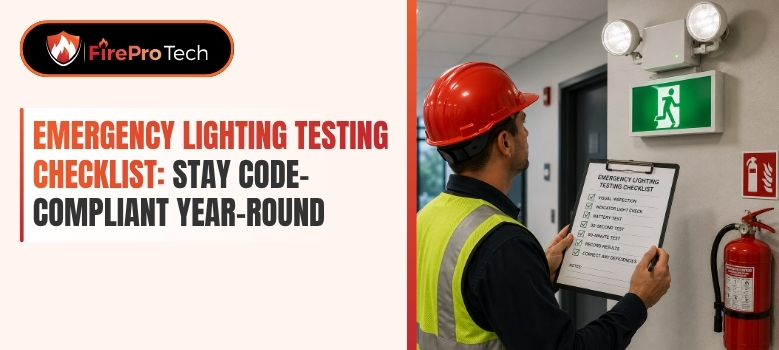
Emergency lighting testing checklist work can become difficult to manage when exit fixtures are spread across several floors, tenant spaces, stairwells, corridors, and exterior discharge paths.