

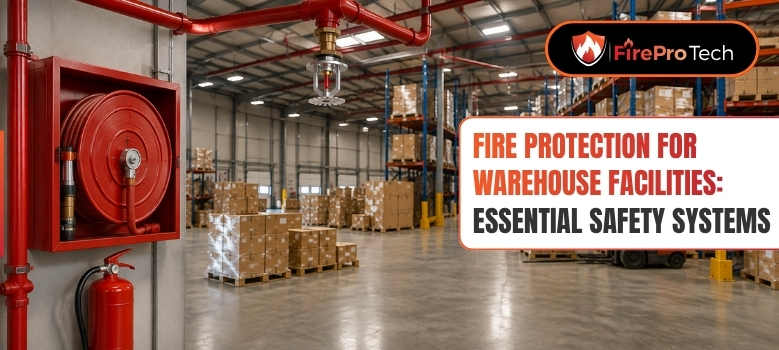
Fire protection for warehouse facilities can become difficult to manage when storage layouts change, inventory increases, or inspections are treated as paperwork rather than risk control. Warehouse owners, property managers, and facility teams need systems that support early warning, reliable suppression, coordinated response, and defensible maintenance records.
This guide explains how to evaluate fire protection for warehouse facilities, what makes industrial facilities different, which systems deserve attention, and how to build a practical inspection and maintenance plan.
Requirements can vary by building design, storage arrangement, jurisdiction, and authority having jurisdiction, so project-specific decisions should be verified with qualified professionals and the applicable local authorities.
Warehouses often appear simple from the outside, but their fire hazards protection can change significantly from one area to another. A facility may contain ordinary cartons, plastics, flammable liquids, battery-charging stations, combustible dust, high-piled storage, packaging equipment, or temporary staging areas.
Each condition can affect how quickly a fire develops and how well a protection system performs. Include this issue in fire protection for warehouse facilities planning.
The original fire protection design may have been appropriate when the building opened. It may no longer match the facility if the business has added taller racks, denser storage, new materials, mezzanines, conveyors, charging equipment, or expanded shipping areas.
A seemingly minor operational change can have major consequences. For example, replacing mostly cardboard products with a larger quantity of exposed plastic packaging may change the fire challenge. Raising storage above the original arrangement can also affect sprinkler discharge patterns and the amount of heat needed to activate suppression.
Facility teams should review protection whenever they change:
The important question is not simply whether a sprinkler or fire alarm system exists. The better question is whether the system still reflects the hazards present today. Keep this point visible in fire protection for warehouse facilities planning.
Material-handling equipment can damage sprinkler piping, alarm devices, control panels, and protective barriers. Forklift traffic near rack aisles creates a physical exposure that should be considered during inspections and facility planning.
Blocked valves, inaccessible risers, storage placed too close to sprinkler heads, and doors that fail to close can all reduce the reliability of an otherwise well-designed system.
Housekeeping also matters. Accumulated cardboard, shrink wrap, pallets, dust, and discarded packaging can add fuel to a fire or obstruct access for emergency personnel. Battery-charging areas may introduce electrical, ventilation, or thermal concerns that require attention beyond routine warehouse storage.
Use fire protection for warehouse facilities planning to track this detail.
A practical risk review connects the building’s protection systems to actual work activities. Walk the facility with operations personnel, not just through old drawings. They often know where storage moves, where congestion occurs, and which areas are difficult to keep clear.
Industrial fire safety is not one device or one inspection report. It is the interaction of engineering, installation, testing, maintenance, employee procedures, emergency communications, and management decisions. Fire Safety for Warehouses should be included in fire protection for warehouse facilities planning.
At FirePro Tech, LLC, our team approaches fire protection services with that relationship in mind. Inspection findings are more useful when they help a facility understand the condition of its systems and the practical actions needed to address deficiencies. A report should support prioritization, not sit unused in a file.
A dependable warehouse protection strategy usually includes several connected layers. The exact design depends on the building and its hazards, but most facilities should evaluate detection and notification, automatic suppression, water supplies and controls, emergency communication, and inspection documentation as one coordinated system.
A warehouse fire alarm system is intended to identify a developing fire or other supervised condition and notify people who need to respond. Depending on the facility, that may involve manual initiating devices, automatic detectors, notification appliances, monitoring connections, control equipment, and interfaces with other building systems.
Large open spaces can create detection challenges. High ceilings, air movement, dust, temperature differences, and storage arrangements may influence detector performance. A device that is suitable for one area may not be appropriate for another. Treat this step as part of fire protection for warehouse facilities.
Equipment near loading docks, freezers, dusty processes, or battery-charging areas may require particular attention during design and maintenance.
The alarm system should be evaluated for more than a successful test signal. Consider whether employees can hear or see notification appliances in noisy areas, whether devices remain accessible, whether the control panel accurately identifies conditions, and whether changes to the building have affected coverage.
A warehouse sprinkler system provides automatic suppression or control when heat activates individual sprinkler heads. Its performance depends on design assumptions, water availability, sprinkler condition, storage arrangement, obstructions, valve position, and ongoing maintenance. This is a practical consideration for fire protection for warehouse facilities.
The term warehouse sprinkler system can describe very different arrangements. A system protecting low storage in a small distribution area may not be comparable to one protecting high-piled storage in a large industrial building.
Rack sprinklers, in-rack arrangements, ceiling-level sprinklers, special suppression features, and water storage or pumping equipment may all be relevant depending on the hazard.
Do not assume that moving racks or adding a new product line is harmless because the sprinkler heads were not physically touched. Storage can block heat movement, interfere with water distribution, or change the fire’s expected growth.
Sprinkler heads should also be checked for corrosion, paint, impact damage, loading, leakage, and other conditions that may affect operation. Document this requirement through fire protection for warehouse facilities.
Suppression systems depend on more than the piping visible inside the warehouse. Control valves must remain in the correct position, water supplies must be available, gauges and components must be maintained, and fire department connections must be accessible and identifiable.
A valve that is closed, partially closed, obstructed, or not properly supervised can leave a system unable to perform as intended. Exterior connections may be blocked by vehicles, pallets, snow, landscaping, or construction materials. During an emergency, those access problems can create avoidable delays.
Inspection and testing should therefore include the supporting infrastructure, not only the devices inside the building. The facility’s emergency plan should also identify who knows the location of risers, control rooms, main shutoffs, fire department connections, and alarm panels. Treat this step as part of fire protection for warehouse facilities.
Portable extinguishers may support first response for an incipient-stage fire when employees are trained, a safe exit is available, and the situation is appropriate for their use. They do not replace automatic suppression, alarm notification, emergency planning, or evacuation procedures.
Because FirePro Tech, LLC does not sell fire extinguishers services or fire protection products, product selection and purchasing should be handled through an appropriate source.
Fire protection services such as inspection, testing, maintenance, installation, and compliance support may still be relevant to the broader protection program when those services fall within the project’s verified scope. Include this issue in fire protection for warehouse facilities planning.
A checklist is useful when it prompts people to verify conditions, assign responsibility, and document corrective action. It is less useful when it becomes a quick form completed without walking the facility or reviewing system changes.
A warehouse walkthrough should compare current conditions with the assumptions behind the protection systems. Look for blocked sprinkler discharge patterns, storage that has moved into required clearance areas, damaged components, inaccessible equipment, and changes that are not reflected in facility records.
A practical industrial fire safety checklist can include:
These checks do not replace required inspection, testing, or maintenance. They help facility personnel find conditions that can develop between professional service visits. Treat this step as part of fire protection for warehouse facilities.
An inspection generally involves examining equipment and conditions. Testing evaluates whether components or functions operate as intended. Maintenance addresses cleaning, adjustment, repair, replacement, or other work needed to preserve reliability. Keep this point visible in fire protection for warehouse facilities planning.
The distinction matters. A visual review may show that a valve is present, but a functional test may be needed to confirm supervision or alarm operation. A control panel may appear normal while a notification appliance, initiating device, or communication pathway has an issue.
The appropriate procedure depends on the system and applicable requirements. Keep this point visible in fire protection for warehouse facilities planning.
Warehouse managers should ask for clear documentation of what was inspected, what was tested, what was found, and what remains unresolved. If a deficiency cannot be corrected immediately, the facility should understand its risk, temporary safeguards, responsible parties, and expected follow-up process.
Fire protection systems sometimes need to be taken out of service for construction, repairs, valve work, alarm modifications, water supply work, or other operational reasons. An impairment should be treated as a managed risk, not an informal maintenance detail. Include this issue in fire protection for warehouse facilities planning.
The responsible team should understand which portions of the facility are affected, who must be notified, what temporary measures are appropriate, and when the system is returned to service. Requirements and notification practices may vary, so the impairment plan should be coordinated with qualified professionals and applicable authorities.
Repairs should also address the cause of a deficiency where possible. Repeatedly documenting the same damaged component without correcting the underlying forklift traffic, storage issue, or access problem leaves the facility exposed to recurring risk. This is a practical consideration for fire protection for warehouse facilities.
The best time to identify a protection gap is before a warehouse expansion, tenant change, or storage conversion is complete. Planning early gives the facility more options and reduces the chance that fire protection work becomes a last-minute obstacle to operations.
This is a practical consideration for fire protection for warehouse facilities.
Before requesting a design review or installation proposal, assemble available information about the building and its use. Useful records may include existing drawings, prior inspection reports, system test records, sprinkler design information, alarm documentation, storage layouts, ceiling heights, commodity descriptions, and records of previous modifications.
The information does not need to be perfect before a professional review begins. However, incomplete or outdated records should be identified early. A field survey may be necessary to confirm what is actually installed. Make this check part of fire protection for warehouse facilities.
The review should consider the warehouse as it operates now and as management expects it to operate in the future. If a facility plans to add racks or change inventory, discuss those plans before finalizing a protection approach. Keep this point visible in fire protection for warehouse facilities planning.
When comparing a fire protection company for industrial work, look beyond the lowest initial price. A useful proposal should make the scope understandable. Ask whether it identifies the systems involved, the areas included, testing or installation activities, documentation deliverables, exclusions, coordination responsibilities, and assumptions that could affect the work.
Review this condition when evaluating fire protection for warehouse facilities.
A proposal that appears inexpensive may omit engineering coordination, access requirements, system shutdown procedures, reporting, or corrective work. Conversely, a broader proposal may include activities that are not necessary for the immediate need. The goal is a clear comparison based on risk and scope rather than price alone.
FirePro Tech, LLC serves as a Houston-based fire protection resource for businesses that need inspection, testing, maintenance, installation, and compliance-related support, subject to the specific project scope and current service availability. Make this check part of fire protection for warehouse facilities.
A direct conversation can help determine whether the need is a routine service, a system change, or a more involved facility review.
Warehouse work must be coordinated with receiving, shipping, inventory movement, production, security, and emergency procedures. Schedule planning should account for equipment access, restricted areas, alarm testing, possible system impairments, and communication with occupants. Review this condition when evaluating fire protection for warehouse facilities.
Do not let operational pressure encourage shortcuts. A test that is postponed repeatedly, a blocked valve that is left for later, or an undocumented rack change can create a larger problem. At the same time, professional coordination can often help the facility plan work in stages and reduce unnecessary disruption.
A warehouse protection plan should be updated when the building or operation changes. Store current service reports where managers can find them, track open deficiencies, document repairs, and make fire protection review part of the change-management process.
A simple internal trigger can help: whenever storage height, commodity, room layout, equipment, or occupancy changes, notify the person responsible for fire protection before the change is finalized. That step can prevent a costly mismatch between operations and system design. Review this condition when evaluating fire protection for warehouse facilities.
Houston warehouse operators face the same fundamental protection challenges as other industrial facilities, but each site still needs a location- and building-specific review. Local conditions, adopted codes, fire department expectations, insurance requirements, building age, water infrastructure, and the authority having jurisdiction may affect the path forward.
Make this check part of fire protection for warehouse facilities.
Start with conditions that could prevent the system from working or delay emergency response. Examples include impaired suppression equipment, inaccessible valves or fire department connections, alarm conditions that remain unresolved, significant storage changes, damaged components, and blocked exits or access routes.
Next, address recurring issues that reveal a management problem. If sprinkler heads are repeatedly struck by forklifts, storage repeatedly exceeds planned heights, or alarm devices are routinely obstructed, the solution may require operational changes in addition to technical repair. Use fire protection for warehouse facilities planning to track this detail.
Before scheduling work, identify what you need to know. Ask which systems are included, what records are available, what changes have occurred since the last review, and whether the facility has unresolved deficiencies. Also ask how impairments will be managed and how completed work will be documented.
Clear questions help a service provider understand the actual problem. They also help the facility compare recommendations and make decisions that support both safety and business continuity.
A professional inspection or consultation is especially valuable when the facility has changed, records are incomplete, deficiencies are recurring, or management is unsure whether the existing warehouse sprinkler system and warehouse fire alarm still match current conditions. Review this condition when evaluating fire protection for warehouse facilities.
FirePro Tech, LLC can be considered when a Houston-area business needs fire protection services related to inspection, testing, maintenance, installation, or compliance support. The appropriate scope should be confirmed for the specific building, system, and requested work rather than assumed from a general service description.
The Fire Protection Systems Market is poised for substantial growth, with its value estimated at USD 95.33 billion in 2024. The market is forecast to expand from USD 107.07 billion in 2025 to USD 342.18 billion by 2035, registering a CAGR of 12.32% during the 2025–2035 forecast period.
Effective fire protection for warehouse facilities is built around the real conditions inside the building. A warehouse fire alarm, sprinkler system, water supply, emergency plan, and inspection record each serve a purpose, but reliability depends on how those pieces work together and whether they remain aligned with current operations.
Review storage changes, access conditions, equipment damage, alarm status, valve condition, housekeeping, and open deficiencies regularly. When a facility is expanding, changing inventory, or struggling with recurring findings, bring in a qualified fire protection company before the change creates a larger compliance or reliability concern.
For businesses in Houston, FirePro Tech, LLC provides a practical point of contact for fire protection services involving inspection, testing, maintenance, installation, and compliance-related needs where the requested scope is appropriate. A current, documented review can help your team decide what requires immediate attention and what should be planned next.
It commonly includes fire alarms, automatic sprinkler systems, water supplies, emergency planning, inspections, testing, maintenance, documentation, and employee procedures. The appropriate combination depends on the building and hazards.
A warehouse sprinkler system can help control or suppress a developing fire before it spreads widely. Its performance depends on correct design, available water, storage conditions, unobstructed discharge, and regular maintenance.
Inspection and testing frequency depends on the system, applicable standards, adopted local requirements, and the authority having jurisdiction. A qualified provider should establish the schedule for the specific facility.
Review alarm and sprinkler condition, valve position, system access, storage changes, obstructions, housekeeping, exits, fire department connections, impairment procedures, employee readiness, and current inspection records. Treat this step as part of fire protection for warehouse facilities.
Yes. Changes in commodity, packaging, storage height, rack layout, aisle arrangement, or building use can affect fire growth and system performance. Have significant changes reviewed before implementation.
Compare providers by relevant industrial experience, clearly defined scope, inspection and testing capabilities, documentation practices, communication, and ability to coordinate work with operations and applicable local requirements. Document this requirement through fire protection for warehouse facilities.
Document the condition, determine which systems or areas are affected, notify responsible parties, apply appropriate temporary safeguards, and arrange correction. Requirements and impairment procedures may vary by situation.
FirePro Tech, LLC is a Houston-based fire protection company that provides inspection, testing, maintenance, installation, and compliance-related support where appropriate for the requested project scope and system needs.
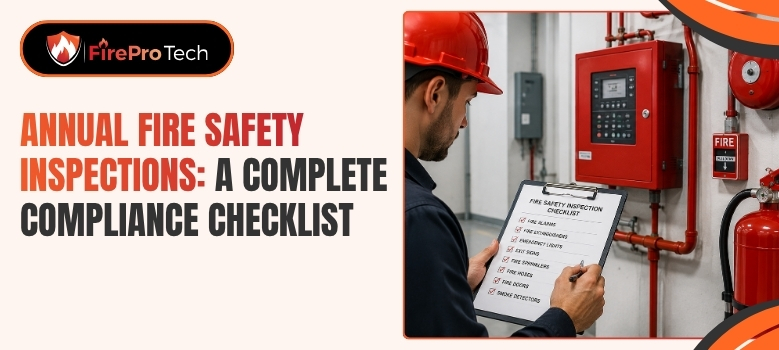
Annual fire safety inspections are meant to help businesses identify life-safety deficiencies before they become emergencies, failed inspections, or operational disruptions.
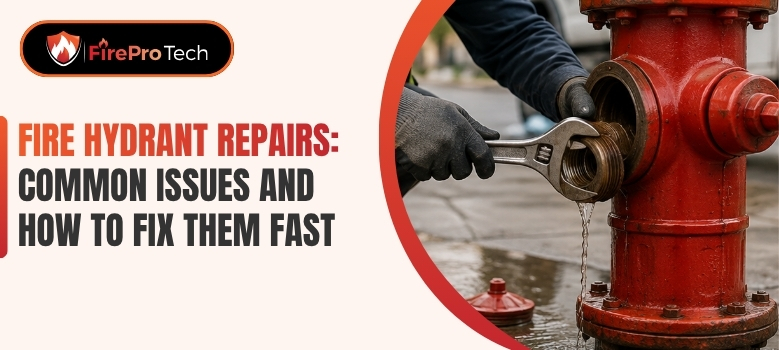
Fire hydrant repairs become urgent when a hydrant leaks, will not open, has poor flow, or appears damaged before an inspection or emergency.
Best Fire extinguisher installation is a practical business decision when you need reliable first-response protection without creating confusion about placement, equipment selection, or ongoing responsibilities.