

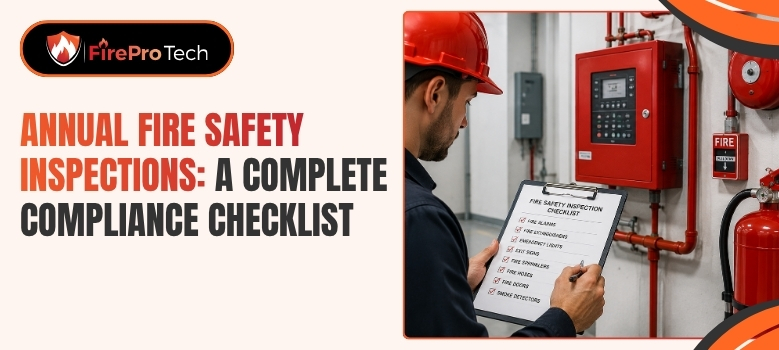
Annual fire safety inspections are meant to help businesses identify life-safety deficiencies before they become emergencies, failed inspections, or operational disruptions. For a facility manager, property manager, business owner, or contractor, the challenge is knowing what should be reviewed and how to document the work clearly.
This guide explains what a practical fire safety inspection checklist should cover, how to prepare a commercial property, which findings usually require follow-up, and how FirePro Tech, LLC can support inspection, testing, maintenance, installation, and compliance needs in Houston and surrounding service areas where available.
An annual inspection is not simply a quick walk-through followed by a signed form. It is part of a continuing fire protection process that helps confirm whether systems remain serviceable, accessible, properly identified, and consistent with the building’s current conditions.
The exact scope depends on the property, installed systems, applicable requirements, manufacturer instructions, and the authority having jurisdiction.
These terms are often used together, but they describe different parts of the process. An inspection is a visual or physical examination intended to identify conditions that could affect readiness. Testing evaluates whether a device, component, or system performs as intended.
Maintenance addresses cleaning, adjustment, repair, replacement, or other work needed to keep the system in serviceable condition. Document this point during annual fire safety inspections.
A report may show that an inspection was completed while also identifying testing or maintenance that remains due. Treating those activities as interchangeable can create a false sense of completion.
A business may have a current inspection report and still have unresolved impairments, overdue corrective work, blocked equipment, or documentation gaps.
Fire protection systems can be affected by renovations, tenant changes, storage changes, construction, vandalism, weather, corrosion, power interruptions, and routine wear. A sprinkler control valve can become inaccessible after a layout change. A fire alarm device can be affected by dust or remodeling.
An emergency exit can become obstructed as inventory accumulates.
Annual fire safety inspections create a planned opportunity to examine those conditions. They also help management coordinate vendors, preserve records, communicate deficiencies, and avoid discovering a problem only when an inspector, tenant, insurer, or emergency responder asks about it.
The annual visit should therefore be treated as one checkpoint in a broader compliance calendar. Depending on the system and local requirements, some components may require more frequent inspection, testing, or maintenance. Your service provider and local authority can help confirm the schedule that applies to your property.
A useful inspection produces more than a pass-or-fail impression. It should give the responsible party a clear record of what was reviewed, what was found, what was corrected, and what still needs attention. Make this check part of routine annual fire safety inspections.
When a deficiency remains open, the report should be specific enough for management to understand the issue and arrange the next step.
At FirePro Tech, LLC, our team approaches fire protection services with the practical understanding that documentation must work for the people managing the building. Clear records help connect field observations with maintenance decisions, future inspections, and compliance communication. Use annual fire safety inspections to keep this step documented.
A checklist helps prevent a common problem: focusing on the most visible equipment while overlooking the conditions that affect the entire life-safety system. The following categories provide a practical starting point for commercial properties. They do not replace the requirements applicable to a specific building or system.
Use annual fire safety inspections to keep this step documented.
A review of a fire alarm system may include the control panel, initiating devices, notification appliances, power supplies, annunciators, monitoring connections, and visible wiring or equipment conditions. The inspector may also need to consider whether devices remain accessible and whether recent construction or occupancy changes affect coverage or system operation.
Managers should make sure the panel is accessible, room identification is current, and any known trouble or supervisory signals have been addressed. Do not silence or reset a persistent signal without determining why it occurred. This is a practical checkpoint for annual fire safety inspections.
A recurring trouble condition may indicate a battery, wiring, power, communication, or device issue that needs qualified attention. Use annual fire safety inspections to keep this step documented.
Keep records of testing and repairs with the system documentation. If a tenant has altered walls, ceilings, doors, or room layouts, inform the fire protection professional before the inspection. Physical changes can affect device locations, audibility, visibility, or the accuracy of zone and annunciator information.
For sprinkler and standpipe systems, visible conditions matter. Valves should be accessible and identifiable, gauges should be readable, piping and fittings should not show obvious damage or unauthorized alterations, and sprinkler discharge areas should not be obstructed by storage or new construction.
The surrounding environment also deserves attention. Corrosion, leaking components, frozen conditions, impact damage, painted sprinkler components, and changes in heating or storage arrangements can create issues that require evaluation. Review this item as part of fire safety inspections.
A control valve that has been closed or partially closed can compromise protection even when the rest of the system appears normal.
A property representative should know where the riser room, control valves, fire department connections, and related equipment are located. These areas should not be used for general storage. Access problems can slow inspection work and create a serious operational concern during an emergency.
A fire extinguisher services review generally considers location, accessibility, mounting or placement, identification, physical condition, pressure indication where applicable, seals, hoses, pins, labels, and service records. The appropriate extinguisher type and placement depend on the hazards and the building’s protection plan. Document this point during annual fire safety inspections.
FirePro Tech, LLC does not sell fire extinguishers or other fire protection products. Where inspection or maintenance services are relevant, the focus should remain on evaluating serviceability and documenting needed action rather than treating equipment as a retail purchase. Include this check in annual fire safety inspections.
Do not move an extinguisher to make room for furniture, merchandise, or temporary displays without confirming that the revised location remains appropriate. Missing signage, blocked access, visible damage, and outdated service records should be handled promptly through the responsible service process.
Emergency lighting and exit signs support evacuation when normal power is interrupted. A review may consider visibility, physical condition, illumination, battery or power performance where testing applies, and whether signs remain positioned to guide occupants along the approved path of egress.
The checklist should also account for the path itself. Exit doors should be usable as intended, corridors and stairs should remain clear, and changes in furniture, partitions, merchandise, or tenant improvements should not create confusion about the way out. Review this item as part of annual fire safety inspections.
A marked exit is not enough if the route leading to it is obstructed or poorly understood.
Fire doors and rated barriers can be affected by wedges, damaged closers, unapproved penetrations, missing hardware, poor fit, or modifications that were not coordinated with the fire protection plan.
An inspection may identify visible concerns, but specialized evaluation may be needed when the condition involves a rated assembly or a significant building alteration.
Tell the inspection provider about renovations, new tenants, changes in use, increased storage, equipment installation, or areas that have been reconfigured. Fire protection requirements are connected to how a space is used, not only to the equipment installed in it. This is a practical checkpoint for annual fire safety inspections.
The administrative portion of a business fire safety checklist is easy to underestimate. Keep current copies of inspection and testing reports, corrective work records, system drawings or documents available to the responsible parties, monitoring information where applicable, and records of known impairments or temporary safeguards.
Maintain an emergency contact list that includes the property representative, facility contact, alarm or sprinkler service contact, and other responsible parties appropriate to the building. If a system is taken out of service, impairment procedures may require notification, precautions, and restoration steps that vary by system and jurisdiction.
Our team at FirePro Tech, LLC can help businesses organize inspection-related service needs so deficiencies are easier to understand and follow-up work is less likely to be lost between vendors or management changes. This is a practical checkpoint for annual fire safety inspections.
Preparation is not about making a property look perfect for one day. It is about giving the inspector access to the systems, accurate information about the building, and enough time to identify conditions that deserve attention. Good preparation also reduces avoidable delays and helps management respond to findings more efficiently.
Track this detail through annual fire safety inspections.
Before scheduling, compare the current building to the information used during prior service visits. Ask whether the occupancy, floor plan, tenant mix, storage arrangement, operating hours, or fire protection equipment has changed. Even a small remodeling project can affect alarm devices, sprinkler coverage, exit routes, fire doors, or emergency lighting.
Walk through the property with staff who understand daily operations. Employees often know where equipment becomes blocked, which doors are difficult to use, or where deliveries and temporary storage create recurring problems. Track this detail through annual fire safety inspections.
Their observations can help management correct housekeeping issues before the inspection and identify conditions that need a more technical review.
Risers, valves, fire alarm panels, backflow assemblies, fire department connections, extinguishers, electrical rooms, mechanical areas, and emergency exits should be accessible as applicable to the property.
Remove unrelated storage from equipment rooms, but do not disconnect, relocate, or adjust system components unless the work is being handled through an appropriate qualified process.
Have prior reports and records available. If an unresolved deficiency has a work order, estimate, scheduled repair, or temporary measure, keep that information with the inspection file.
A clear record does not automatically resolve a deficiency, but it helps responsible parties demonstrate that the issue is being managed rather than ignored. Make this check part of routine annual fire safety inspections.
Commercial properties often have multiple parties affecting fire protection conditions. A tenant may control interior storage. A general contractor may be completing work near a sprinkler system. A property manager may be responsible for common areas while individual occupants control leased spaces.
Set expectations before the visit. Notify tenants of access needs, coordinate escorts for restricted areas, and inform the service provider about construction or shutdown constraints. If testing could affect alarms, monitoring, building access, or operations, confirm the planned process in advance rather than improvising on the inspection day.
Avoid scheduling the inspection without considering the building’s actual operating pattern. A visit during a high-traffic period may make access difficult, while a visit during a quiet period may require coordination with security or building representatives. Document this point during annual fire safety inspections.
The right schedule is the one that permits the required work without creating unnecessary confusion.
A short internal review can identify common preventable issues:
This walk-through is not a substitute for professional inspection or testing. Its purpose is to improve communication and eliminate conditions that management can reasonably address before the scheduled visit.
A credible inspection may identify deficiencies. The goal is not to avoid all findings through superficial preparation; the goal is to understand them and respond appropriately. Keep this condition visible during annual fire safety inspections.
Ask whether each finding is an immediate impairment, a maintenance issue, a documentation concern, an accessibility problem, or a condition requiring design or code review.
When a finding affects a critical system, discuss interim precautions and restoration priorities with the qualified service provider and the responsible authority as applicable. Requirements differ, so the response should be based on the affected system and local process rather than a generic internet checklist.
At FirePro Tech, LLC, we recommend giving management a clear path from inspection results to corrective action. That may include additional testing, maintenance, repair coordination, installation work, or compliance support, depending on what the property requires. Keep this condition visible during annual fire safety inspections.
Call Now for Professional Fire Safety Inspection Services
The inspection report is the beginning of the follow-up process, not the end. A property remains at risk when deficiencies are recorded but no one owns the next step. Effective compliance management turns technical findings into prioritized actions, documented decisions, and verified completion.
Not every finding has the same urgency. A system impairment, inaccessible control valve, nonfunctional notification device, or condition that affects evacuation may require faster action than a minor recordkeeping correction. This is a practical checkpoint for annual fire safety inspections.
The inspector or service provider should explain the significance of the finding, but the building representative remains responsible for ensuring that the issue is not overlooked.
Ask practical questions:
This approach helps prevent two opposite mistakes: delaying a serious concern because it is buried in a long report, or treating every minor observation as if it requires the same emergency response. Review this item as part of annual fire safety inspections.
Some findings can be addressed through maintenance or repair. Others may result from a change in building use, a renovation, damaged equipment, outdated documentation, or a condition that requires a broader evaluation.
A correction restores intended function; an upgrade may involve improving or changing the system because the property’s needs have changed.
Do not assume that replacing one component automatically resolves a larger issue. For example, moving a wall, changing a ceiling, increasing storage height, or converting a space to a different use may require review of multiple systems. Track this detail through annual fire safety inspections.
Coordinating early with a qualified fire protection professional can reduce rework and help clarify the scope before construction or corrective work proceeds.
A simple tracker can include the report date, affected system, location, finding, priority, responsible party, proposed action, approval status, scheduled work, completion date, and verification record. The tracker should be updated whenever work is approved, delayed, completed, or changed. Make this check part of routine annual fire safety inspections.
This is particularly important for property managers overseeing multiple buildings. A spreadsheet or maintenance platform can help, but the format matters less than consistent ownership and follow-through. Store the final documentation where the people responsible for the building can retrieve it during a review, emergency, tenant transition, or future inspection.
A work order marked complete is not always the same as a deficiency being resolved. Confirm that the appropriate testing, documentation, labeling, restoration, or notification step was completed.
If a system was impaired during work, verify that it was returned to service and that required parties were informed according to the applicable process. Include this check in annual fire safety inspections.
Ask for records that explain what was done. Keep them with the original inspection report so the history is understandable months later. This prevents the recurring problem of management knowing that someone visited the site but not knowing whether the specific issue was actually corrected.
Commercial fire protection work can affect access, alarms, monitoring, tenants, production areas, and building schedules. Discuss these operational factors before work begins. A clear plan can help coordinate escorts, notifications, shutdowns, testing windows, and restoration without treating safety as an afterthought.
Use annual fire safety inspections to keep this step documented.
FirePro Tech, LLC provides inspection, testing, maintenance, installation, and related compliance support where applicable to the project. The appropriate service depends on the system and the condition identified; a consultation is often the most efficient way to determine the next step rather than guessing from a general checklist.
Searching for fire protection services near me is often the first step after a deficiency, property acquisition, renovation, or missed inspection comes to light. The better decision is not always the provider with the shortest description or fastest promise. Include this check in annual fire safety inspections.
You need a service relationship that fits the building, communicates clearly, documents work, and understands the difference between inspection, testing, maintenance, installation, and compliance support. Track this detail through annual fire safety inspections.
Start by describing the property accurately. Share the building type, approximate size, occupancy or use, installed systems, number of locations, access limitations, recent changes, and known concerns. A provider cannot responsibly assess the work from a vague request if the scope depends on system type or building conditions.
Ask how the provider handles findings. Will the report identify the affected location and condition? Can the team explain which items need prompt action and which require further evaluation? Will completed work be documented in a way that your property records can support future service and review?
You should also confirm that the requested service is actually within the provider’s scope. FirePro Tech, LLC focuses on fire protection services such as inspection, testing, maintenance, installation, compliance support, and related fire safety services where applicable. Keep this condition visible during annual fire safety inspections.
FirePro Tech, LLC does not sell fire extinguishers or fire protection products, and it does not provide kitchen hood cleaning services. Keep this condition visible during annual fire safety inspections.
A useful pre-service conversation should clarify more than price. Consider asking about:
These questions help prevent scope misunderstandings. They also make it easier to compare proposals that may use similar words but include different levels of inspection, documentation, coordination, or follow-up. Include this check in annual fire safety inspections.
Houston properties may include office buildings, retail spaces, industrial facilities, warehouses, multifamily properties, medical or institutional occupancies, and mixed-use buildings. Their fire protection needs can differ substantially. Local review practices, building use, system design, weather exposure, construction activity, and the authority having jurisdiction may affect the service process.
Do not rely on a checklist from another city as proof that your property is compliant. Use general checklists to organize questions, then verify the applicable requirements for the building and jurisdiction. This is especially important when a property has changed ownership, changed occupancy, undergone renovation, or accumulated unresolved deficiencies.
An annual inspection should have a place on the calendar before the previous service cycle is forgotten. Track required visits, related testing and maintenance, report delivery, deficiency follow-up, permit or project coordination, and internal property walk-throughs as applicable. Review this item as part of annual fire safety inspections.
The calendar should also include triggers outside the annual cycle. Renovations, tenant turnover, water damage, system alarms, impact damage, changes in storage, extended vacancies, and construction can all justify contacting a fire protection professional before the next scheduled annual review.
For Houston businesses, FirePro Tech, LLC can be a practical resource when you need to coordinate fire safety inspections or related fire protection services. Confirm service availability, scope, and scheduling for your specific location and system before work is arranged.
The global fire protection system market was valued at USD 67.35 billion in 2023 and is expected to grow to USD 116.17 billion by 2032, registering a compound annual growth rate (CAGR) of 6.25% during the 2024–2032 forecast period.
Annual fire safety inspections are most effective when they are part of an ongoing management process rather than a single appointment. A complete review considers installed systems, equipment access, evacuation conditions, building changes, records, impairments, and the corrective actions needed after the report is issued.
Use a fire safety inspection checklist to organize your preparation, but do not treat a generic list as a substitute for system-specific inspection, testing, maintenance, or local compliance guidance. Requirements can vary by building use, system, jurisdiction, manufacturer instructions, and authority having jurisdiction.
If your Houston business needs help planning a fire safety inspection, responding to deficiencies, or coordinating related fire protection services, FirePro Tech, LLC can help you identify the appropriate service scope.
The next step is to gather your current reports, note any building changes, and discuss the property with a qualified professional before the next inspection deadline.
Annual fire safety inspections are scheduled reviews of a building’s fire protection systems and related conditions. Scope may include alarms, sprinklers, extinguishers, exits, records, and visible hazards.
A typical checklist may cover alarms, sprinkler components, extinguishers, emergency lighting, exit signs, fire doors, access, housekeeping, impairment records, and previous deficiencies. Scope varies by property.
Requirements vary by occupancy, systems, local rules, adopted codes, insurance conditions, and the authority having jurisdiction. Confirm the applicable schedule and records for your specific property.
Provide access to equipment and records, clear exits and protection areas, review previous deficiencies, document building changes, and coordinate with tenants or contractors before the inspection.
Cost depends on the building, systems, locations, access, testing scope, documentation, and corrective work. A property-specific quote is more reliable than a general online estimate.
Document the finding, determine its urgency, assign responsibility, and arrange correction or follow-up. Significant impairments may require prompt precautions, notifications, testing, or verification.
FirePro Tech, LLC provides inspection, testing, maintenance, installation, and compliance support where applicable. Scope depends on the property and system. It does not sell products or provide kitchen hood cleaning.
Describe your building, systems, location, and service need, then confirm scope, records, scheduling, and follow-up. Houston businesses can discuss available support with FirePro Tech, LLC.
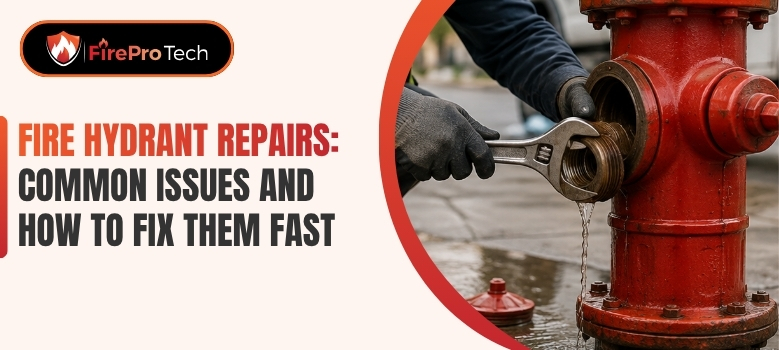
Fire hydrant repairs become urgent when a hydrant leaks, will not open, has poor flow, or appears damaged before an inspection or emergency.
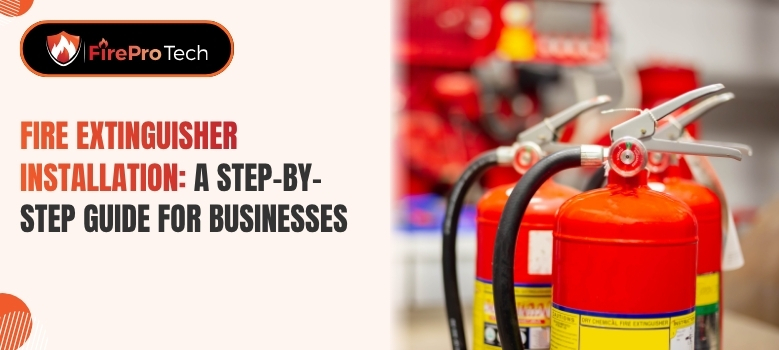
Best Fire extinguisher installation is a practical business decision when you need reliable first-response protection without creating confusion about placement, equipment selection, or ongoing responsibilities.
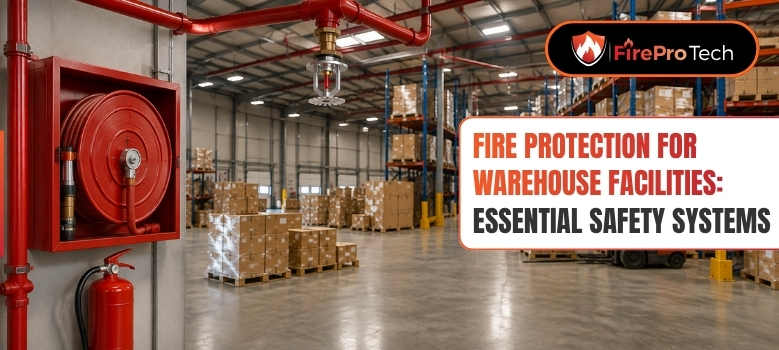
Fire protection for warehouse facilities can become difficult to manage when storage layouts change, inventory increases, or inspections are treated as paperwork rather than risk control.