

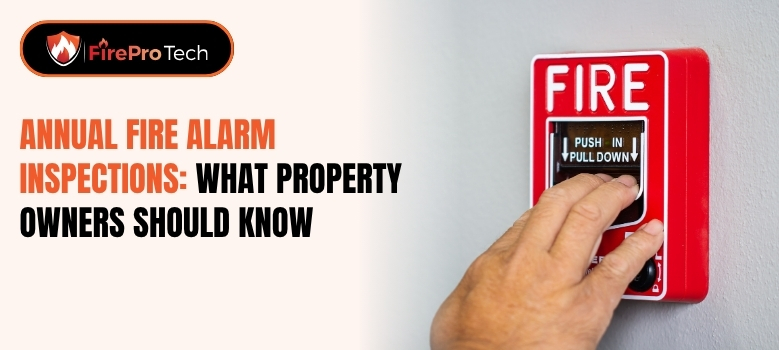
A reliable schedule for annual fire alarm inspections helps property owners find system problems before an alarm, inspection deadline, or fire marshal review exposes them. In Houston, commercial buildings often depend on coordinated inspections, testing, documentation, and repairs to keep fire protection responsibilities organized.
This guide explains what an annual fire alarm inspection service typically evaluates, how testing differs from a visual review, what affects fire alarm inspection cost, and how to prepare your property. It also explains when fire alarm installation or corrective work may become part of the larger compliance plan.
Fire alarm inspection services are not simply a paperwork exercise. They are part of an ongoing process for confirming that a fire alarm system remains accessible, functional, documented, and appropriate for the conditions in the building.
The exact scope can vary based on the system, occupancy, monitored features, local requirements, and direction from the authority having jurisdiction.
A professional inspection reviews the condition and operation of relevant fire alarm equipment. Depending on the installation and contract scope, that may include the control unit, initiating devices, notification appliances, power supplies, batteries, annunciators, supervisory features, monitoring connections, and other connected components.
The technician may compare the installed system with available records, observe conditions that could interfere with operation, and identify signs of damage, alteration, obstruction, corrosion, contamination, or unauthorized changes. Document this point during annual fire alarm inspections.
A device that is physically present but inaccessible, covered, disconnected, or affected by a later renovation may still create a protection concern.
The inspection also provides an opportunity to identify issues that may not be obvious during normal building operations. A panel can appear normal while a backup battery is aging, a notification appliance is obstructed, a detector is affected by its environment, or a supervisory condition is not being handled correctly.
These terms are often used together, but they are not interchangeable. An inspection is primarily an examination of equipment and conditions. Testing involves operating or activating devices and functions to confirm that they respond as intended.
Maintenance addresses cleaning, adjustment, repair, replacement, or other work needed to keep the system reliable. Use annual fire alarm inspections to keep this step documented.
NFPA 72 fire alarm testing is performed according to the applicable system requirements and the equipment’s design. It may involve different procedures for smoke detectors, heat detectors, manual initiating devices, waterflow switches, supervisory devices, notification appliances, emergency communication features, power supplies, and monitoring pathways.
A property owner should ask for a clear explanation of which activities are included. A visual inspection alone may not provide the same information as functional testing, and testing without appropriate documentation can leave the owner uncertain about what was examined and what remains unresolved.
The inspection record should make it possible to understand the system’s condition on the date of service. Useful documentation generally identifies the property, service date, system or equipment examined, findings, test results where applicable, and any deficiencies that require attention. Keep this condition visible during annual fire alarm inspections.
Keep inspection records with other life-safety documentation. Property managers may need them when coordinating repairs, responding to building questions, preparing for a review, transferring responsibilities, or planning future work. Missing records can make it harder to determine whether a problem is new, recurring, or previously identified.
At FirePro Tech, LLC, our team approaches inspection work as part of a practical fire protection services process: evaluate the system, communicate findings clearly, and help the property owner understand the next step rather than leaving a technical report without context.
The quality of commercial fire alarm testing depends on preparation as much as on the test itself. Document this point during annual fire alarm inspections.
A technician needs access to the relevant equipment, accurate information about the building, and a way to coordinate with occupants, monitoring parties, and other contractors when system signals may be transmitted or building functions may be affected. Document this point during annual fire alarm inspections.
The service provider may review prior reports, available system drawings, sequence-of-operations information, installation records, monitoring details, and known deficiencies. The technician may also confirm access to locked rooms, roof areas, riser spaces, electrical rooms, tenant areas, and other locations containing fire alarm system or supporting equipment.
Property owners should identify recent renovations, tenant improvements, changes in room use, additions to the building, recurring trouble signals, nuisance alarms, and areas that are difficult to access. A change in layout or environmental conditions can affect device coverage and may require a closer review.
If the system is connected to a supervising station or other monitoring arrangement, the responsible parties may need to coordinate test signals in advance. The exact process depends on the monitoring arrangement and local procedures. Make this check part of routine annual fire alarm inspections.
Failing to coordinate can result in unnecessary emergency responses or, more seriously, confusion about whether a signal is a test or a real event. Include this check in annual fire alarm inspections.
The scope varies by system, but a fire sprinkler inspection in Houston visit may address several layers of operation. The technician may evaluate whether initiating devices produce the expected signal, whether notification appliances operate, whether supervisory and trouble conditions are received, and whether the control equipment responds appropriately.
The review may also consider primary and secondary power, annunciation, system labeling, accessible disconnects, visible damage, and the relationship between the fire alarm system and connected building functions.
Where the system is integrated with other equipment, the test plan should account for the approved sequence and the practical risk of disrupting building operations.
Testing should be performed deliberately. Resetting a panel without finding the cause of a trouble condition, silencing an alarm without confirming the initiating device, or bypassing a device without documenting it can create a false sense of security. Keep this condition visible during annual fire alarm inspections.
The goal is not merely to make the panel look normal at the end of the appointment; it is to understand whether the system can perform its intended functions.
A deficiency does not always mean the entire system has failed. It does mean the finding should be understood, documented, and prioritized. Some findings may require prompt attention because they affect detection, notification, supervision, power, monitoring, or access.
Others may involve documentation, labeling, environmental conditions, or components that need planned service.
Ask whether a reported issue is an immediate impairment, a condition requiring correction, or a recommendation for additional evaluation. The answer may depend on system design, building conditions, applicable requirements, and the authority having jurisdiction. Make this check part of routine annual fire alarm inspections.
Corrective work may include adjustment, repair, component replacement, programming, wiring investigation, or fire alarm installation changes. FirePro Tech, LLC can help property decision-makers evaluate inspection findings and determine whether maintenance, repair, installation, or additional compliance support is the appropriate next step.
Testing may require brief coordination with occupants, security staff, elevator or mechanical contractors, monitoring contacts, and building management. The work plan should reflect the property’s operating hours and the locations that must be entered. Include this check in annual fire alarm inspections.
For a multi-tenant property, notifying occupants about scheduled testing can reduce interruptions and improve access. It is also helpful to maintain a current contact list so the technician can quickly reach the person authorized to provide access or make decisions about deficiencies.
Planning is where property owners can prevent many avoidable problems. Waiting until a deadline is close may leave little time to correct deficiencies, obtain access to tenant spaces, coordinate a reinspection, or resolve questions about documentation.
Houston properties should account for their building’s specific use, system configuration, local review process, and operational schedule rather than relying on a generic calendar.
Begin with the system records you already have. Review prior reports for repeated trouble signals, unresolved deficiencies, inaccessible areas, failed devices, battery concerns, and recommendations for additional work. Review this item as part of annual fire alarm inspections.
A recurring finding often deserves more attention than a one-time administrative issue because it may indicate that the underlying condition has not been addressed.
Consider how the property has changed since the last inspection. Renovations, partition changes, new equipment, tenant turnover, storage changes, and alterations to ceiling or mechanical conditions may affect device access or performance. A system that was appropriate for an older layout may require professional evaluation after a significant modification.
The building’s occupancy and operating conditions also matter. A warehouse, office building, medical facility, apartment property, school, retail space, or industrial site may have different equipment, access challenges, impairment concerns, and coordination needs. Document this point during annual fire alarm inspections.
Requirements are not identical for every property, so the inspection plan should be based on the actual system and building.
Many inspection delays are operational rather than technical. A technician may be unable to complete the work if a riser room is locked, a tenant area is unavailable, a lift is needed but not arranged, or no authorized person is present to review findings.
Before scheduling, identify:
If the property has multiple buildings or separate fire alarm panels, confirm whether the appointment covers one system or the full site. Clear scope at the beginning helps avoid assumptions about what was or was not included. Review this item as part of annual fire alarm inspections.
Fire alarm compliance testing is influenced by more than the equipment manufacturer’s instructions. The system design, adopted codes and standards, inspection requirements, permit history, building use, and authority having jurisdiction may all affect what is expected. Keep this condition visible during annual fire alarm inspections.
NFPA 72 is widely used as a reference for fire alarm and signaling system inspection, testing, and maintenance, but property owners should not assume that a general online summary determines the complete requirement for their building. Local authorities and project-specific documents may establish additional expectations.
For that reason, a service provider should be able to explain findings in relation to the system and the property, while making clear when an issue needs confirmation from the authority having jurisdiction. No responsible provider should guarantee a particular approval outcome without reviewing the relevant circumstances.
Review this item as part of annual fire alarm inspections.
When comparing providers, look beyond the lowest quoted price. Ask whether the scope includes inspection, functional testing, documentation, deficiency reporting, monitoring coordination, and follow-up support. Also ask how the provider handles incomplete access, impairments, repeat deficiencies, and work that falls outside the original scope.
A useful quote should identify the property or system covered, assumptions about access, included testing, exclusions, documentation, and potential additional work. If the quote is vague, the final cost may be difficult to predict even when the initial price appears attractive.
Use annual fire alarm inspections to keep this step documented.
If you search for “fire alarm installation near me” or “fire alarm inspection service,” prioritize a provider that can evaluate the existing system before recommending changes. Installation is sometimes necessary, but it should follow a clear understanding of the building, system condition, design needs, and applicable review requirements.
Fire alarm inspection cost is not a single standard amount for every property. The price reflects the time, personnel, access, system complexity, documentation, and coordination required.
A property owner can make better decisions by separating the cost of the inspection itself from the cost of correcting deficiencies discovered during the inspection. Keep this condition visible during annual fire alarm inspections.
A small, accessible system with current records may require a different level of effort than a large, multi-building system with several panels, extensive notification appliances, monitoring connections, or difficult tenant access. Device count is one factor, but it is not the only one.
Other considerations may include the number of floors, system age, type of initiating devices, emergency communication features, special hazards, integrated building functions, access restrictions, operating-hour requirements, and whether previous records are available. The service provider may also need additional coordination when testing affects occupants or monitored signals.
A quote should explain assumptions rather than imply that every property receives the same scope. Ask what happens if the technician encounters undocumented equipment, inaccessible devices, active trouble conditions, or evidence that the system has been altered. Make this check part of routine annual fire alarm inspections.
An inspection report may identify conditions that require maintenance, repair, programming, replacement, or further investigation. These costs should be evaluated separately from the original inspection price whenever possible. That separation helps the owner understand what was included in the visit and what additional work is being proposed.
The least expensive immediate repair is not always the most suitable long-term decision. For example, repeatedly addressing the same trouble without investigating the underlying wiring or environmental cause can create recurring service expense. Conversely, replacing or redesigning equipment without confirming the actual problem can create unnecessary cost and system complexity.
A practical decision usually considers urgency, system reliability, compatibility, documentation, future maintenance, building changes, and the risk of delaying the work. For larger corrective projects, obtain a clear scope and confirm whether design, permitting, installation, programming, testing, and closeout documentation are included or handled separately.
Fire alarm installation may be considered when a system is being added to a new building, expanded for a renovation, modified for a change in occupancy, or replaced because the existing arrangement cannot reliably support the property’s needs. This is a practical checkpoint for annual fire alarm inspections.
Installation decisions should be based on a qualified evaluation, not simply on an isolated inspection comment. This is a practical checkpoint for annual fire alarm inspections.
A new or modified system may involve design coordination, device placement, wiring, power, programming, monitoring, acceptance testing, and documentation. The exact process varies by project and jurisdiction. Property owners should confirm the responsibilities of the fire protection services, electrical contractor, design professional, general contractor, building owner, and authority having jurisdiction.
The phrase “fire alarm installation near me” may help locate local providers, but proximity alone does not establish that a contractor is appropriate for the project. The more useful questions concern experience with comparable systems, communication, documentation, coordination, and the ability to support the system after installation.
A dependable budget includes more than the scheduled inspection. Consider potential reinspection, corrective maintenance, access equipment, monitoring coordination, records updates, and system changes resulting from renovations or tenant improvements. Include this check in annual fire alarm inspections.
This does not mean every property needs extensive additional work. It means the owner should avoid treating the inspection as an isolated transaction. A documented, recurring process makes it easier to identify trends and plan expenditures before a deficiency becomes an urgent operational issue.
Call Now for Professional Fire Alarm Inspection Services
Most inspection problems are preventable when responsibility, timing, and system information are handled deliberately. The following issues frequently make inspections less efficient or leave owners with unresolved questions. This is a practical checkpoint for annual fire alarm inspections.
Late scheduling can create a chain of problems: limited appointment availability, unavailable tenant spaces, delayed repairs, and insufficient time for follow-up. Schedule with enough room to review the report and address findings, especially when the property has a large or complex system.
The best timing depends on the property’s obligations and operating schedule. A recurring annual planning date can help, but it should not replace attention to renovations, recurring alarms, system impairments, or changes in building use. Track this detail through annual fire alarm inspections.
A normal display is useful, but it does not prove that every field device, notification appliance, circuit, power source, or monitored function will perform as intended. A system can have no visible trouble signal and still have an obstruction, damage, access issue, expired documentation, or a component that requires testing.
This is why a qualified inspection and testing process matters. It evaluates more than what can be seen from the front of the control panel. Track this detail through annual fire alarm inspections.
A report is not the end of the process when it identifies a deficiency. Assign someone to review each finding, determine its priority, obtain clarification if needed, and document the corrective action.
If the work is deferred, record the reason and the planned next review rather than allowing the issue to disappear into an email thread.
For property managers, a central log can help coordinate owners, tenants, vendors, and building staff. It can also show whether the same issue has appeared across multiple inspection cycles.
Two quotes cannot be compared fairly if one includes functional testing and documentation while the other covers only a limited visual review. Confirm the scope in writing, including access assumptions, system areas, monitoring coordination, report format, and follow-up responsibilities. Use annual fire alarm inspections to keep this step documented.
Also confirm whether repairs are included, quoted separately, or excluded. Clear boundaries protect both the property owner and the service provider from misunderstandings.
A renovation can affect alarm devices, notification coverage, wiring, room layouts, ceiling conditions, power, and system programming. Even when a contractor completes the construction work, the property owner should make sure fire alarm impacts are evaluated and documented.
At FirePro Tech, LLC, we help property owners and managers connect inspection findings with practical next steps, whether that means routine maintenance, corrective service, installation work, or additional review of a changed building condition.
The global fire protection system market was valued at USD 67.35 billion in 2023 and is expected to grow to USD 116.17 billion by 2032, registering a compound annual growth rate (CAGR) of 6.25% during the 2024–2032 forecast period.
Annual fire alarm inspections give property owners a structured way to evaluate system condition, identify deficiencies, maintain records, and plan corrective work. The inspection should be viewed as part of a continuing fire protection process—not as a single appointment that automatically resolves every compliance or reliability question.
For Houston property owners, the most effective approach is to schedule early, provide complete access, review previous findings, coordinate monitored testing, and ask for a clear explanation of the work performed.
Requirements and testing scope may vary by system, building, jurisdiction, and authority having jurisdiction, so decisions should be based on the property’s actual conditions.
FirePro Tech, LLC provides fire protection services that can support inspection, testing, maintenance, installation, and compliance planning when those services fit the property’s needs.
If you are preparing for annual fire alarm inspections, start by reviewing your records and arranging a conversation about the system, the building, and the next practical step.
Annual fire alarm inspections are scheduled reviews of a fire alarm system’s equipment, condition, documentation, and required functions. The exact scope varies by system, building, jurisdiction, and authority having jurisdiction.
No. An inspection examines equipment and conditions, while testing operates devices or functions to confirm response. Maintenance addresses cleaning, adjustment, repair, or other work needed to support reliable operation.
NFPA 72 fire alarm testing may include initiating devices, notification appliances, power supplies, supervisory signals, trouble signals, monitoring, and connected functions, depending on the system and applicable requirements. Review this item as part of annual fire alarm inspections.
Fire alarm inspection cost depends on system size, device count, building access, system complexity, records, monitoring coordination, and testing scope. Repairs, reinspection, and installation work are usually evaluated separately.
Review previous reports, identify recent building changes, arrange access to all equipment and tenant areas, coordinate monitored signals, and make responsible contacts available to discuss findings and corrective priorities. Track this detail through annual fire alarm inspections.
Fire alarm installation may be appropriate for new construction, expansions, renovations, occupancy changes, or systems that cannot reliably support the building. A qualified evaluation should establish the need and project scope.
Compare the written scope, testing activities, documentation, access assumptions, monitoring coordination, deficiency process, and follow-up support. Do not compare prices without confirming that the services being quoted are equivalent.
FirePro Tech, LLC can help property owners evaluate inspection, testing, maintenance, installation, and compliance-support needs. The appropriate scope depends on the property, system, project conditions, and applicable requirements.
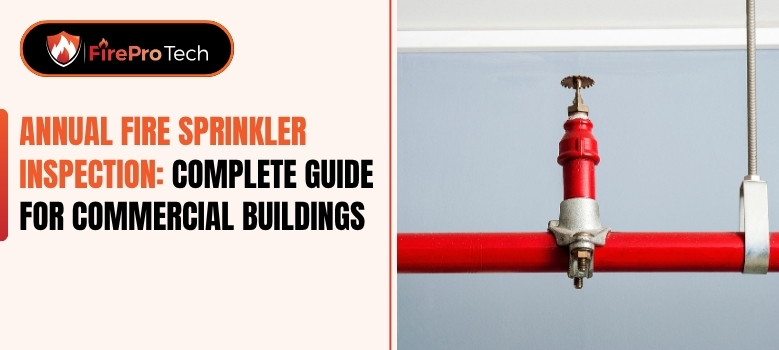
Annual fire sprinkler inspection is a recurring commercial building responsibility that can become difficult when records are incomplete, access is limited, or deficiencies are discovered at the last minute.
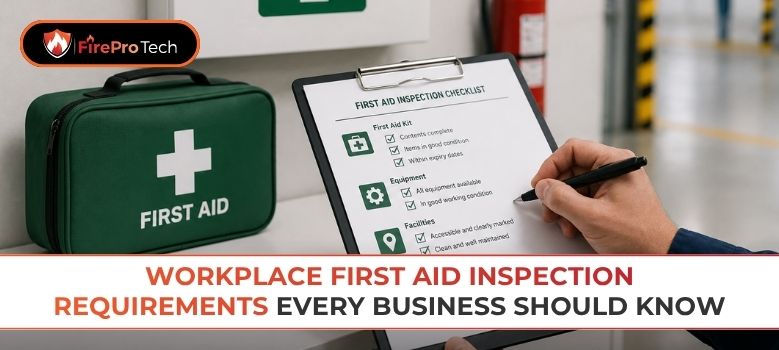
Workplace first aid inspection requirements are easy to overlook because the cabinet may look complete from the outside. A real inspection checks whether supplies are present, usable, accessible, and suited to the injuries employees could reasonably face.
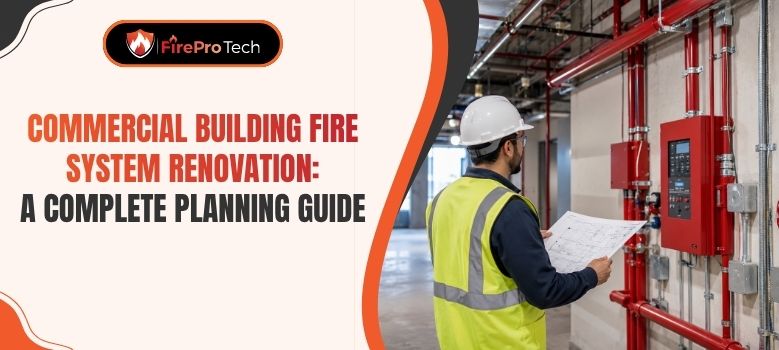
Commercial building fire system renovation is where many property teams discover how much hidden risk lives behind walls, above ceilings, and inside old paperwork. If you are updating a tenant space, reconfiguring a floor plan, or modernizing an aging facility, the fire protection work cannot be treated as an afterthought.