

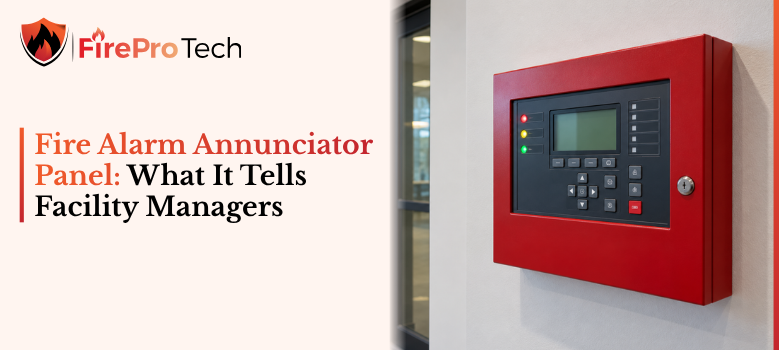
Fire alarm annunciator panel information is most useful when a facility team can quickly connect the displayed signal to a real location and an appropriate response.
In a busy commercial building, the difference between “alarm active” and a clearly identified detector, pull station, or monitored condition can affect how efficiently staff manage evacuation and assist emergency responders.
The annunciator is one part of the larger fire alarm system, so its value depends on design, programming, installation, labeling, testing, and maintenance.
This guide explains what the display may show, how to interpret common conditions, what staff should do next, and when a Houston business may need fire alarm system.
A fire alarm annunciator panel is a user interface that presents fire alarm system information at a location separate from, or in addition to, the main fire alarm control panel.
It may be positioned near a building entrance, security desk, lobby, fire command area, or another location selected during system design. The exact appearance and available functions vary by equipment, programming, building layout, and applicable requirements.
The practical purpose is straightforward: give authorized personnel a readable indication of what the system is reporting without requiring them to search through the entire building or access the main control equipment immediately. The fire alarm annunciator panel should present this information clearly during an alarm event.
The fire alarm control panel receives and processes signals from initiating devices and connected systems. Those devices may include smoke detectors, heat detectors, manual pull stations, waterflow switches, supervisory devices, and other approved inputs. The control panel then operates notification appliances and communicates status to connected equipment as designed.
The fire alarm annunciator panel displays selected information from that control system. It does not automatically replace the control panel, and it should not be treated as an independent diagnosis of the event.
Depending on the system, the fire alarm annunciator panel may provide buttons or controls for acknowledging signals, silencing notification appliances, or resetting the system. Access to those controls should follow the building’s emergency procedures and the instructions of authorized personnel.
During an event, the display may identify more than one type of condition. The wording varies by manufacturer, but these categories are common:
A supervisory or trouble signal should not be casually dismissed because it is not displayed as a fire alarm. These conditions can indicate that part of the protection system needs attention. The correct response depends on the property’s procedures, the signal details, and the people responsible for managing the system.
This point matters because the fire alarm annunciator panel helps staff interpret system conditions during an alarm event.
The most important information is usually the first alarm location or point identified by the system, followed by additional signals as they occur. A trained operator should read the display carefully rather than relying only on a buzzer, flashing light, or general “alarm” message.
A small amount of accurate information can help staff communicate more effectively while occupants follow the building’s emergency plan.
A fire alarm annunciator panel may show a floor, room, tenant area, stairwell, mechanical space, or other programmed description. It may also show a device type, loop, zone, address, or point number. These identifiers are useful only when they match clear field labels and current building conditions.
For example, a display that identifies “Level 3 East Corridor Smoke Detector” gives an operator a more useful starting point than a generic “Zone 4 Alarm.” However, even a precise display does not mean staff should enter a potentially hazardous area to investigate.
The display supports communication and response coordination; it does not eliminate the need for evacuation and professional emergency response. A clear fire alarm annunciator panel can support faster communication during an alarm event.
Many systems record or display events in sequence. The first signal may help identify where the initiating condition occurred, while later signals may indicate additional devices, notification activation, supervisory conditions, or system interactions. Operators should note the information without delaying evacuation or other actions required by the emergency plan.
If the display cycles through messages, staff should follow the system’s operating instructions and document the signals when it is safe to do so. Photographs or written notes may help responders and service professionals later, but documentation should never take priority over life safety.
Accurate information on the fire alarm annunciator panel is especially important during an alarm event.
Some annunciators indicate whether a signal has been acknowledged, whether audible notification has been silenced, or whether the system has been reset. These status changes can be operationally important.
Silencing a buzzer or notification appliance does not necessarily remove the initiating condition, and resetting the panel does not prove that the hazard has been resolved. The fire alarm annunciator panel should present this information clearly during staff training.
Unauthorized operation can also erase useful information or return the system to a normal display before the condition has been evaluated. Unless the emergency plan and responsible authority direct otherwise, personnel should avoid pressing controls simply to make the panel quiet.
A qualified professional may need to inspect the affected device, wiring, power supply, or connected fire protection equipment. This point matters because the fire alarm annunciator panel helps staff interpret system conditions during staff training.
Request A Fire Alarm Review For Clearer Emergency Information [Request A Quote]
A fire alarm annunciator is valuable only when people know how to use the information safely. Every property should maintain an emergency plan appropriate to its occupancy, hazards, occupants, and local expectations.
The fire alarm annunciator panel display supports that plan; it does not replace evacuation procedures, emergency communications, or instructions from emergency responders.
When the annunciator indicates an alarm, occupants should follow the building’s emergency procedures. Depending on the property, that may include evacuating by designated routes, assisting people who need support, closing doors when practical, reporting to an assembly location, and calling emergency services according to the established plan.
Building staff should avoid assuming that a single detector activation is a false alarm because there is no visible smoke. Smoke can be concealed, conditions can change quickly, and the initiating device may be located in an area that staff cannot safely access.
A trained responder can evaluate the situation using the display, building information, and appropriate equipment. A clear fire alarm annunciator panel can support faster communication during staff training.
The annunciator can help a designated building representative communicate a concise update: the signal type, the displayed location, whether additional signals are appearing, and whether the system shows supervisory or trouble conditions. That information may help emergency responders orient themselves when they arrive.
Staff should not place themselves between responders and the reported area, unlock restricted spaces without direction, or attempt to investigate conditions beyond their training. The safest role for most personnel is to support evacuation, keep access routes clear, provide known building information, and follow official instructions.
Accurate information on the fire alarm annunciator panel is especially important during staff training.
After an alarm or other activation, the panel may return to normal only after the initiating condition is cleared and the system is properly reset. A reset that temporarily removes a message does not establish that the detector, pull station, waterflow device, communication path, or control equipment is operating correctly.
Repeated alarms, recurring troubles, unexplained supervisory signals, or a panel that will not return to normal should be evaluated. Keeping a log of the message, time, displayed location, and actions taken can help a fire protection professional identify patterns.
The log is especially useful when multiple shifts or vendors share responsibility for the property. The fire alarm annunciator panel should present this information clearly during system testing.
A clear display begins long before an emergency. Fire alarm system design determines what devices are installed, how areas are divided, how signals are identified, and where annunciation is provided. Installation and programming then determine whether those plans are accurately reflected in the equipment.
Fire inspection services, testing, and maintenance help confirm that the system continues to report conditions as intended. This point matters because the fire alarm annunciator panel helps staff interpret system conditions during system testing.
A device label should make sense to someone who understands the building, not only to the person who installed the system. Room names, tenant spaces, floor descriptions, and zone references can become confusing after renovations, tenant changes, reconfigured offices, or changes to building numbering.
A property team should review whether displayed descriptions still match the physical site. If a panel says “Storage Room” but the room is now a telecommunications space, the information can slow response and create uncertainty.
Updating labels may require changes to drawings, programming, records, and acceptance or service documentation, depending on the scope of work. A clear fire alarm annunciator panel can support faster communication during system testing.
A commercial fire alarm system is affected by more than its control equipment. Remodeling, new partitions, changed ceiling layouts, added equipment, new tenant spaces, and altered access routes can affect detector coverage, notification, initiating devices, and the usefulness of annunciator descriptions.
This is why a property manager should not assume that an older system remains appropriate simply because the panel still powers on. A review may be warranted when a space changes use, when occupants report confusing signals, or when a renovation affects protected areas.
The correct solution could involve programming updates, device changes, documentation updates, broader design work, or a combination of these, subject to project conditions and applicable requirements. Accurate information on the fire alarm annunciator panel is especially important during system testing.
A professional inspection or test can examine whether signals reach the control equipment and annunciator, whether devices are identified correctly, whether notification operates as expected, and whether trouble or supervisory conditions are handled appropriately. Maintenance addresses deficiencies that testing or operating history reveals.
The scope and frequency of inspection, fire alarm sensitivity testing, and maintenance depend on the system, occupancy, jurisdiction, adopted requirements, and applicable standards. Records should be retained according to the property’s compliance process and any applicable authority requirements.
FirePro Tech, LLC can help commercial decision-makers evaluate fire alarm service needs, coordinate system work, and address maintenance or compliance questions without assuming that every building requires the same scope. The fire alarm annunciator panel should present this information clearly after building changes.
Not every confusing display requires a complete replacement, and not every older panel can be improved through a simple label change. The right decision depends on the equipment’s condition, the building’s current use, available documentation, system compatibility, and the outcome of professional evaluation.
Consider scheduling a review when the fire alarm annunciator panel repeatedly shows unexplained trouble conditions, displays descriptions that do not match the building, has damaged or unreadable controls, lacks accessible records, or becomes difficult for authorized staff to operate.
A review is also reasonable when a property has undergone a significant renovation, occupancy change, or expansion.
Other concerns include frequent nuisance activations, missing device information, unclear zone descriptions, communication issues, and a system that cannot provide the level of notification or coordination required by the current operation. These signs do not identify a specific solution by themselves.
They indicate that a qualified professional should assess the system rather than relying on assumptions. This point matters because the fire alarm annunciator panel helps staff interpret system conditions after building changes.
A small property may need a straightforward display at a designated location. A large campus, high-occupancy building, industrial facility, or multi-tenant property may need more deliberate coordination among the fire alarm control panel, remote annunciators, emergency communication equipment, building operations, security, and emergency responders.
A clear fire alarm annunciator panel can support faster communication after building changes.
A mass notification system may add voice messages, visual notifications, or other communication functions, but it is not automatically interchangeable with a standard fire alarm annunciator. The design must account for the building’s risks, communication goals, system interfaces, occupant needs, and applicable requirements.
Decisions should be made during a coordinated design and review process, not solely from a panel feature list.
Before authorizing a repair, modification, or installation, ask what condition the work addresses, whether the existing equipment is compatible with the proposed change, how device descriptions will be verified, what testing will be performed, and what records will be updated.
Also confirm who will coordinate access, shutdowns, notifications, and any required approvals. Accurate information on the fire alarm annunciator panel is especially important after building changes.
The lowest initial price may not represent the lowest operational risk if the work leaves inaccurate labels, undocumented changes, or unresolved compatibility problems. Conversely, a full replacement may be unnecessary when a targeted repair or programming correction addresses the actual issue. A professional evaluation helps separate those options.
If your Houston facility needs fire alarm inspection, testing, maintenance, installation, or compliance support, FirePro Tech, LLC can help you define the service scope around the existing system and the building’s current needs. Availability, project scope, and applicable requirements should be confirmed for the specific property.
The U.S. Fire Alarm and Detection Market Report by P&S Intelligence provides an in-depth analysis of the industry, segmented by product (fire detectors and fire alarms), technology (wired and wireless systems), application (residential, commercial, industrial, and government/public infrastructure), type (audible alarms, visual alarms, and manual call points), and geographic outlook. The report covers market trends and forecasts for the period 2019–2032.
Read Also: Emergency Lighting Testing Checklist: Stay Code-Compliant Year-Round
A fire alarm annunciator panel shows the system’s reported conditions in a form that authorized personnel can use to understand where an event may be occurring and what type of signal is active.
The most useful displays connect alarm, supervisory, and trouble information to accurate locations, understandable labels, and a current emergency response plan.
During an alarm, occupants should follow the building’s life-safety procedures and avoid unsafe investigation or unauthorized panel operation. After the event, recurring signals, inaccurate descriptions, system changes, and maintenance concerns deserve professional attention rather than repeated resets.
The fire alarm annunciator panel should present this information clearly for emergency communication.
For commercial properties in Houston, FirePro Tech, LLC provides fire protection services that may include fire alarm inspection, testing, maintenance, installation, and related compliance support. A system review can help decision-makers understand whether the current annunciator and connected equipment continue to support the building’s operations, occupants, and emergency response needs.
It may show the alarm type, affected floor or room, device or zone, event sequence, and system status. Exact information depends on the equipment, programming, and building design.
The control panel processes system inputs and manages connected functions. A fire alarm annunciator panel displays selected system information at a remote or more accessible location and may provide limited authorized controls.
A trouble signal indicates a detected fault or abnormal condition, such as a power, wiring, communication, or equipment issue. It should be documented and evaluated rather than repeatedly dismissed.
Staff should follow the property’s emergency plan and authorized operating procedures. A reset is not a repair, and unauthorized operation can remove useful information or leave an unresolved condition. This point matters because the fire alarm annunciator panel helps staff interpret system conditions for emergency communication.
Accurate labels help authorized personnel and responders connect a displayed signal to a physical area. Renovations, tenant changes, or reconfigured spaces can make older descriptions misleading.
Not automatically. A mass notification system may provide broader voice or visual communication, while a fire alarm annunciator panel identifies fire alarm conditions. Integration depends on the building, design, equipment, and applicable requirements.
Review may be appropriate after renovations, occupancy changes, recurring alarms or troubles, unclear device descriptions, system expansion, or changes in communication needs. A qualified evaluation should define the scope.
FirePro Tech, LLC provides fire alarm inspection, testing, maintenance, installation, and related fire protection services. Service scope, availability, and requirements should be confirmed for the specific Houston property. A clear fire alarm annunciator panel can support faster communication during an emergency.

Fire extinguisher servicing is essential when a business needs dependable first-response equipment instead of extinguishers that merely look acceptable on the wall.

Industrial fire protection company selection can determine whether your facility receives practical protection or simply accumulates paperwork and unresolved deficiencies.
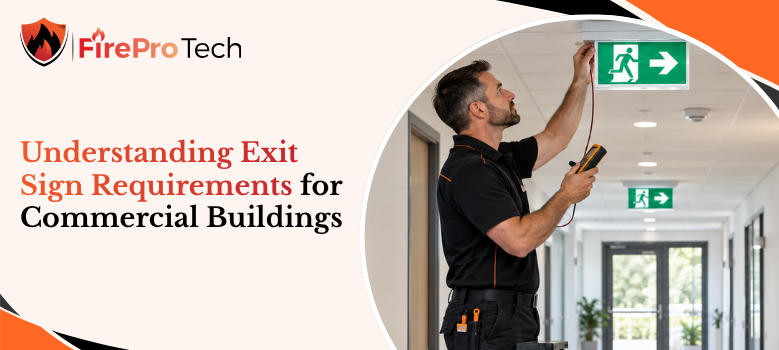
Exit sign requirements are a practical concern for any commercial property where employees, customers, tenants, or visitors may need to leave during a power failure or emergency.