

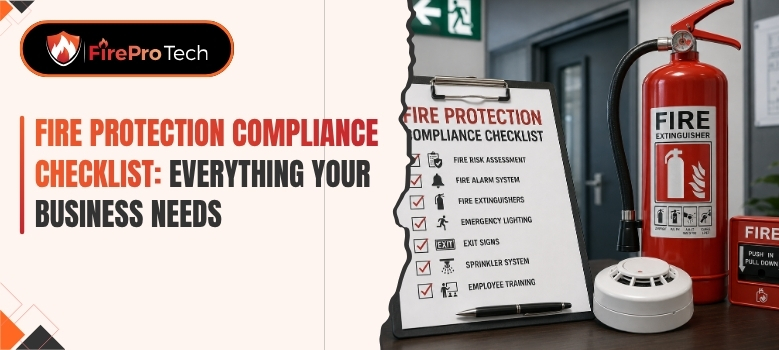
Fire protection compliance checklist planning can help your business find missed inspections, unresolved deficiencies, incomplete records, and system conditions that may affect safety or approval.
For a facility manager or business owner, the challenge is rarely knowing that fire protection matters; it is knowing which tasks apply to the building and what must happen next.
This fire code compliance guide explains how to organize the major parts of a defensible compliance program, including system inventories, inspection readiness, testing, maintenance, documentation, corrective action, and local coordination.
Because requirements can vary by occupancy, adopted code, equipment, system design, and authority having jurisdiction, use this checklist as a planning tool and confirm project-specific requirements with qualified professionals and the appropriate authority.
A useful checklist begins with the building rather than with a generic list of equipment. A small office, multifamily property, warehouse, medical facility, industrial site, and retail space may have very different hazards and fire protection systems.
The goal is to identify what protects the property, who is responsible for each task, and how the work will be documented.
Walk through the property and create an inventory of installed fire protection features. Treat this as a routine fire protection compliance checklist item.
Depending on the building, that inventory may include fire alarm systems, initiating devices, notification appliances, monitoring connections, fire sprinkler systems, standpipes, fire pumps, water storage, special hazard systems, emergency communication features, fire doors, rated assemblies, exit-related features, and portable equipment maintained by an appropriate provider.
Do not assume that a system is covered simply because it appears on an old service report. Renovations, tenant improvements, changes in use, additions, and equipment replacements can make older records incomplete. Compare drawings, permits, prior reports, inspection tags, impairment records, and the physical installation when possible.
The fire protection compliance checklist makes this step easier to document.
For each system, record its general location, purpose, responsible contact, service history, known deficiencies, and access requirements. If a contractor needs a roof key, mechanical-room access, monitoring information, lift access, or an escort, note that before scheduling work. Small coordination failures can turn a routine visit into an incomplete inspection.
Compliance is easier to manage when responsibilities are assigned rather than assumed. The property owner, manager, tenant, maintenance team, fire monitoring services provider, fire protection contractor, building engineer, and authority having jurisdiction may each have different roles. Add this item to the fire protection compliance checklist.
A practical responsibility plan should answer four questions:
The answers may differ between an owner-occupied building and a property with multiple tenants. Written responsibility is especially important when a business changes managers, uses third-party maintenance staff, or operates across multiple locations. Keep this condition visible on the fire protection compliance checklist.
Some compliance tasks are planned on a recurring basis, while others are triggered by a change. A renovation, tenant turnover, process change, new storage arrangement, fire alarm modification, sprinkler alteration, or change in occupancy may require review even if the last inspection was satisfactory.
This distinction prevents a common mistake: treating the last completed inspection as proof that the current building remains compliant. A system may have passed a previous review but require additional evaluation after the building, hazard, or system configuration changes. Include this check on the fire protection compliance checklist.
Fire protection code requirements are not one universal checklist that applies identically to every business. They are shaped by the building’s use, size, construction, hazards, installed systems, adopted codes and standards, permit history, and the expectations of the local authority having jurisdiction.
Understanding that framework helps businesses avoid both under-preparing and paying for work that does not address the actual risk. The fire protection compliance checklist should include this detail.
Start by identifying the occupancy classification, building conditions, fire protection systems, and operational hazards that influence the compliance review. Fire protection companies can help assess storage height and arrangement, flammable materials, cooking processes, industrial operations, high-occupancy areas, and special equipment, all of which can affect the type and scope of protection required.
The applicable requirements may involve adopted fire codes, building codes, referenced standards, manufacturer instructions, permit conditions, insurance expectations, and local procedures. A service provider can inspect, test, maintain, or install systems within its verified scope, but the authority having jurisdiction makes decisions about approvals, notices, permits, and enforcement.
Treat this as a routine fire protection compliance checklist item.
When a requirement is unclear, do not rely on an informal assumption or a report from a different property. Ask which provision applies, whether the condition is existing or new, what documentation is needed, and who has authority to accept the proposed correction.
That approach is more reliable than trying to resolve a technical question after a failed inspection or an urgent project deadline. Add this item to the fire protection compliance checklist.
Strong documentation should allow someone who was not present during the work to understand what system was reviewed, what was found, what was tested, what remained unresolved, and what follow-up was required. Keep records in a consistent location and use a naming process that makes them easy to retrieve.
Useful records may include:
A report that says “needs attention” without identifying the affected component, condition, risk, or recommended next step is difficult to manage. Ask for clear descriptions and preserve the final record after the work is completed. Documentation supports operational decisions, future service visits, inspections, and conversations with officials.
Records are not just files for an inspector. They can reveal recurring problems, aging equipment, access issues, seasonal scheduling conflicts, and areas where maintenance is being deferred. Review this point through the fire protection compliance checklist.
Reviewing them before a scheduled visit can help the facility team correct obvious access or housekeeping issues and gather information the technician may need.
At FirePro Tech, LLC, our team approaches compliance-related service as part of an ongoing process rather than a single appointment. Inspection, testing, maintenance, installation, and compliance support each produce more value when the resulting information is organized and acted upon.
A fire inspection compliance checklist should cover more than whether equipment is physically present. It should help the business verify that systems are accessible, serviceable, properly documented, and evaluated according to the conditions that apply to the property. Include this check on the fire protection compliance checklist.
The exact scope must be confirmed for the building and system, but the following framework is a practical starting point. Add this item to the fire protection compliance checklist.
Before a scheduled inspection or service visit, confirm that the provider has the correct site information and that the building can be accessed safely. Gather prior reports, open deficiency records, system drawings, contact information, and any details about recent construction or operational changes.
Check whether locked rooms, tenant spaces, roofs, mechanical areas, riser rooms, fire pump rooms, alarm panels, control valves, and monitoring equipment will be accessible. If a system must be placed in test mode, coordinate with the responsible monitoring and building personnel before work begins.
A system left in test or impairment status after the visit can create a serious operational problem. The fire protection compliance checklist makes this step easier to document.
Notify occupants when testing may produce audible signals, water flow, supervisory indications, or temporary service interruptions. The notice should explain that testing is planned and identify whom occupants should contact with questions. Avoid disabling protection without an established process for authorization, notification, safeguards, and restoration.
The scope depends on the systems installed. A fire alarm review may involve control equipment, initiating devices, notification, power supplies, supervisory signals, monitoring interfaces, and other components. Water-based system service may involve valves, gauges, alarms, water supplies, risers, obstructions, fire department connections, and related equipment.
Fire pumps, standpipes, special hazard systems, and emergency systems each have their own evaluation considerations. Use the fire protection compliance checklist to track this step.
The key question is not simply whether a component looks normal. It is whether the system can perform its intended function and whether testing confirms the necessary signals, movement, flow, pressure, power, supervision, or response. The fire protection compliance checklist should include this detail.
A visual walk-through cannot replace required testing, and a test result does not eliminate the need for appropriate maintenance or correction.
The provider’s report should identify the systems and areas covered, the work performed, results, deficiencies, impairments, and recommended actions. If a test could not be completed, the reason should be recorded and a follow-up plan established.
Inspection finds conditions; maintenance and correction address them. Look for recurring deficiencies such as inaccessible equipment, damaged components, missing labels, impaired valves, outdated documentation, power issues, blocked devices, environmental damage, or conditions that prevent required testing. Review this point through the fire protection compliance checklist.
Not every deficiency has the same urgency. A condition that disables a critical function or leaves a required area without protection should receive immediate attention. Other items may be scheduled based on risk, system impact, parts, access, permitting, or coordination needs.
Do not make that decision from a vague report alone. Ask what is affected, whether the system remains operational, what interim measures are needed, and what must be verified after correction. Keep this condition visible on the fire protection compliance checklist.
A responsible compliance program closes the loop. It does not stop when the technician submits a report or when a work order is opened.
The business should know who owns the correction, when it is expected, whether the system is impaired, and whether testing or documentation is required after the work.
Before accepting a completed visit, confirm that the report matches the actual scope. Review the property name, service date, systems evaluated, exceptions, recommendations, and restoration status. Ask questions while the technician is present if a finding is unclear.
Clear communication at the end of the visit is usually easier than reconstructing the issue weeks later. The fire protection compliance checklist makes this step easier to document.
Fire protection services in Houston TX may involve coordination among owners, tenants, contractors, service providers, and local officials. Scheduling early and providing accurate property information can reduce avoidable delays, but no provider can guarantee a particular approval or enforcement outcome because those decisions may rest with the authority having jurisdiction.
The most useful compliance checklist is not a list that ends with “inspection complete.” It is a management system for the items found during the review. Businesses often struggle when a report contains several deficiencies with no clear priority, owner, deadline, or confirmation step.
Use the fire protection compliance checklist to track this step.
Begin by determining what the finding affects. Does it involve a life safety function, a building-wide system, one zone, one device, a water supply component, monitoring, access, documentation, or a condition outside the provider’s scope? The answer influences the urgency and the people who must be informed.
Ask the service provider to explain whether the finding is an impairment, a deficiency, a recommendation, or an observation. Those terms may have different practical implications, and a business should not guess at the meaning. Use the fire protection compliance checklist to track this step.
If required protection is unavailable, follow the applicable impairment procedures and consult the responsible professionals and authority as appropriate.
Corrective work may require access to occupied spaces, coordination with tenants, shutdowns, testing, permits, lifts, specialized trades, or communication with a monitoring company. The cheapest or fastest-looking option is not always the best option if it creates a second visit, an incomplete test, or a conflict with production and occupancy.
A better plan identifies the affected area, required materials or labor, access restrictions, temporary safeguards, authorization, testing requirements, and final documentation. When multiple items are present, group compatible work where practical, but do not delay a high-risk correction merely to combine it with lower-priority work.
Use the fire protection compliance checklist to track this step.
A closed work order is not automatically proof of a corrected condition. Depending on the work, the system may need retesting, acceptance documentation, updated drawings, a revised report, or notification to another responsible party. Ask what evidence will show that the correction is complete.
Keep the original finding and the completion record together. That creates a clear history and prevents the same issue from being rediscovered without context during the next inspection. It also helps a new manager understand what was changed and whether additional monitoring is needed.
At FirePro Tech, LLC, inspection, testing, maintenance, installation, and compliance support can help businesses address the practical steps between identifying a problem and documenting the work. The appropriate service depends on the system, property, and confirmed scope. Include this check on the fire protection compliance checklist.
Houston businesses face the same basic need for reliable fire protection planning as businesses elsewhere, but local projects still require attention to the specific jurisdiction, property conditions, adopted requirements, and scheduling realities involved. A generic national checklist cannot replace site-specific review.
The authority having jurisdiction may review plans, permits, inspections, acceptance testing, violations, and corrective actions. Its role and process can vary depending on the project and location.
Before changing a system, altering a protected area, or addressing a formal notice, determine whether submittals, permits, witnessed testing, or other coordination is required. Review this point through the fire protection compliance checklist.
Do not assume that a contractor’s completion report alone satisfies every local requirement. Confirm what documentation must be submitted, who schedules any required review, and whether additional testing or approval applies. These questions are particularly important during renovations, tenant improvements, system expansions, and changes in occupancy.
Service planning should account for operating hours, tenant access, production schedules, deliveries, security procedures, and areas that cannot be left unattended. Houston weather and building conditions can also affect access, exterior equipment, water-related components, and the feasibility of certain work. The specific impact depends on the property and the system.
Add this item to the fire protection compliance checklist.
Share known constraints before requesting service. Accurate information about building access, system type, prior deficiencies, construction, and desired scheduling helps the provider determine the appropriate visit and identify coordination needs before arrival. It also helps avoid treating a complex project as a routine inspection appointment.
When evaluating fire protection services, look beyond whether a provider can perform one test. Consider whether the team can communicate findings clearly, identify the limits of the work, document results, coordinate follow-up, and support the property through inspection, testing, maintenance, installation, or compliance-related needs that genuinely fit its capabilities.
Treat this as a routine fire protection compliance checklist item.
Ask practical questions: What information is needed before scheduling? How are deficiencies described? How are impairments communicated? What happens when access prevents completion? What documentation is provided after corrective work? Answers to these questions reveal how well a provider fits your operational process.
FirePro Tech, LLC is a Houston-based fire protection company providing inspection, testing, maintenance, installation, compliance support, and related fire safety services within its verified scope. Businesses should discuss their system type and property conditions directly so the requested work can be evaluated accurately.
The fire protection compliance checklist should include this detail.
The Fire Protection Systems Market is poised for substantial growth, with its value estimated at USD 95.33 billion in 2024. The market is forecast to expand from USD 107.07 billion in 2025 to USD 342.18 billion by 2035, registering a CAGR of 12.32% during the 2025–2035 forecast period.
A fire protection compliance checklist gives your business a practical way to organize system inventories, inspection preparation, testing, maintenance, documentation, deficiencies, impairments, and corrective work. It is most effective when it is updated after building changes and used as an operating tool rather than stored until the next inspection.
Remember that fire protection code compliance depends on the property, systems, hazards, adopted requirements, and authority having jurisdiction. A checklist can reveal gaps, but it cannot replace a qualified evaluation or an official determination where one is required.
If your business needs help reviewing fire protection systems, planning inspection or testing work, maintaining existing protection, installing applicable systems, or organizing compliance support, FirePro Tech, LLC can help you determine an appropriate next step based on your facility and service needs in Houston.
A clear review today can make future scheduling, documentation, and corrective decisions easier.

It typically covers system inventories, required inspections, testing, maintenance, documentation, deficiencies, impairments, corrective work, and coordination with the authority having jurisdiction.
No. Requirements vary by occupancy, building conditions, hazards, installed systems, adopted codes, and local authority. A qualified review is needed to confirm what applies to a specific property.
Intervals vary by system, applicable standards, manufacturer instructions, building conditions, and local requirements. Use the property’s service program and confirm the schedule with a qualified provider.
Keep inventories, inspection and testing reports, maintenance records, permits, drawings, acceptance documents, deficiency corrections, impairment notices, and retesting or completion documentation.
Determine what system or area is affected, whether protection is impaired, what interim actions apply, who owns the correction, and whether retesting or authority coordination is required. The fire protection compliance checklist should include this detail.
FirePro Tech, LLC provides inspection, testing, maintenance, installation, and compliance support within its verified scope. The appropriate service depends on the property, system, and requested work.
Not always. Compliance may also involve corrections, permits, acceptance testing, records, and authority review. An inspection report documents a review but may not establish every required approval.
Gather prior reports, system information, permits, and open deficiency records; arrange access; notify responsible personnel; and disclose renovations, occupancy changes, or known impairments before service.
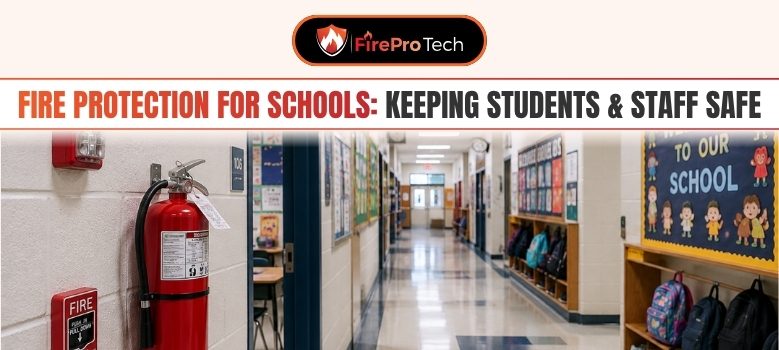
Fire protection for schools is a daily responsibility for administrators, facility managers, and school leaders who must protect students, staff, visitors, and the continuity of education.
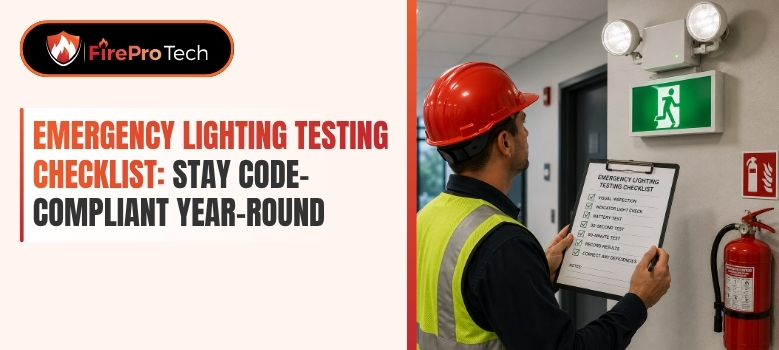
Emergency lighting testing checklist work can become difficult to manage when exit fixtures are spread across several floors, tenant spaces, stairwells, corridors, and exterior discharge paths.
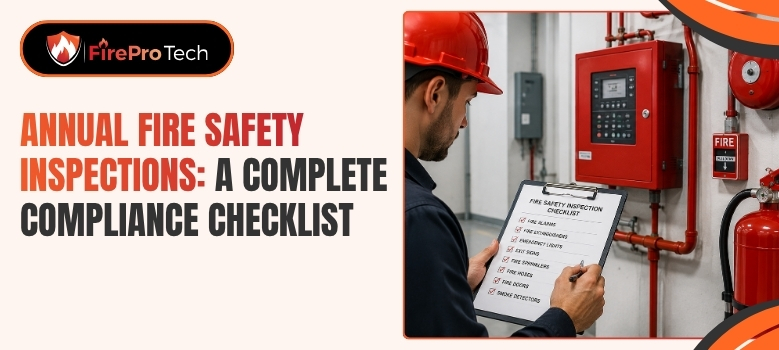
Annual fire safety inspections are meant to help businesses identify life-safety deficiencies before they become emergencies, failed inspections, or operational disruptions.