

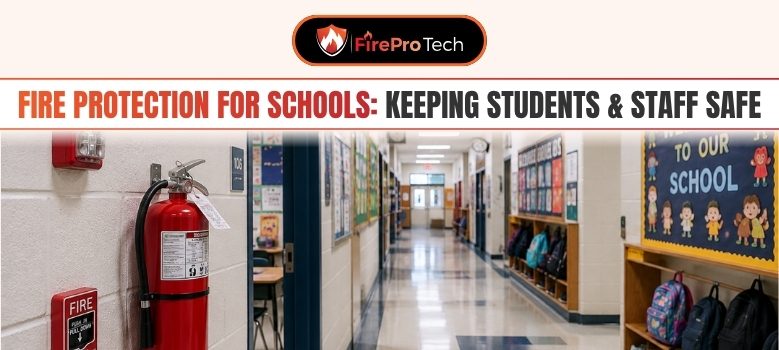
Fire protection for schools is a daily responsibility for administrators, facility managers, and school leaders who must protect students, staff, visitors, and the continuity of education.
A school may have alarms and sprinklers in place, yet small maintenance issues, blocked exits, incomplete records, or unclear staff responsibilities can weaken the overall safety plan.
This guide explains how educational facility fire protection works as a coordinated process.
You will learn what to evaluate in school fire alarm systems and sprinkler systems, how inspections and testing support reliability, how to improve fire drills for schools, and when working with a fire protection service company can make planning and compliance easier.
Schools are not simple commercial spaces. They include classrooms, offices, cafeterias, laboratories, athletic areas, storage rooms, mechanical spaces, and sometimes residential or childcare functions. Each area can present different hazards, occupancy patterns, access concerns, and evacuation challenges.
Effective fire protection services begin with understanding how the entire campus operates rather than looking at one device or system in isolation.
A useful review starts with the building’s current use. A classroom wing used only during the day may have a different risk profile from a science laboratory, stage, kitchen area, or maintenance shop. Storage practices also matter.
Combustible materials placed near electrical equipment, heaters, exits, or sprinkler heads can create avoidable problems.
Administrators and facility teams should consider questions such as:
The answers help determine whether the school needs routine service, system modifications, additional planning, or a more complete evaluation. Keep this point visible in fire protection for schools planning.
A fire alarm may provide notification, while sprinklers may help control fire growth. Emergency lighting, exit signs, fire doors, fire extinguishers services, smoke control features, communications procedures, and evacuation routes support the same life safety objective. Weakness in one area can complicate the performance of the others.
For example, an alarm notification may work correctly, but a blocked corridor can slow evacuation. A sprinkler system may be installed, but stored materials can interfere with coverage or access. A school may conduct drills, but poor accountability procedures can make it difficult to confirm everyone is safe.
These are program-level issues, not isolated equipment concerns. Make this check part of fire protection for schools.
Construction, classroom reassignments, new technology rooms, portable buildings, and changes to school schedules can affect fire protection. Commercial fire protection services are essential when a renovation alters wall layouts, alarm devices, sprinkler coverage, electrical service, or evacuation paths. Moving a wall or adding a ceiling can change how a system should perform.
Before work begins, involve the appropriate fire protection professionals and confirm which requirements apply to the project and jurisdiction. Requirements can vary by building type, system, adopted codes, authority having jurisdiction, and project scope.
Early coordination is usually easier than discovering a system or documentation issue during an inspection, occupancy review, or emergency response.
School fire alarm systems are designed to detect fire-related conditions, notify occupants, and support an organized response. Their value depends on more than whether a panel appears powered. This is a practical consideration for fire protection for schools.
Detection devices, notification appliances, initiating circuits, monitoring arrangements, backup power, interfaces, and records all need appropriate attention for the system to remain dependable.
A school’s alarm system may include smoke detectors, heat detectors, manual pull stations, waterflow switches, supervisory devices, audible appliances, visual notification appliances, control panels, annunciators, and other connected functions. The exact arrangement depends on the building, design, occupancy, and applicable requirements.
The practical question is not simply, “Does the alarm sound?” It is whether the system can detect an applicable condition, communicate it clearly throughout the required areas, identify useful information to responders, and continue operating when normal power is interrupted. Make this check part of fire protection for schools.
Schools should also consider whether background noise, large open spaces, athletic facilities, or classroom technology could affect how occupants receive notification. Review this condition when evaluating fire protection for schools.
Some problems are visible during a walk-through. Others require testing or review by qualified personnel. Common concerns may include damaged devices, obstructed notification appliances, inaccessible pull stations, inaccurate zone labels, trouble signals, outdated drawings, missing service records, or changes to the building that are not reflected in the system documentation.
A trouble signal should not be treated as a minor inconvenience. It may indicate a power, communication, circuit, battery, or device issue that affects system readiness. School staff should have a defined process for reporting and escalating signals rather than silencing them and leaving the condition unresolved.
Use fire protection for schools planning to track this detail.
Testing and service must be planned around students, staff, testing schedules, athletics, transportation, and other activities. Advance communication helps reduce confusion when alarms sound during scheduled work. It also allows the school to identify who will meet technicians, provide access, review records, and receive the final documentation. These planning principles also apply to fire protection for warehouse facilities, where testing and service must be coordinated around daily operations, access requirements, and facility schedules.
When work affects a portion of the system, the school should understand what is temporarily impaired, what interim measures may be appropriate, and when normal protection is restored. Include this issue in fire protection for schools planning.
The correct process depends on the system and circumstances, so temporary impairment planning should be handled with qualified guidance rather than informal assumptions.
At FirePro Tech, LLC, fire alarm inspection, testing, maintenance, installation, and related compliance support can be evaluated according to the school’s system and operational needs. The objective is not to create unnecessary work.
It is to identify what the system requires, document its condition, and help the facility make informed decisions. Include this issue in fire protection for schools planning.
Records should help administrators understand what was tested, what was found, what was corrected, and what remains open. Keep current information about the alarm panel, connected equipment, service history, deficiencies, repairs, impairments, and any follow-up that has been assigned.
A complete record also helps when staff changes, a new facility manager takes responsibility, a renovation is planned, or an authority having jurisdiction requests documentation. The record should be understandable to someone who did not attend the original service visit. Keep this point visible in fire protection for schools planning.
Fire sprinkler systems are an important part of educational facility fire protection because they can help control a developing fire and limit its growth while occupants evacuate and emergency responders are notified. Sprinklers are not a substitute for alarms, evacuation procedures, or staff training.
They are one component of a coordinated protection strategy.
A sprinkler system depends on more than the sprinkler heads visible in classrooms or corridors. Valves, water supplies, risers, piping, waterflow devices, supervisory equipment, control rooms, and related components all contribute to performance.
If a control valve is closed, a water supply is impaired, or a component is damaged, the system may not be ready when needed. Treat this step as part of fire protection for schools.
Facility teams should know which areas contain system control equipment and ensure that access is maintained. Storage should not obstruct valves, risers, alarm devices, or service areas. Any unusual condition, leak, damage, or unauthorized adjustment should be reported through the school’s established process.
Schools frequently change how rooms are used. A storage room may become a technology lab. A classroom may receive new ceiling features, partitions, lighting, or tall cabinets. These changes can affect sprinkler discharge patterns, access, and the assumptions made during the original design.
Do not hang objects from sprinkler piping or use sprinkler components as supports. Do not paint, cover, damage, or relocate sprinkler heads without qualified evaluation. Keep storage arrangements consistent with the approved design and confirm whether a change requires professional review. Include this issue in fire protection for schools planning.
The same caution applies during construction. Dust, impact, heat, temporary ceilings, and disconnected systems can create impairment concerns. Before a project begins, coordinate with the fire protection service company, contractor, school leadership, and any relevant authority so protection is not unintentionally compromised.
Inspection generally involves examining system components and conditions. Testing verifies that equipment or functions operate as intended. Maintenance addresses service needs, adjustments, repairs, or replacement of components. These activities support one another, but they are not interchangeable. Include this issue in fire protection for schools planning.
A visual inspection alone cannot confirm every operational function. Likewise, a test that identifies a deficiency does not automatically correct it. Schools should review service documentation carefully and make sure deficiencies are assigned, tracked, and resolved or otherwise managed with appropriate professional guidance.
Requirements and intervals can vary by system type, equipment, jurisdiction, adopted standards, and authority having jurisdiction. A school should not rely on a generic calendar found online as its only maintenance plan. Instead, maintain a system-specific schedule based on the installed protection and applicable requirements.
This is a practical consideration for fire protection for schools.
Not every deficiency has the same practical effect. A missing label, impaired supervisory signal, leaking pipe, damaged sprinkler, or inaccessible valve may require a different response. The right priority depends on the condition, the system’s function, the affected area, and applicable requirements.
Ask the service provider to explain the finding in plain language: What was observed? What part of the system does it affect? Is the condition urgent? What corrective action is recommended? What information is needed to prepare a quote? Document this requirement through fire protection for schools.
Clear answers help school leaders budget responsibly without minimizing a potentially serious issue.
A dependable school fire protection program is easier to manage when service is treated as a recurring operational process instead of an emergency purchase.
Planning ahead gives the school time to coordinate access, notify occupants, review records, address deficiencies, and schedule corrective work before a deadline or inspection creates unnecessary pressure. Review this condition when evaluating fire protection for schools.
Start with a list of the fire protection systems and areas on campus. Depending on the property, this may include fire alarm systems, sprinkler systems, standpipes, emergency communications, fire pumps, special hazard protection, extinguishers, exit features, and related equipment.
The inventory should identify which buildings are covered, who is responsible, and where records are stored. Document this requirement through fire protection for schools.
For each system, document the equipment type, service history, known deficiencies, last completed service, pending recommendations, and planned building changes. If the school has multiple buildings, keep the information organized by building and system. This reduces the chance that an issue in an auxiliary facility is overlooked.
A service visit can be delayed when no one knows who can unlock a room, operate a panel, approve access, provide drawings, or receive the report. Assign a primary contact and a backup contact. Make sure both understand the site’s safety procedures and communication expectations.
The coordinator should also identify testing windows that avoid exams, assemblies, transportation periods, and other activities where alarms or system actions could cause disruption. Advance planning protects both the school day and the quality of the service visit. Review this condition when evaluating fire protection for schools.
A report is most useful when it leads to a decision. After receiving documentation, separate completed work from open deficiencies. Confirm whether recommended corrections require a quote, engineering review, permitting, coordination with another contractor, or follow-up testing.
A simple internal tracking process can include:
Schools should avoid changing, bypassing, or resetting equipment simply to clear an indication without understanding the underlying cause. If a deficiency affects system readiness, obtain qualified advice about notification and interim precautions. Make this check part of fire protection for schools.
When evaluating a fire protection company, look beyond a low service price. Ask whether the provider understands commercial or educational facilities, can document inspection and testing results clearly, communicates deficiencies in practical terms, and can support the relevant scope of inspection, testing, maintenance, installation, or compliance work.
Document this requirement through fire protection for schools.
It is also reasonable to ask how the provider handles access issues, impairments, follow-up corrections, system changes, and records. The best fit is not necessarily the company that promises the fastest answer. It is the provider that helps the school maintain a clear, defensible, and workable fire protection process.
For schools in Houston, FirePro Tech, LLC can help evaluate fire protection service needs and coordinate appropriate inspection, testing, maintenance, installation, and compliance-related work based on the facility’s systems and circumstances. Treat this step as part of fire protection for schools.
Compliance is not a one-time certificate or a binder on a shelf. It is an ongoing combination of system condition, required service, documentation, staff practices, building use, and communication with the applicable authority. Requirements may change when a school expands, changes occupancy, modifies systems, or operates under different local conditions.
Maintain current records, respond to findings, and verify questions with qualified professionals and the authority having jurisdiction when necessary. A cautious approach is especially important when a school is preparing for construction, opening a new building, or addressing a significant impairment.
Treat this step as part of fire protection for schools.
Fire drills for schools are most valuable when they test the complete response, not just how quickly people leave a room. Students and staff need to know how notification occurs, which routes to use, where to report, how accountability works, and what to do when a preferred route is unavailable.
Drills should be conducted according to the school’s procedures and applicable local requirements. Review this condition when evaluating fire protection for schools.
A drill plan should account for different ages, mobility needs, language needs, visitors, substitute teachers, transportation areas, athletic facilities, and specialized classrooms. Staff should know alternate routes and assembly locations. If a student or staff member needs assistance, the plan should identify responsibilities in advance without compromising privacy or dignity.
The goal is not to create panic or surprise people in unsafe ways. The goal is to build familiarity with a clear response. School leaders should coordinate drills with teachers, administrators, security personnel, transportation staff, and other groups that may be on campus.
Keep this point visible in fire protection for schools planning.
After a drill, review more than the total evacuation time. Consider whether the alarm was heard or seen in all relevant areas, whether doors and routes remained usable, whether teachers carried attendance information, whether visitors were included, and whether anyone was left unaccounted for.
Use fire protection for schools planning to track this detail.
Also review communication. Did staff know where to report problems? Could administrators distinguish a drill from an actual emergency? Were emergency responders or monitoring contacts handled according to the school’s established procedure? These questions reveal weaknesses that a stopwatch cannot show.
A drill may reveal a door that sticks, a route blocked by furniture, an assembly area that is too small, a notification appliance that is difficult to hear, or an accountability process that depends on one person. Each finding should be recorded and assigned for follow-up.
Keep this point visible in fire protection for schools planning.
Fire drills should not be used to test equipment in an improvised manner. System testing and maintenance should be performed through the appropriate service process. When an alarm or sprinkler system requires work, coordinate with a qualified fire protection service so testing, notification, and documentation are handled appropriately.
Keep this point visible in fire protection for schools planning.
Students depend on adults to respond calmly and consistently. Staff training should cover immediate notification, evacuation, accountability, assisting occupants, reporting conditions, and avoiding reentry unless directed by authorized responders. The exact procedure should follow the school’s emergency plan and local guidance.
Reinforce that smoke, fire, blocked paths, or other hazards may require a change in route. Staff should not assume that the usual exit is always available. A practical plan gives them enough understanding to make safe decisions while waiting for emergency responders. Document this requirement through fire protection for schools.
At FirePro Tech, LLC, our team can help schools address inspection, testing, maintenance, installation, and compliance questions related to fire protection systems. For urgent uncertainty about an alarm or other life safety condition, speak with a qualified professional and follow the school’s emergency procedures.
The Fire Protection Systems Market is poised for substantial growth, with its value estimated at USD 95.33 billion in 2024. The market is forecast to expand from USD 107.07 billion in 2025 to USD 342.18 billion by 2035, registering a CAGR of 12.32% during the 2025–2035 forecast period.
Fire protection for schools works best when systems, people, records, and procedures support one another. School fire alarm systems need appropriate inspection and testing. Fire sprinkler systems for schools require protection from impairment, damage, and unsuitable storage conditions.
Fire drills for schools should evaluate communication, evacuation, accountability, accessibility, and follow-up—not only speed.
School leaders can begin by reviewing the current system inventory, checking open deficiencies, confirming who owns each responsibility, and scheduling service around campus operations. Requirements vary by system, building, jurisdiction, and authority having jurisdiction, so verify important decisions with qualified professionals.
For educational facilities in Houston, FirePro Tech, LLC provides fire protection services related to inspection, testing, maintenance, installation, and compliance support where appropriate to the facility’s needs.
A clear conversation about the building, systems, records, and concerns can help you determine the next practical step and keep fire protection planning focused on students, staff, and reliable operations.
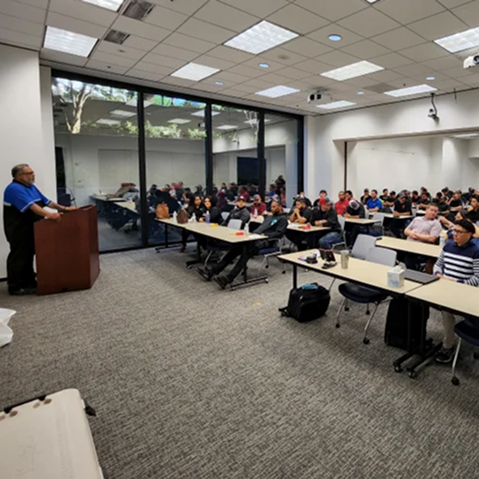
It can include fire alarm systems, sprinkler systems, inspections, testing, maintenance, emergency planning, drills, documentation, and compliance coordination. The exact scope depends on the campus and applicable requirements.
Inspection and testing schedules vary by system, equipment, jurisdiction, adopted standards, and authority having jurisdiction. Schools should maintain a system-specific schedule with a qualified fire protection service company. Use fire protection for schools planning to track this detail.
Sprinklers can help control a developing fire and limit its growth while occupants evacuate and responders are notified. They must remain accessible, properly maintained, and coordinated with the rest of the life safety plan.
Document the exact condition and location, determine how it affects system readiness, and obtain qualified guidance on correction and interim precautions. Do not silence, bypass, or alter equipment without understanding the cause. Make this check part of fire protection for schools.
Drills should evaluate notification, evacuation routes, accessibility, accountability, assembly areas, staff responsibilities, communication, and follow-up. Evacuation time is useful, but it should not be the only measure.
Look for a provider that can support the needed inspection, testing, maintenance, installation, or compliance scope and that explains findings clearly. Ask about documentation, impairments, follow-up work, and experience with educational facilities. Treat this step as part of fire protection for schools.
FirePro Tech, LLC is a Houston-based fire protection company that provides inspection, testing, maintenance, installation, and related compliance support. Service scope should be confirmed for the specific school and system.
Keep system inventories, inspection and testing reports, maintenance records, deficiency notices, completed corrections, impairment documentation, system drawings, and follow-up decisions. Organized records help staff and service providers work efficiently.
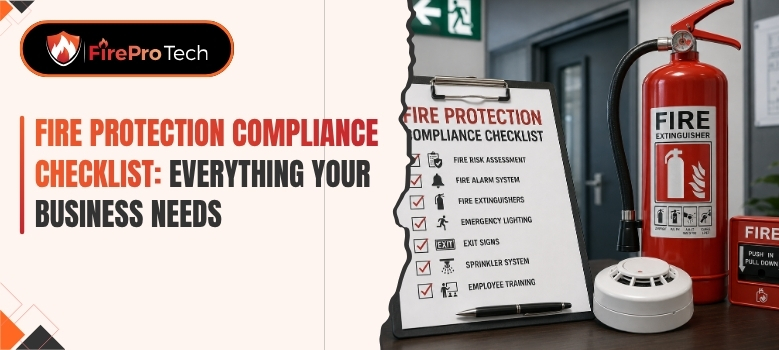
Fire protection compliance checklist planning can help your business find missed inspections, unresolved deficiencies, incomplete records, and system conditions that may affect safety or approval.
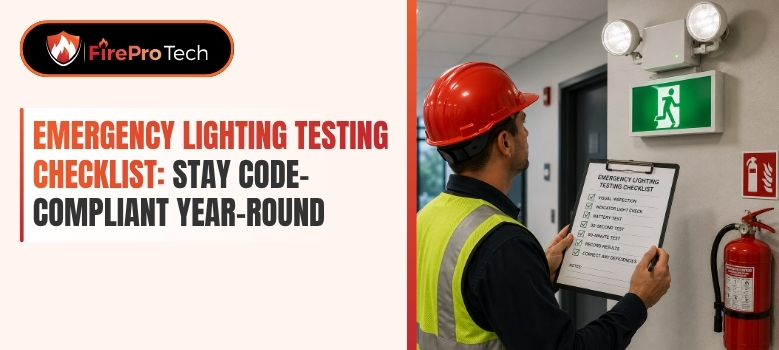
Emergency lighting testing checklist work can become difficult to manage when exit fixtures are spread across several floors, tenant spaces, stairwells, corridors, and exterior discharge paths.
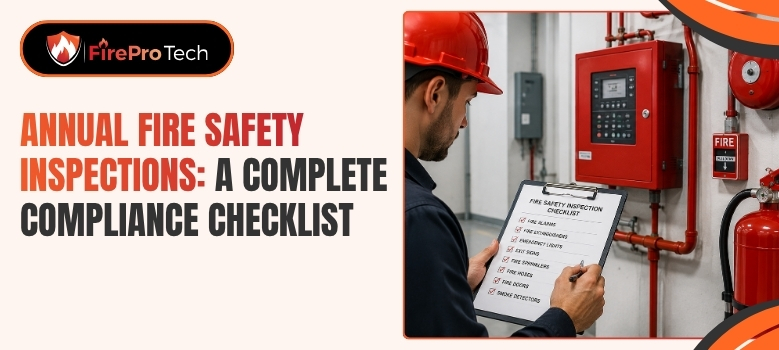
Annual fire safety inspections are meant to help businesses identify life-safety deficiencies before they become emergencies, failed inspections, or operational disruptions.